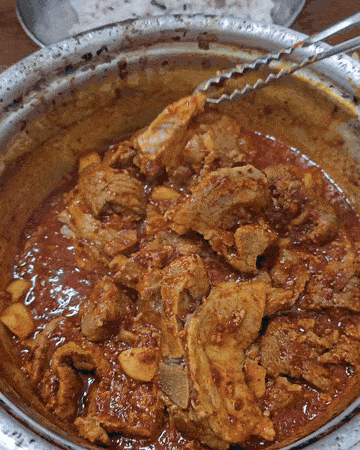
Spicy Pork Galbi-jjim in Daegu at Seomun Market
Gyeonghui Sikdang Seomun Market Branch, written in Korean as 경희식당 서문시장점, is a local restaurant inside the Seomun Market area of Daegu. It serves Korean braised rib dishes, including pork and beef galbi-jjim, together with cheonggukjang, a traditional fermented soybean stew.
I paid for this meal myself and ordered the pork galbi-jjim. For international visitors looking for a filling local meal rather than a polished tourist restaurant, this place offers an old-fashioned market atmosphere, adjustable spice levels, and a generous combination of braised pork and soybean stew.
Quick Visitor Info
Restaurant: Gyeonghui Sikdang Seomun Market Branch
Korean name: 경희식당 서문시장점
Area: Jung-gu, Daegu
Address provided: 115-67 Daesin-dong, Jung-gu, Daegu
Weekday hours: 9:00 a.m.–8:00 p.m.
Weekend hours: 9:00 a.m.–8:00 p.m.
These hours were checked on Naver on May 20, 2026. They may have changed, so check the latest listing before making a special trip.
Regular holiday: Not confirmed
Break time: Not confirmed
Last order: Not confirmed
Public-holiday hours: Not confirmed
Reservations: Not confirmed
Parking: Using a Seomun Market parking facility is the most practical option based on my visit notes. Street parking may risk a parking or stopping violation, so I would not rely on roadside parking.
What Are Dwaeji Galbi-jjim and Cheonggukjang?
Dwaeji galbi-jjim is a Korean braised pork rib dish cooked in a seasoned sauce. At this restaurant, the version I tried had a red, spicy sauce with enough liquid left in the pan to mix with rice.
The restaurant also serves sogalbi-jjim, the beef version of braised ribs, although I did not try it during this visit.
Cheonggukjang is a Korean stew made with strongly fermented soybeans. It is known for having a noticeable aroma, which can surprise first-time visitors. However, the smell inside this restaurant was not especially strong during my visit.
The cheonggukjang served with my meal contained plenty of visible beans and had a rich, comforting broth.
Finding the Restaurant Inside Seomun Market
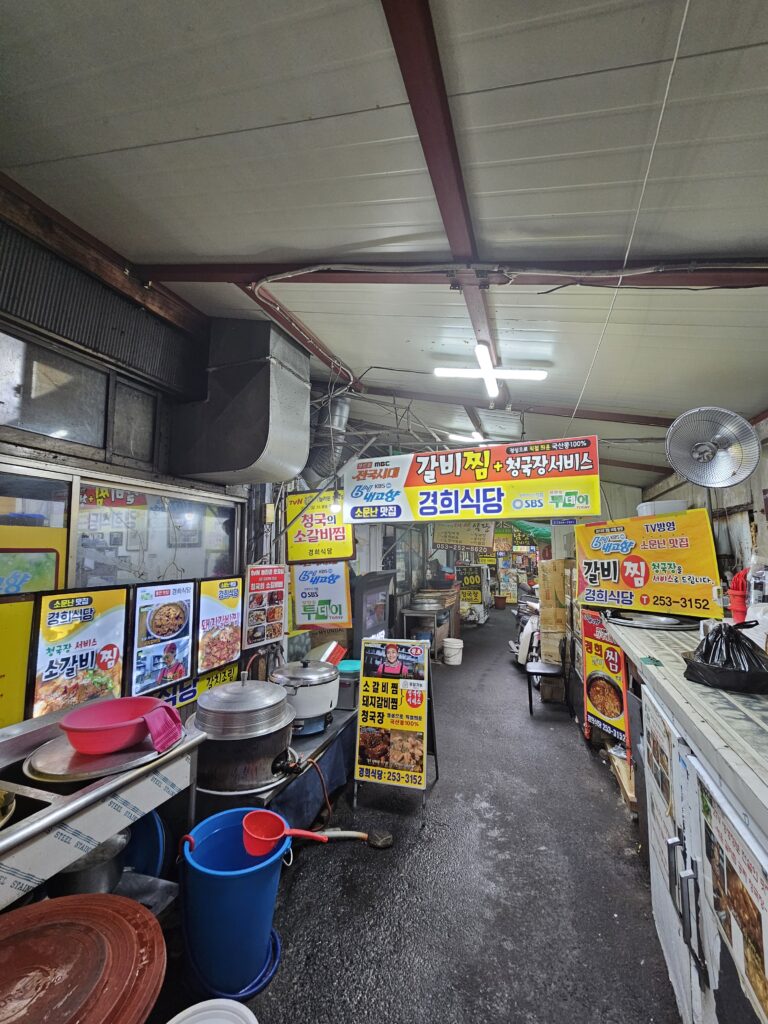
Gyeonghui Sikdang is not located in a modern standalone building. It sits along an indoor market passage with cooking equipment, restaurant signs, and several businesses serving Korean meals.
There were multiple yellow signs advertising pork ribs, beef ribs, and complimentary cheonggukjang, which made the restaurant easier to notice while walking through the passage.
The surrounding alley had several places serving braised dishes and traditional Korean meals. My first thought was that a restaurant would need to serve good food to continue competing in an area with so many similar options.
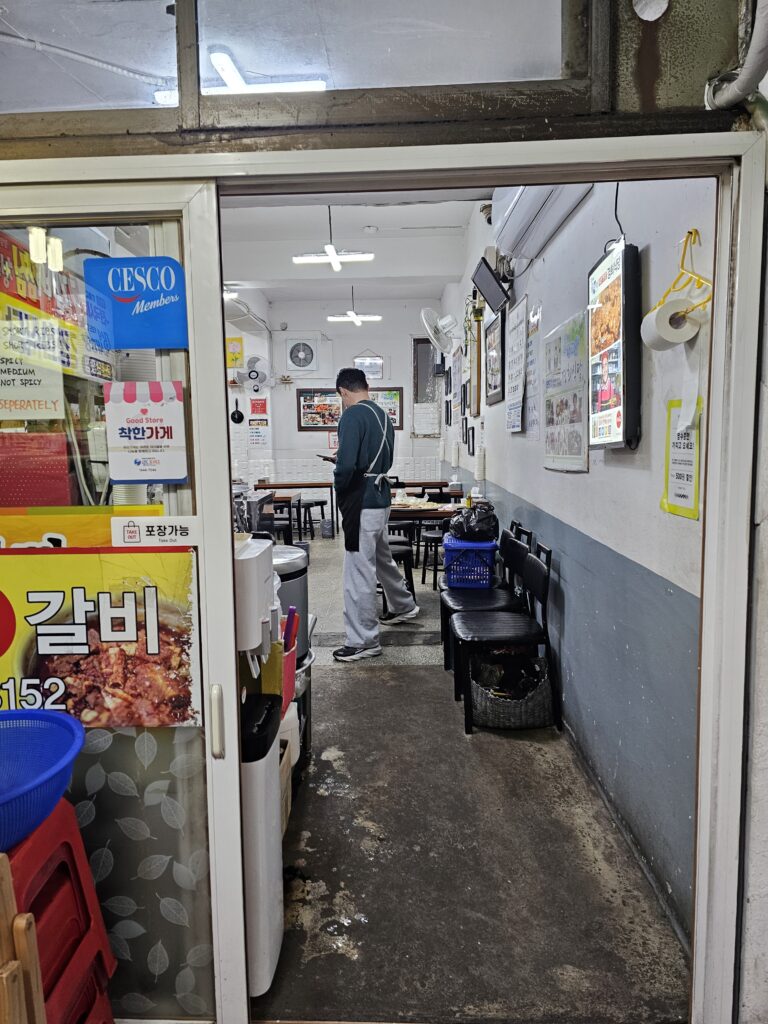
The entrance had a simple glass door with signs showing that takeaway was available at the time the photo was taken. The range of takeaway dishes and any additional packaging fees were not confirmed.
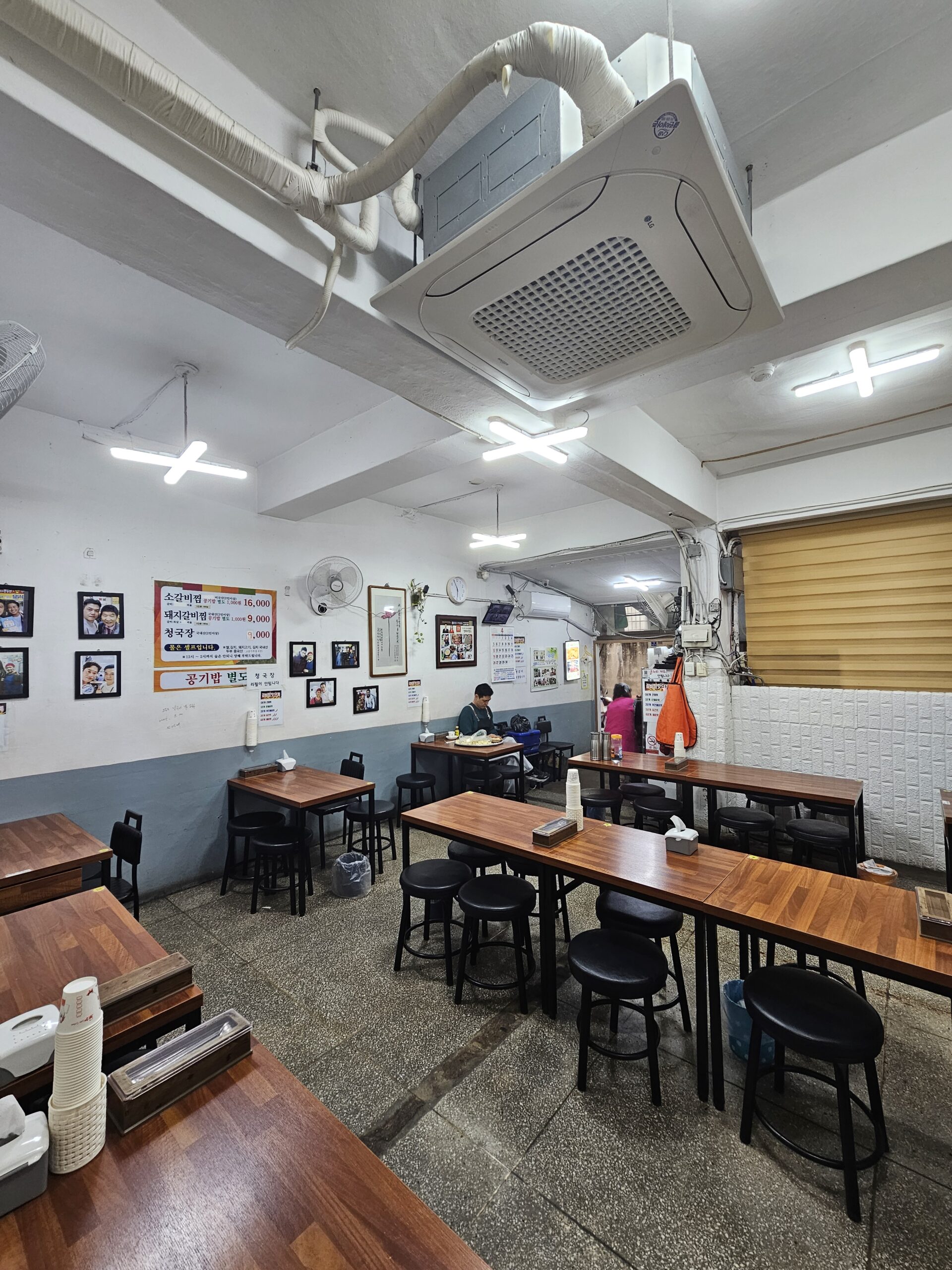
Inside, the restaurant had long wooden tables and round black stools. The design was simple and practical rather than decorative, but the space was neatly arranged.
It had the atmosphere of an older Korean market restaurant, often described in Korea as a nopo-style place. Nopo generally refers to a long-established, old-fashioned local business with a sense of history rather than a modern interior.
A Restaurant with Visible Local History

A large sign inside listed several Korean television programs, including 6 My Hometown, Live Information, Nationwide Era, Live Today, and Amazing Saturday.
The same sign displayed the phrase “40 years of tradition.” This was the restaurant’s own promotional wording, so I would treat it as an in-store claim rather than a separately verified opening date.
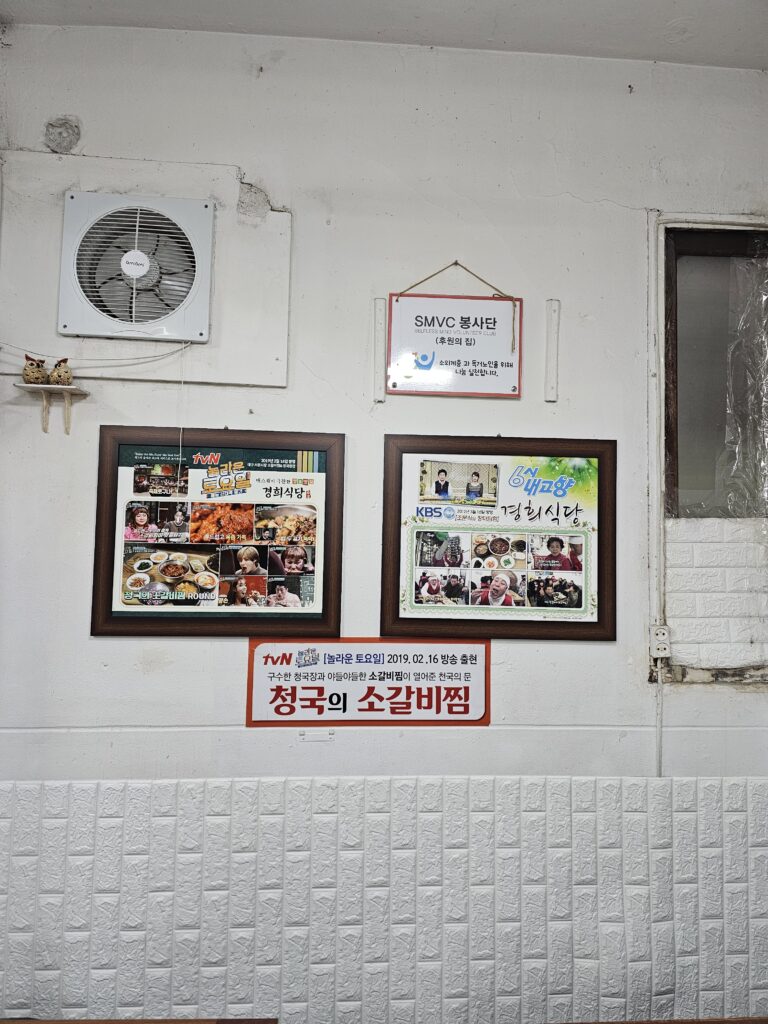
Framed displays on the wall also showed material related to television appearances. One sign stated that the restaurant appeared on Amazing Saturday on February 16, 2019.
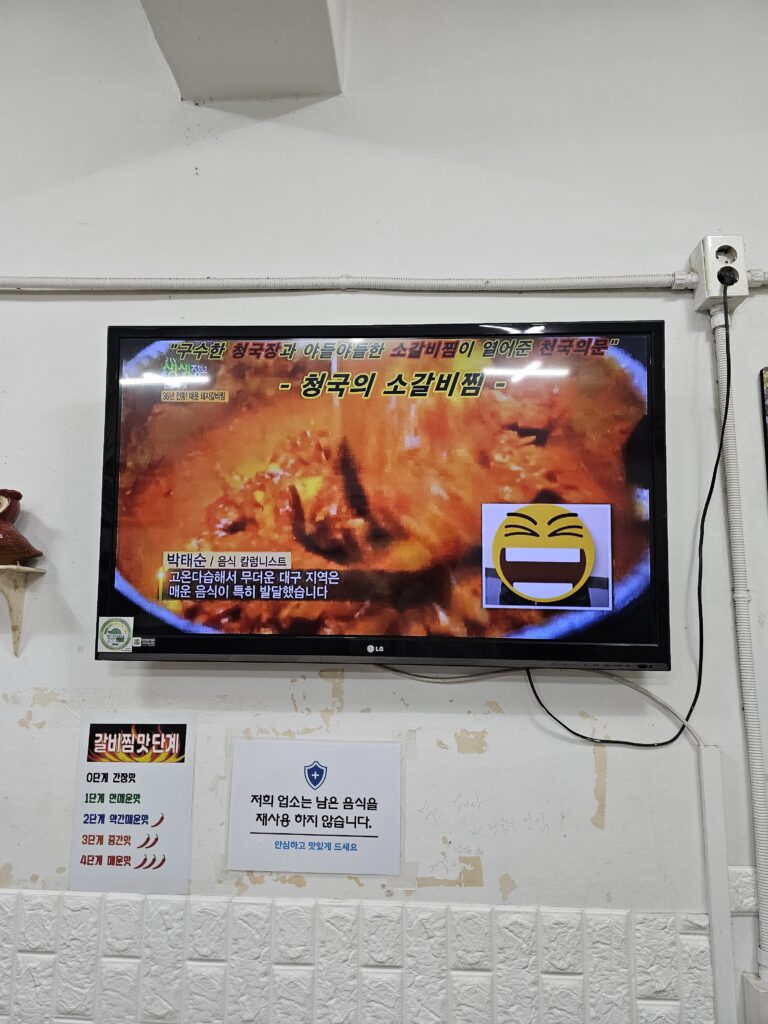
A television inside the dining room was playing footage that appeared to feature the restaurant’s red braised rib dish. I could not confirm the exact program or video platform, but it added to the feeling that the restaurant was proud of its signature menu.
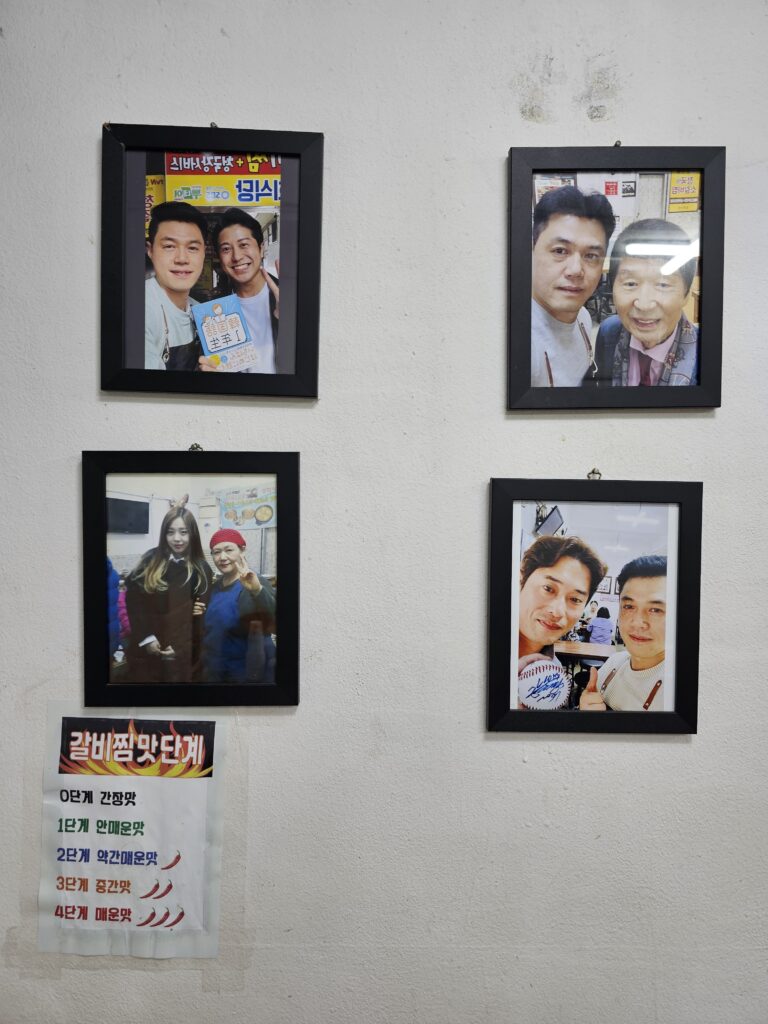
Other framed visitor photographs were displayed on the wall. I did not confirm the identities of the people in the pictures, so I would not describe them as celebrities or athletes without additional verification.
Prices and Ordering Rules
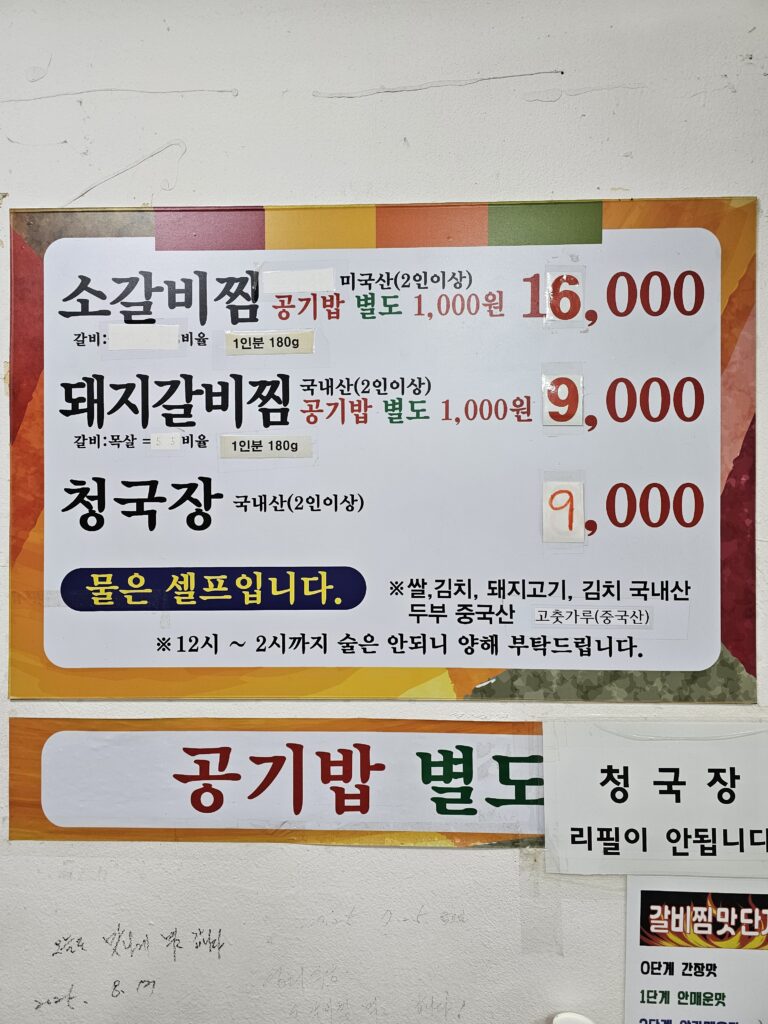
Prices shown on the menu board at the time of my visit were:
- Beef galbi-jjim: 16,000 KRW per person
- Pork galbi-jjim: 9,000 KRW per person
- Cheonggukjang: 9,000 KRW
- Bowl of rice: 1,000 KRW separately
The menu stated that the beef galbi-jjim and pork galbi-jjim portions were 180 grams per person.
The board also indicated a minimum order of two people for the main dishes. This means it may not be a convenient choice for a solo traveler who wants to order only one portion of galbi-jjim.
Prices and ordering conditions may have changed since the visit, so check the latest menu if exact pricing is important.
Water was marked as self-service. Self-service water is common in casual Korean restaurants: customers usually collect their own water and sometimes cups from a designated area.
Choosing the Spice Level
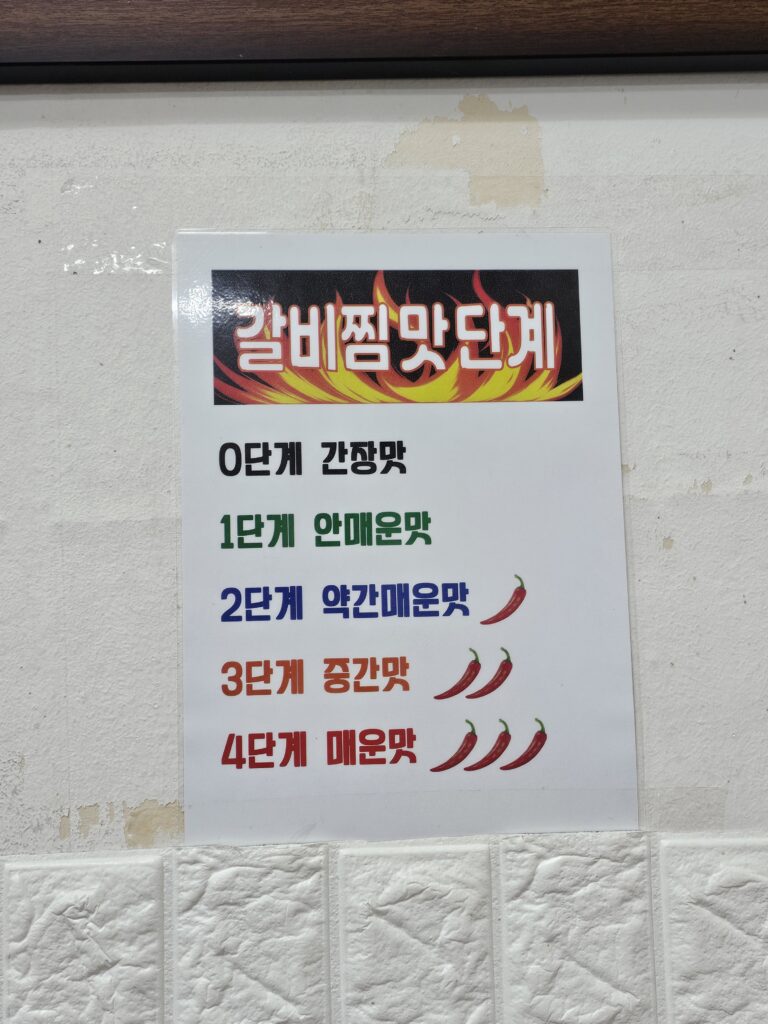
One useful feature for foreign visitors is the adjustable spice level.
The displayed choices were:
- Level 0: Soy sauce flavor
- Level 1: Non-spicy
- Level 2: Slightly spicy
- Level 3: Medium
- Level 4: Spicy
I ordered the dish on the spicy side, although I did not record the exact numbered level.
Being able to adjust the heat made the meal easier to enjoy. The spicy flavor kept the rich braised sauce from feeling too heavy or sweet, especially when eating it with rice.
The Full Table Setting
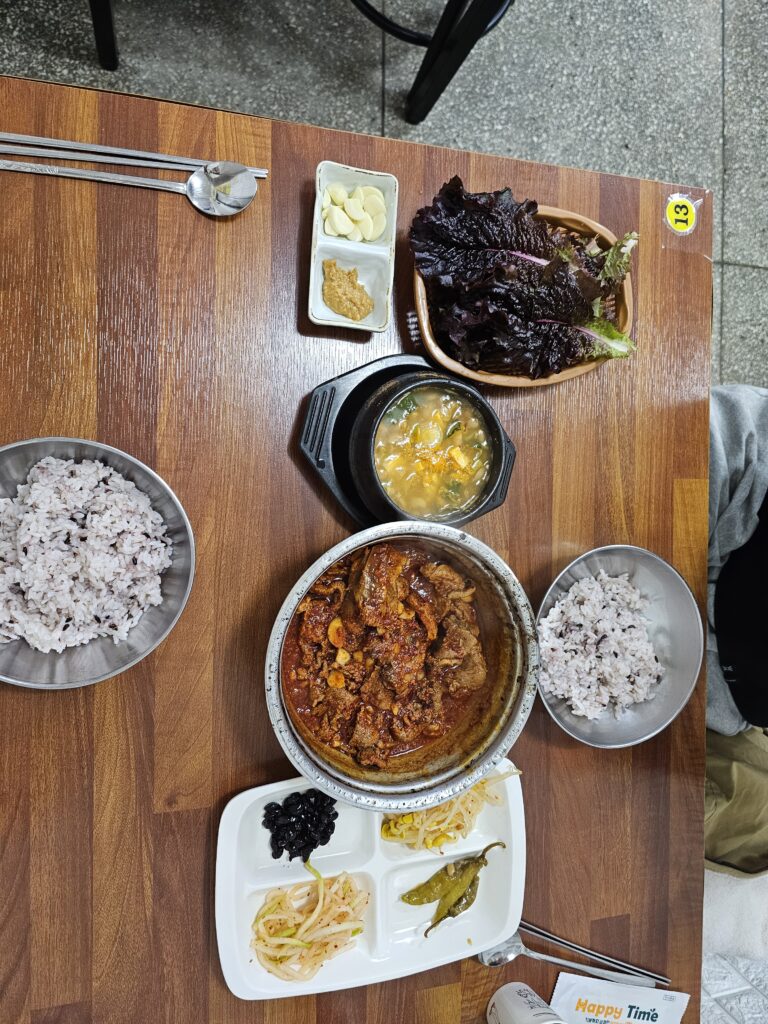
The meal arrived with the red pork galbi-jjim in the center, a hot stone bowl of cheonggukjang, rice, lettuce, sliced garlic, ssamjang, and several small side dishes.
Ssamjang is a thick, savory Korean dipping paste often eaten with meat and lettuce wraps. The small accompanying dishes are called banchan and are a standard part of many Korean meals.
The combination made the meal feel more complete than ordering only a single braised dish. The staff were also kind and helped make the meal comfortable.
Cheonggukjang Served with the Braised Ribs
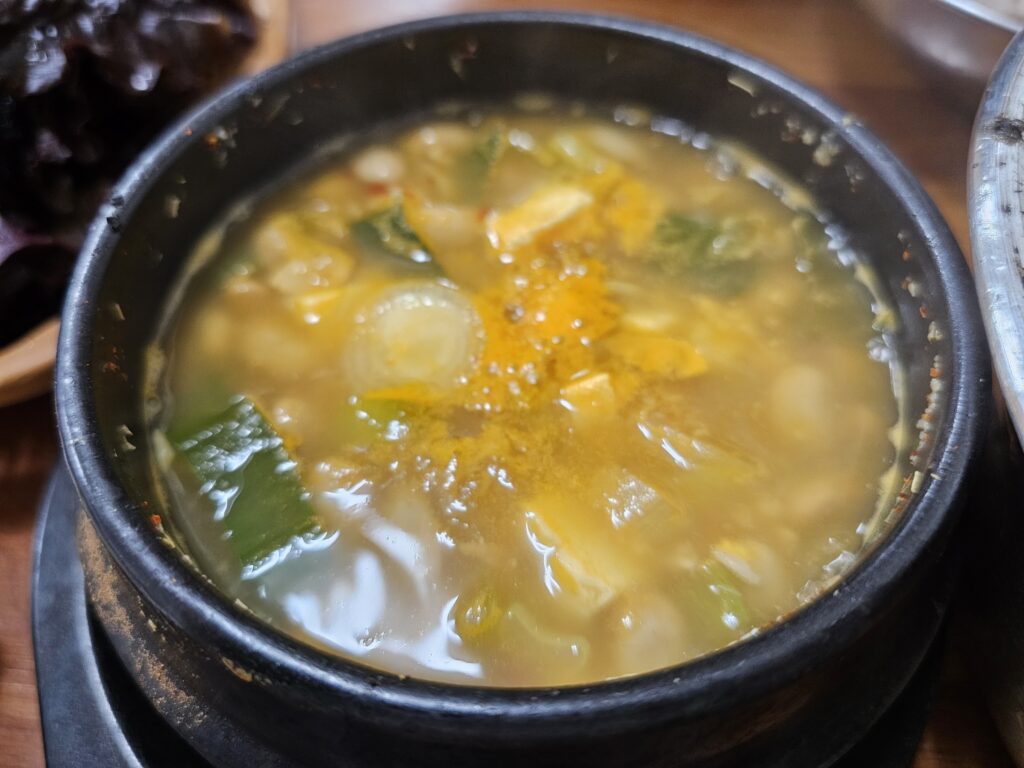
During my visit, cheonggukjang was served as a complimentary accompaniment when ordering a jjim dish.
Although cheonggukjang was also listed as a separate menu item, the complimentary serving did not feel like a small or unimportant extra. It came in a hot stone bowl with a substantial amount of soybean and other ingredients.
As restaurant policies can change, visitors should confirm whether complimentary cheonggukjang is still included when ordering.
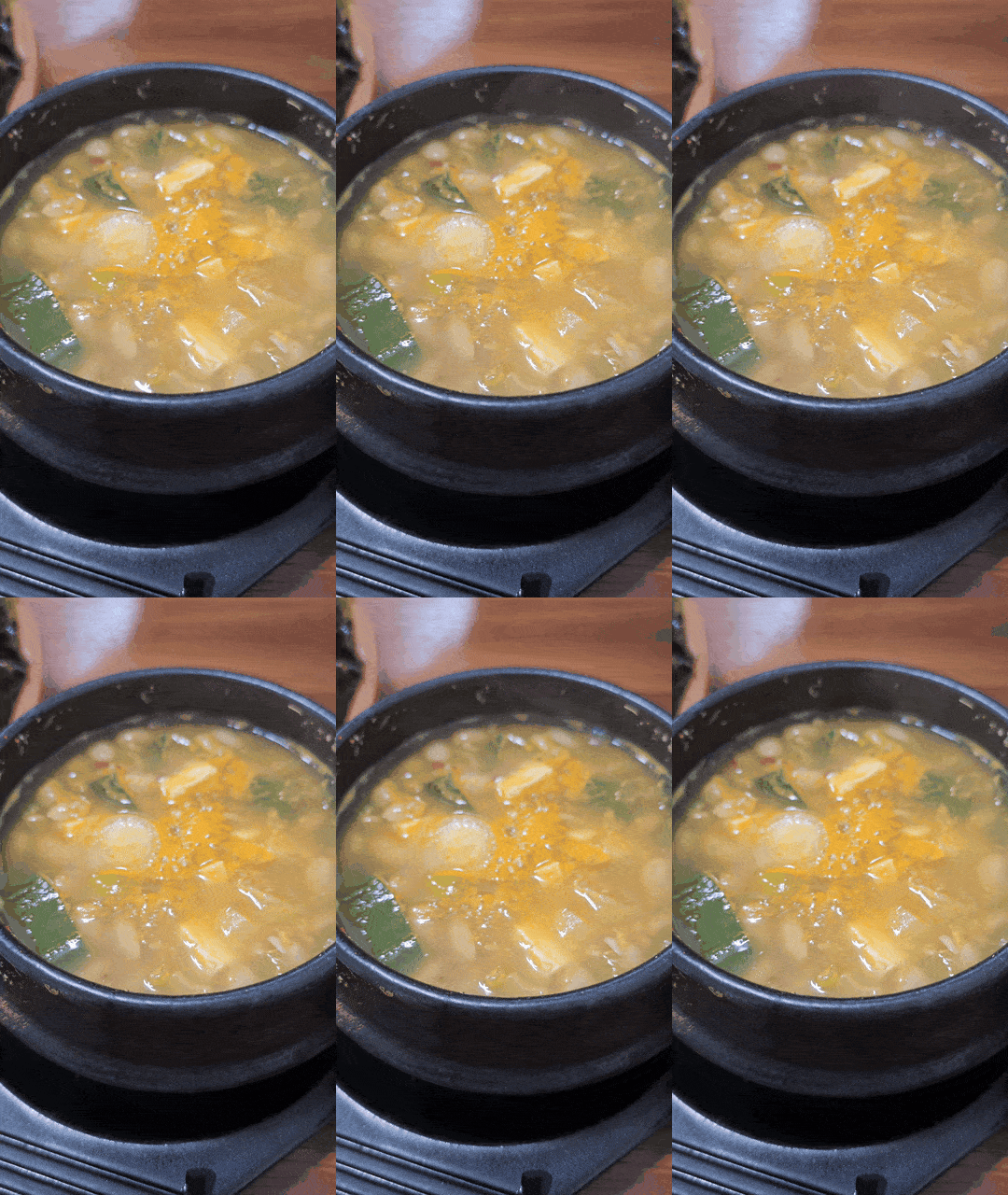
The stew arrived bubbling hot. The broth looked thick and hearty, with visible soybean pieces, tofu, and vegetables.
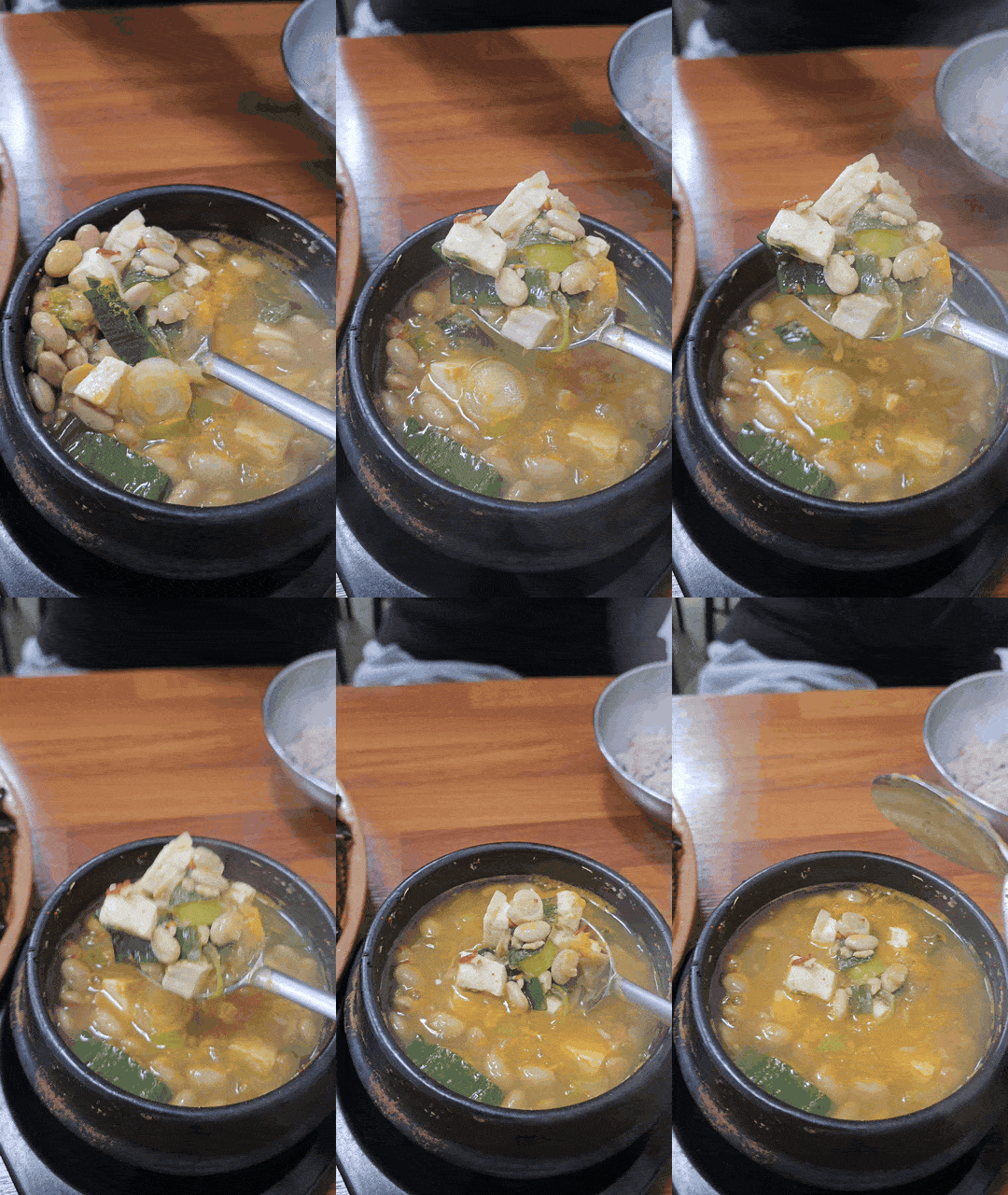
When I lifted a spoonful, there were plenty of whole fermented soybeans rather than only broth.
The flavor was rich and worked well between bites of spicy pork. Cheonggukjang can have a very powerful smell, but the aroma did not fill the entire restaurant during my visit. That made the experience more approachable than I expected.
Sensitivity to fermented food aromas varies from person to person, so visitors who strongly dislike fermented smells should still keep that in mind.
My Pork Galbi-jjim Experience
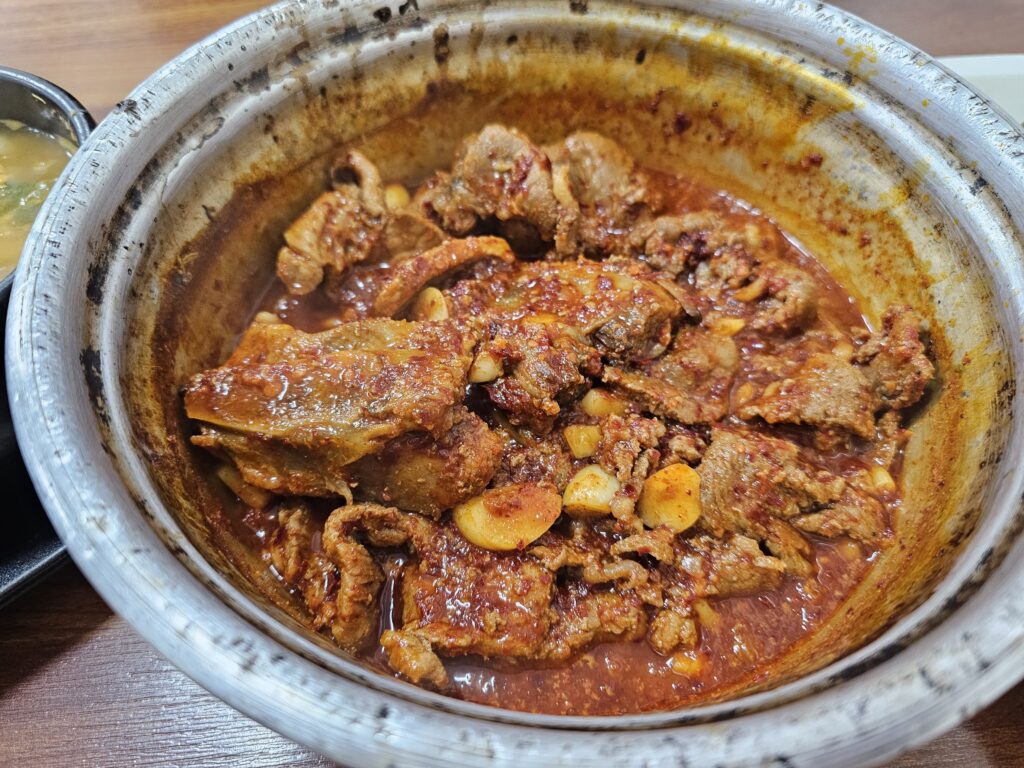
The pork galbi-jjim arrived in a wide metal pan with red sauce, bone-in pork pieces, and whole garlic cloves.
The sauce was not cooked down until completely dry. There was still enough sauce around the meat to spoon over rice or mix into the rice after eating some of the pork.
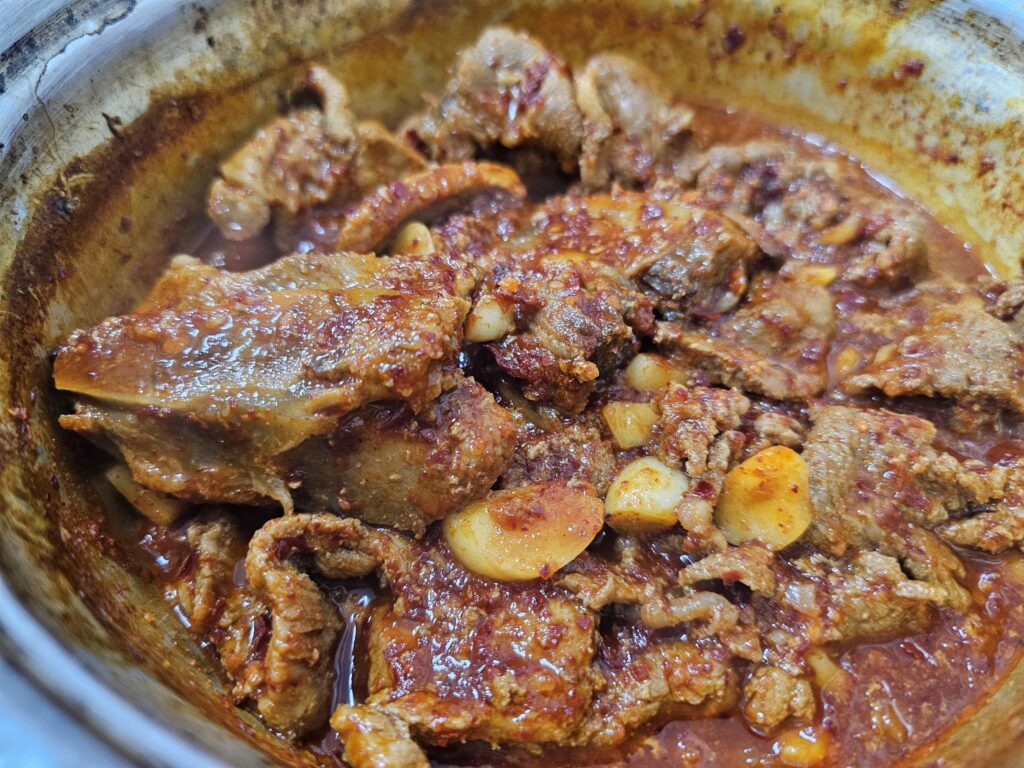
Up close, the sauce coated the meat and rib bones evenly. The spicy seasoning worked especially well with rice and helped keep the dish from becoming tiring as the meal continued.
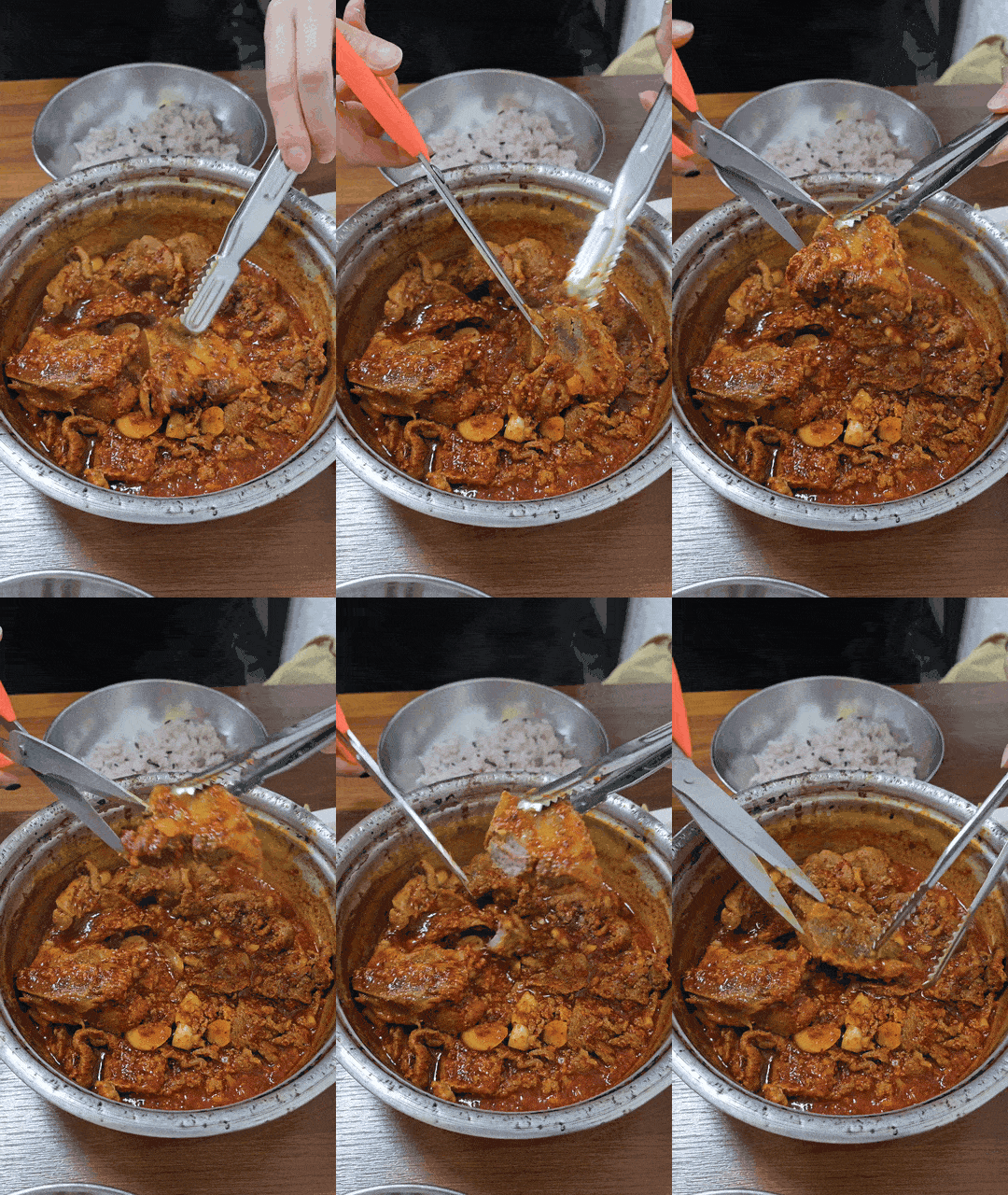
The pork was very tender. It was easy to cut with kitchen scissors without using much force, which made it simple to divide the larger pieces into smaller bites.
Scissors and tongs are commonly provided with larger Korean meat dishes so diners can cut and share the food directly at the table.
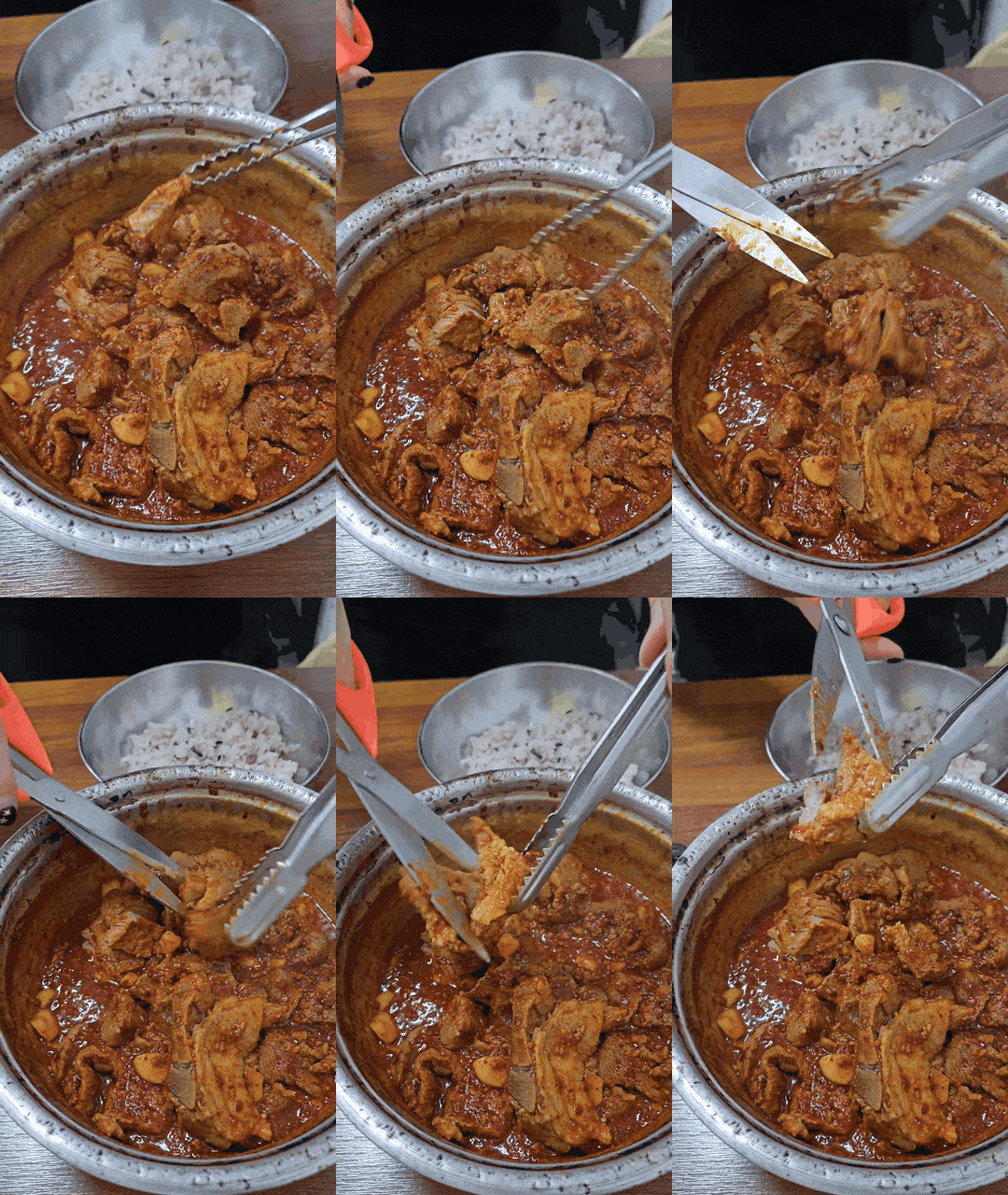
The bone-in pieces were also fairly substantial. More importantly, the meat itself was soft rather than merely covered in a flavorful sauce.
After eating the pork, mixing rice with the remaining red sauce was one of the most satisfying parts of the meal.
What Foreign Visitors Should Know
First, the two-person minimum is the most important limitation. The pork galbi-jjim was reasonably priced per person at the time of my visit, but solo travelers may not be able to order a single portion.
Second, choose the spice level carefully. Level 0 was described as a soy sauce flavor, while the higher levels became progressively hotter. Visitors who are sensitive to Korean chili should begin with a lower level.
Third, rice was listed separately on the menu board. Do not assume rice is included automatically with every main dish.
Fourth, the restaurant is inside a traditional market environment. The entrance and surrounding passage may feel less obvious than a street-facing restaurant, but the yellow signs help identify it.
Finally, the restaurant had a simple local atmosphere rather than English-focused service or tourist-style presentation. That is part of its appeal, but having the Korean restaurant name saved on your phone may help when asking for directions inside the market.
Final Recommendation
Gyeonghui Sikdang is a good option for two or more people who want to try spicy pork galbi-jjim in Daegu in a traditional market setting.
The pork was tender enough to cut easily, the red sauce worked well with rice, and the adjustable spice system made the dish accessible to different preferences. The complimentary cheonggukjang was also a genuine highlight, with plenty of soybeans and a rich broth.
The main limitation is the two-person minimum, which makes the restaurant less practical for solo diners. Apart from that, I had no major complaints, and the friendly service and old-fashioned market atmosphere made me willing to return.
[FAQ]
Q1. What is galbi-jjim?
A1. Galbi-jjim is a Korean braised rib dish. It can be made with beef or pork and is cooked in a seasoned sauce. The pork version at this restaurant was served with a red, spicy sauce.
Q2. Is the pork galbi-jjim suitable for someone who cannot eat spicy food?
A2. The restaurant displayed five spice choices, including a soy sauce flavor and a non-spicy level. Spice options may change, so confirm the available levels when ordering.
Q3. Can one person order the galbi-jjim?
A3. The menu board at the time of the visit stated a two-person minimum. Solo visitors should confirm whether a single portion is now available before visiting.
Q4. Is rice included with the galbi-jjim?
A4. Rice was listed separately at 1,000 KRW on the menu board at the time of the visit.
Q5. What is cheonggukjang?
A5. Cheonggukjang is a traditional Korean stew made with strongly fermented soybeans. It usually has a rich flavor and a distinctive aroma.
Q6. Does the restaurant provide cheonggukjang for free?
A6. During this visit, cheonggukjang was served as a complimentary accompaniment with the braised dish. Confirm the current policy before ordering because restaurant services can change.
Q7. Where should visitors park?
A7. A Seomun Market parking facility is the safer option. Roadside parking may result in a parking or stopping violation.
Plan your own Korean food adventure
🌶️ Test your Korean spice tolerance — find your survival level in 7 questions
🎰 Spin the Korean Food Roulette — let the wheel pick your next meal
🍀 Draw Korean Lotto 6/45 numbers — lucky picks in official ball colors