Halmae Kalguksu: A Local Korean Noodle Restaurant in Daegu
Halmae Kalguksu is a local Korean noodle restaurant in Daegu’s Nam-gu district, serving familiar dishes such as kalguksu and janchi guksu in a lively neighborhood setting. It is worth considering if you want a meal that feels more like an everyday local lunch than a polished tourist restaurant.
I visited on May 20, 2026, paid for my own meal, and ordered both the kalguksu and janchi guksu.
What Are Kalguksu and Janchi Guksu?
Kalguksu is a Korean noodle soup traditionally associated with knife-cut wheat noodles. Depending on the restaurant, the noodles and broth can vary considerably. Some bowls are thick and rustic, while others are lighter and easier to eat.
The version I tried here had noticeably thinner noodles than the broad kalguksu noodles I usually expect.
Janchi guksu, sometimes translated as Korean banquet noodles, is made with thin wheat noodles served in a light broth. Anchovy-based broth is common, although the exact recipe differs by restaurant.
At Halmae Kalguksu, the janchi guksu had a particularly strong savory aroma that reminded me of a concentrated anchovy broth, although I did not confirm the exact stock recipe.
Quick Visitor Info
Restaurant: Halmae Kalguksu
Korean name: 할매칼국수
Address: 14, Myeongdeok-ro 38-gil, Nam-gu, Daegu
Visit date: May 20, 2026
Weekday hours observed at the time of my visit: 11:00–21:00
Weekend hours recorded at the time of my visit: 11:00–21:00
Regular holiday: Every Sunday
Public holidays: A printed restaurant leaflet also stated that the restaurant closes on public holidays. Check before visiting because this information may have changed.
Break time: Not confirmed
Last order: Not confirmed
Reservations: Not confirmed
Parking: Parking was not straightforward because the restaurant is inside a narrow neighborhood street. I saw some open spaces nearby, but they did not appear to be clearly marked legal parking spaces. Do not assume that an empty roadside space is safe to use, as illegal parking may result in a fine. Check local parking signs or use a confirmed parking area.
All hours, prices, and practical details in this guide were observed at the time of my visit and may have changed.
My First Impression
I had passed this restaurant many times before visiting.
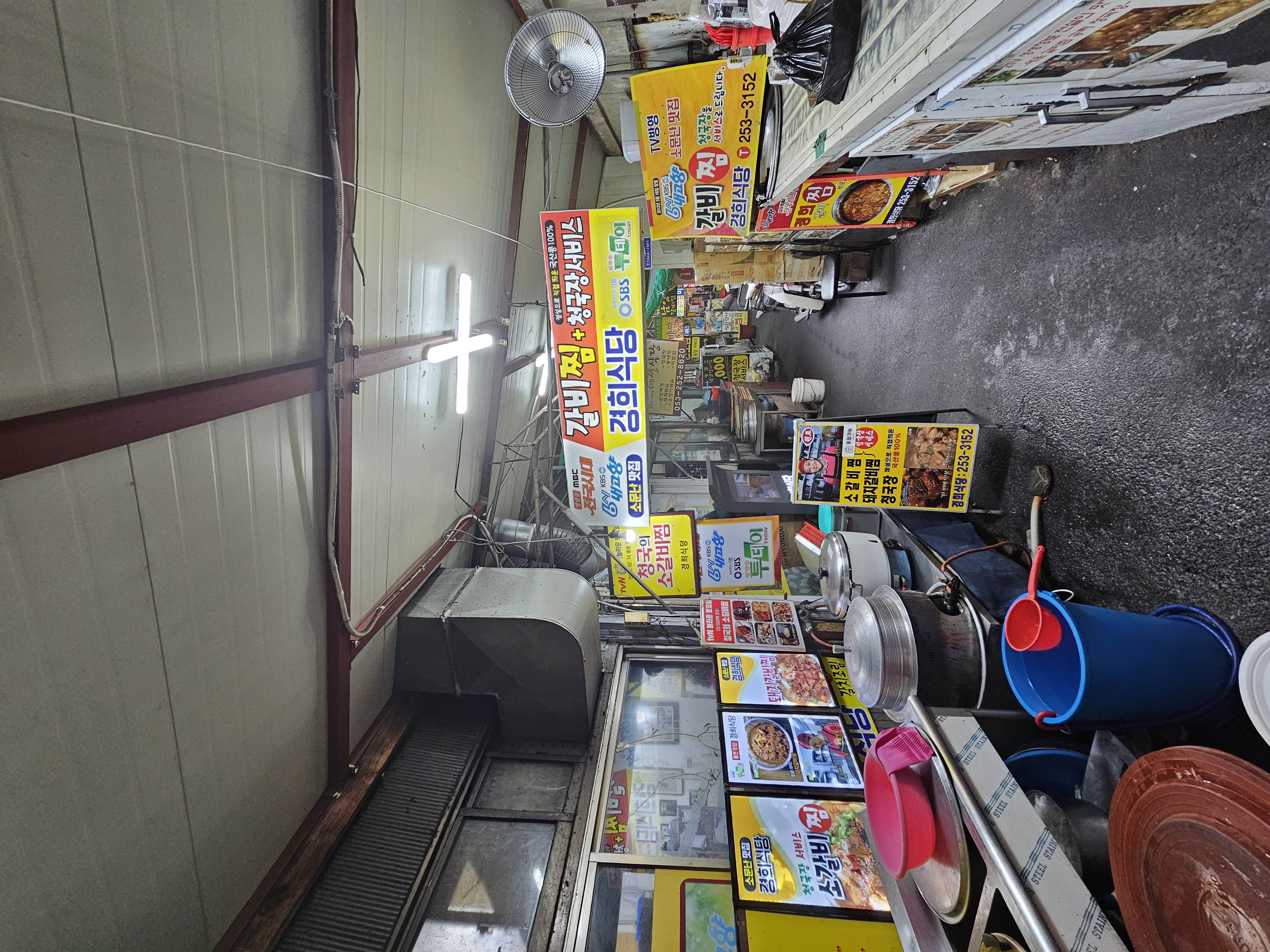
From outside, the building looked old and understated enough that I had wondered whether the restaurant was still operating or whether many people actually came here.
The atmosphere changed completely once I stepped inside.
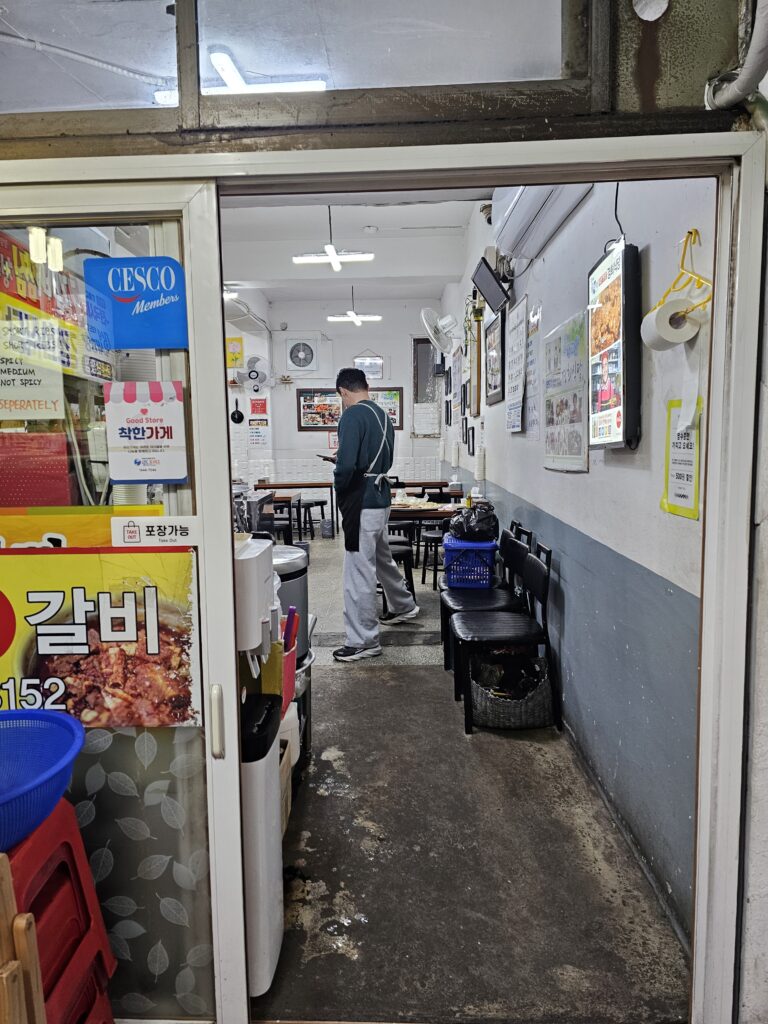
The dining room was much larger than it appeared from the street, and customers continued to arrive while I was there. There was even a short wait at one point. The room felt busy and conversational rather than quiet, with the kind of lively atmosphere often found in a popular neighborhood restaurant.
I could not photograph the entire dining room because many tables were occupied, but seating continued beyond the area visible in the photo. The staff member who assisted us was also friendly.
Menu and Prices at the Time of My Visit
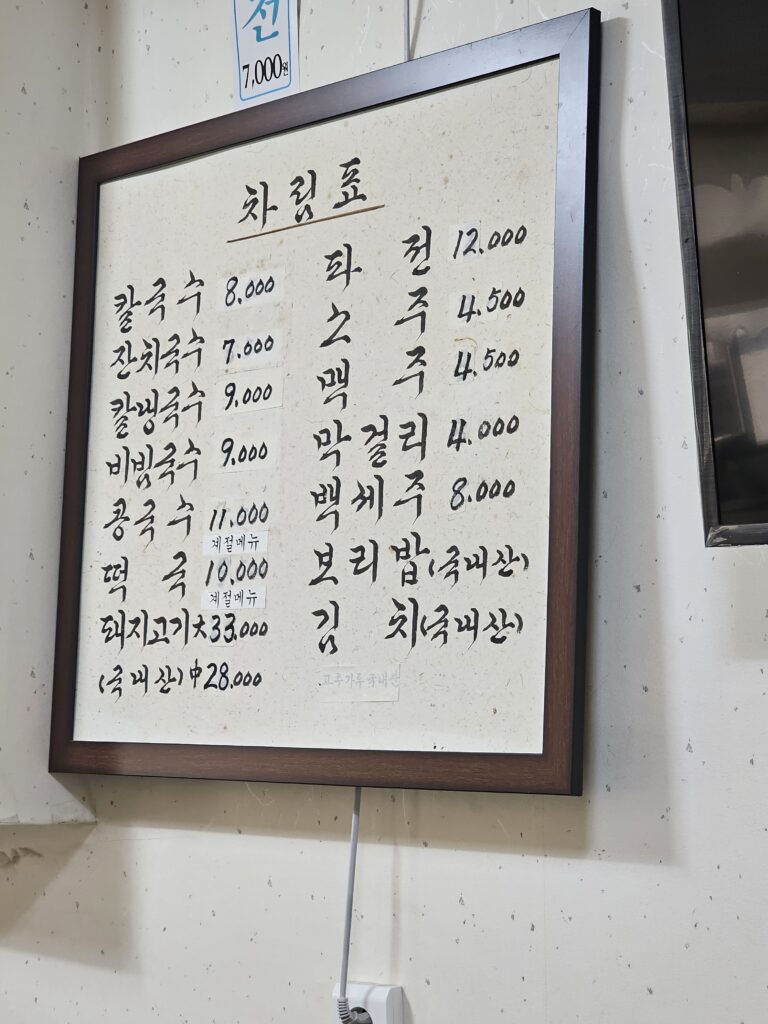
The wall menu showed a focused selection of noodles, pork, pancakes, and drinks.
Prices at the time of my visit were:
- Kalguksu: 8,000 KRW
- Janchi guksu: 7,000 KRW
- Cold kalguksu: 9,000 KRW
- Bibim guksu: 9,000 KRW
- Kongguksu: 11,000 KRW
- Tteokguk: 10,000 KRW
- Pork platter, large: 33,000 KRW
- Pork platter, medium: 28,000 KRW
- Pajeon: 12,000 KRW
- Soju: 4,500 KRW
- Beer: 4,500 KRW
- Makgeolli: 4,000 KRW
- Baekseju: 8,000 KRW
Kongguksu is a chilled noodle dish in a creamy soybean broth, while bibim guksu is mixed noodles with a seasoned sauce. Tteokguk is Korean rice cake soup, and pajeon is a savory Korean pancake.
Please check the latest menu before visiting if exact prices are important.
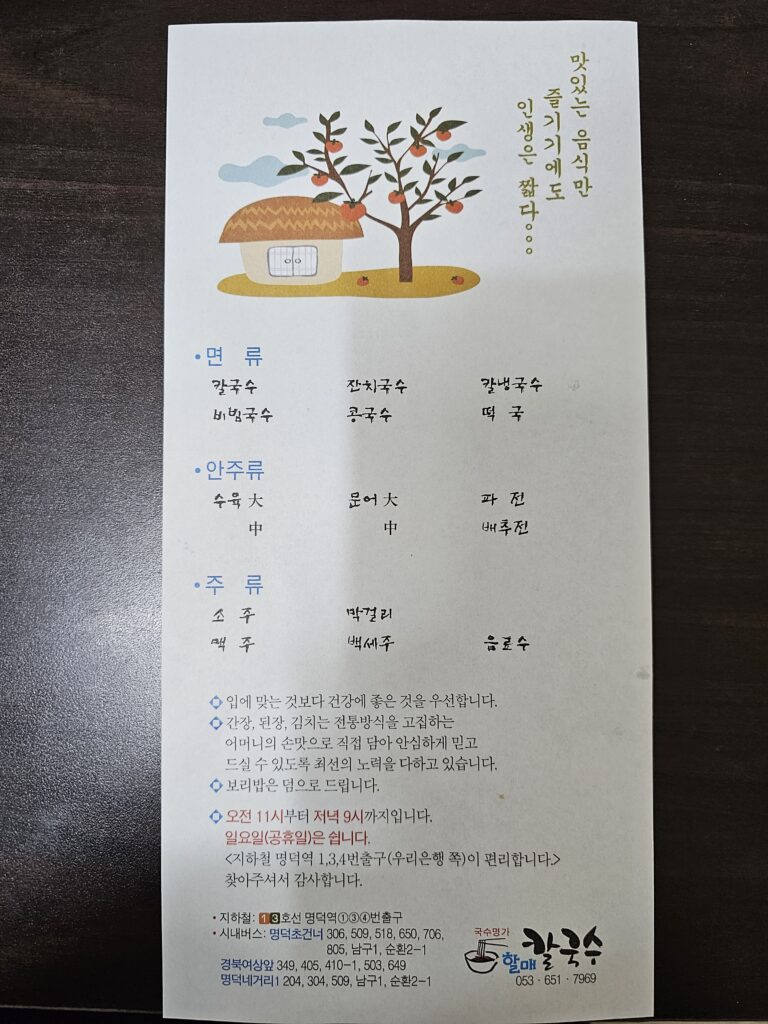
A printed leaflet on the table stated that the restaurant makes its soy sauce, doenjang, and kimchi using traditional methods.
Doenjang is Korean fermented soybean paste. It is commonly served with raw vegetables or used as the base of soups and sauces.
The leaflet also stated that a small bowl of barley rice is included with noodle orders.
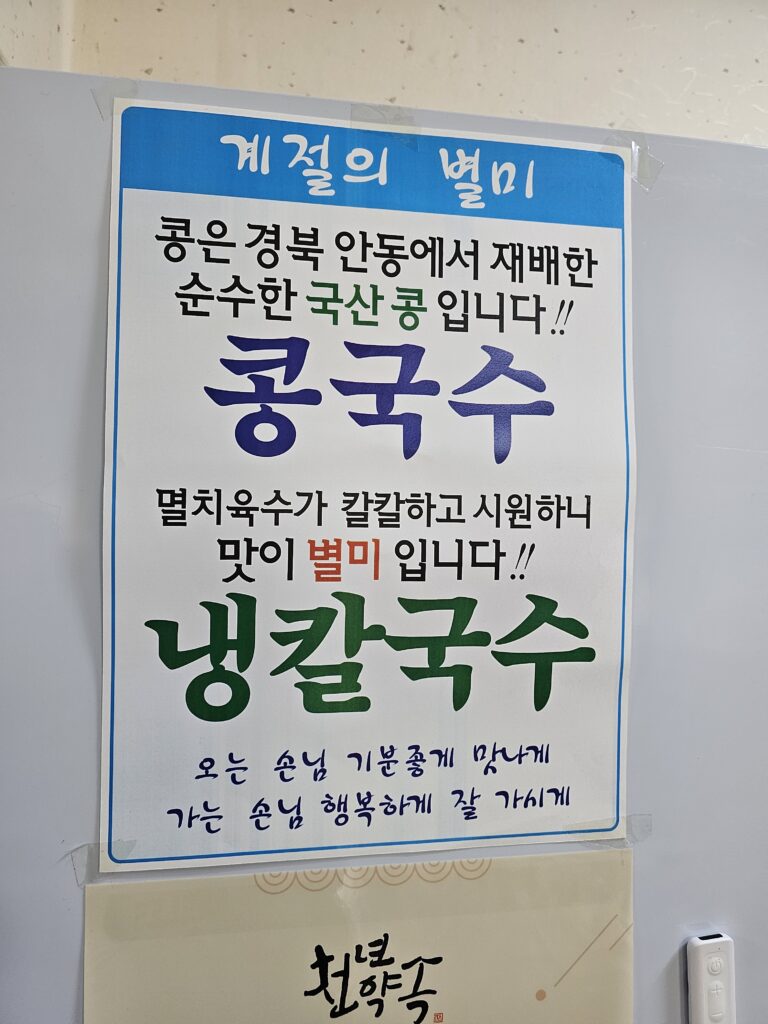
A separate sign introduced kongguksu and cold kalguksu as seasonal specialties.
The kongguksu sign said that domestically grown soybeans from Andong in North Gyeongsang Province were used. The cold kalguksu was described as having a refreshing anchovy broth.
The wall menu used the name “kal-naeng-guksu,” while the sign used “naeng-kalguksu.” Both appeared to refer to the restaurant’s cold kalguksu dish.
I was told that the cold kalguksu was one of the restaurant’s signature items, but I did not order it on this visit. I also did not confirm its exact sales season or whether it was available every day.
Barley Rice and Side Dishes
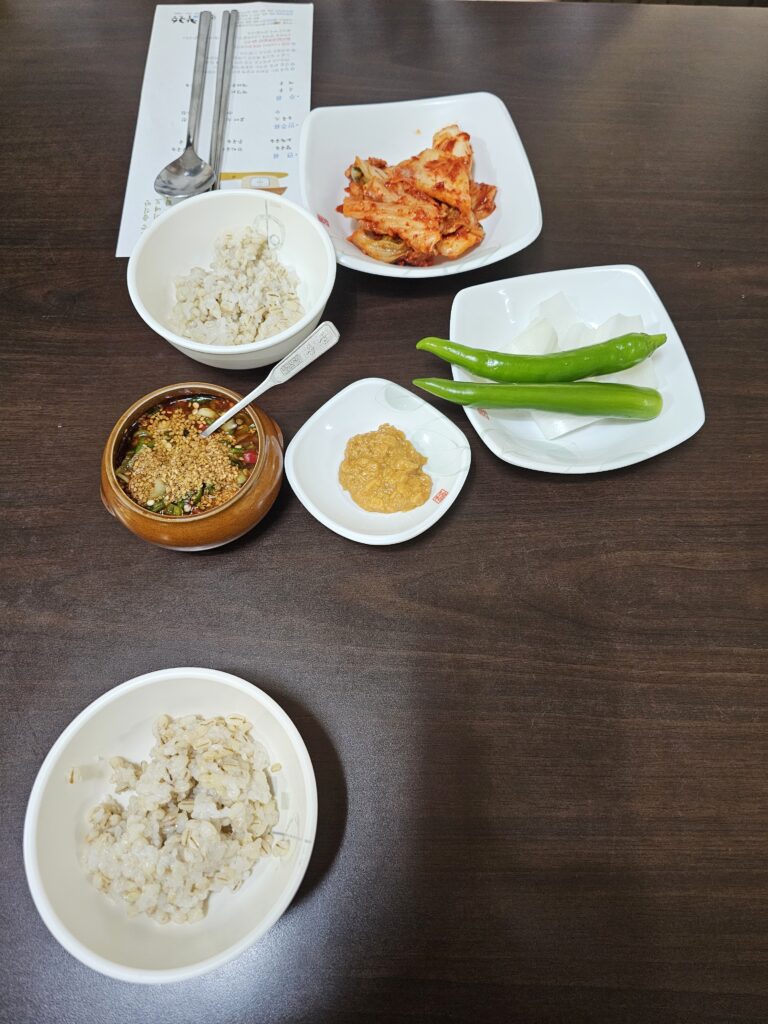
Before the noodles arrived, we received small bowls of barley rice with kimchi, green chili peppers, raw onion, a soybean-paste-style condiment, and a separate seasoned sauce.
In many Korean restaurants, small side dishes are served automatically with the main meal. Here, the barley rice made the set feel more filling than a simple bowl of noodles.
The restaurant’s leaflet stated that the kimchi and fermented condiments were made in-house. To me, the side dishes had the comforting feel of a simple home-style Korean meal rather than an elaborate restaurant spread.
Kalguksu: Clear Broth and Thinner Noodles
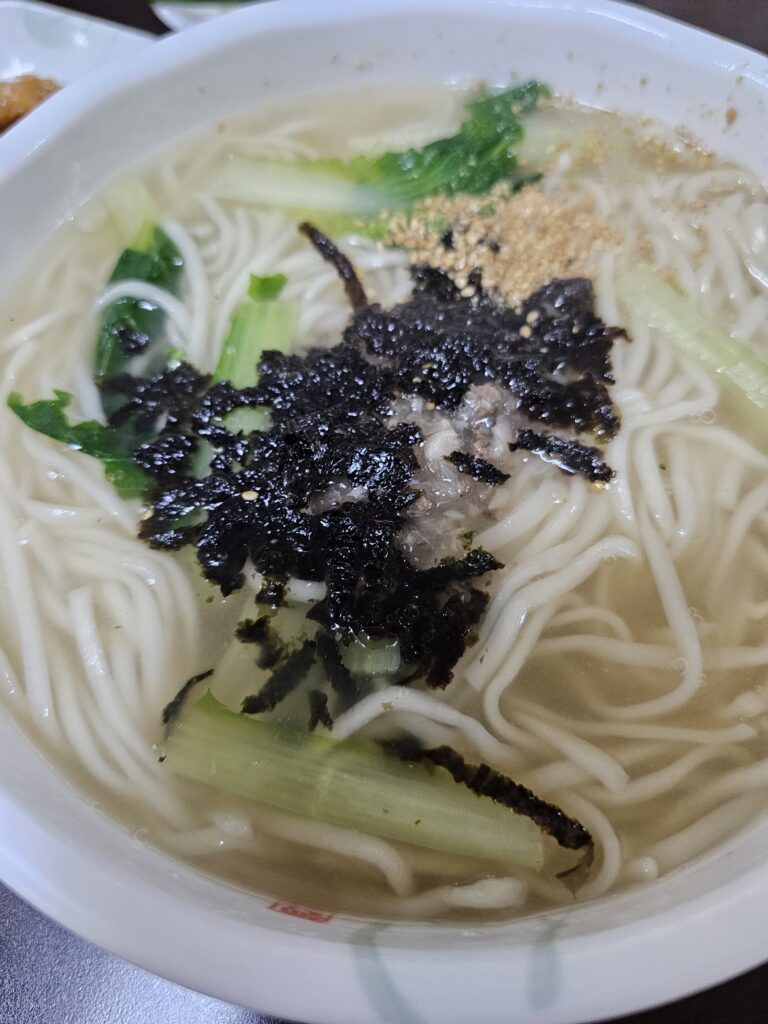
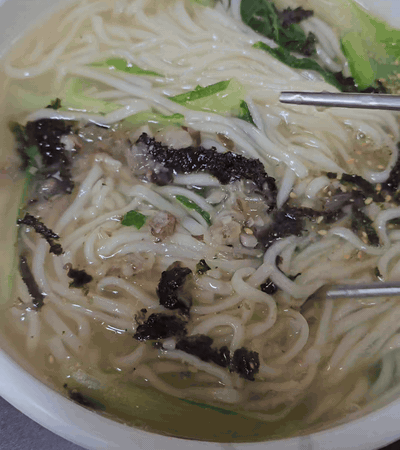
The kalguksu arrived in a pale, clear-looking broth topped with seaweed, sesame seeds, green vegetables, and finely chopped garnish.
The broth tasted especially clean and refreshing to me.
It was light enough that I wondered whether vegetables played a major role in the stock, but I did not confirm the ingredients, so that is only my impression of the flavor.
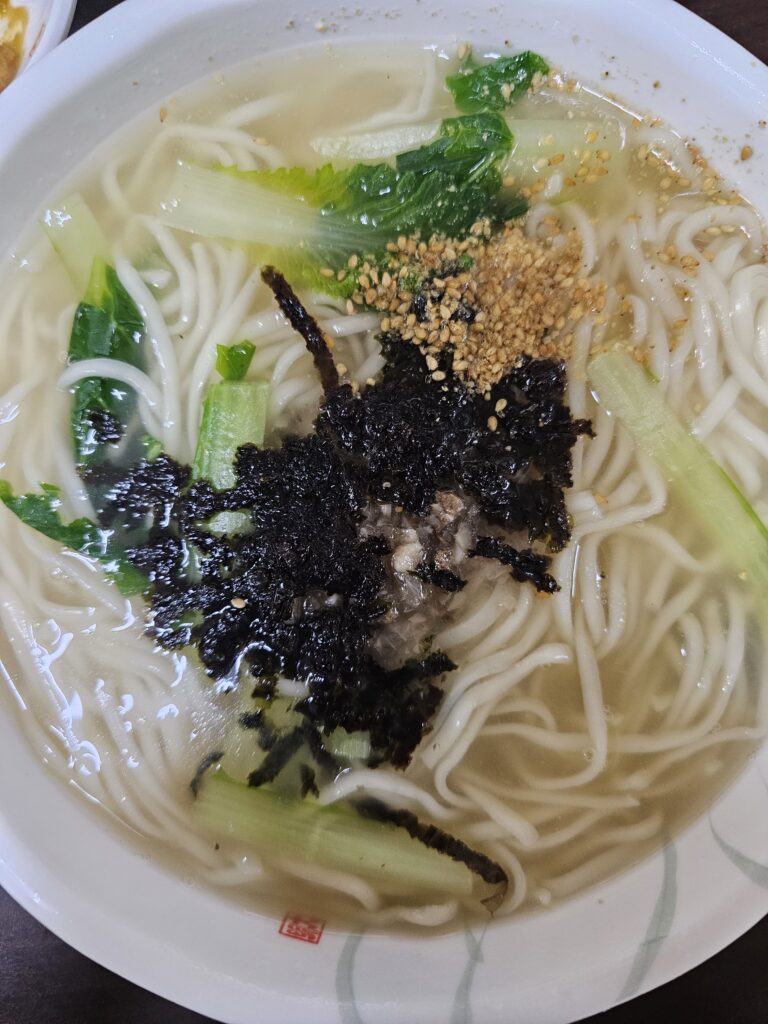
The noodles were one of the most distinctive parts of the bowl.
They were thinner than the wide, heavy kalguksu noodles I often associate with traditional market noodle shops. The texture was soft, and the noodles went down easily with the clear broth.
This was not a thick or heavily seasoned style of kalguksu. It felt more like a simple, comfortable bowl built around a clean broth and smooth noodles.
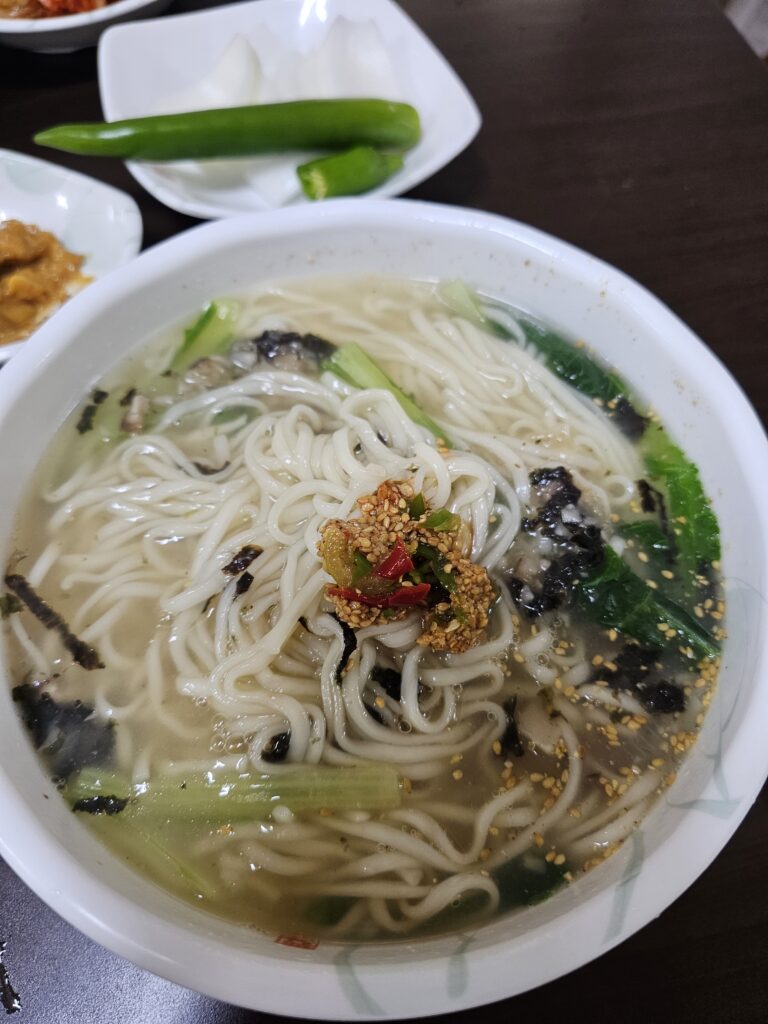
I first tasted the soup without adding the seasoned sauce.
After that, I placed a small amount of the sauce on top of the noodles. It gave the otherwise mild bowl a stronger and more defined flavor.
Because the exact ingredients and spice level of the sauce were not confirmed, it is best to add it gradually rather than mixing everything in at once.
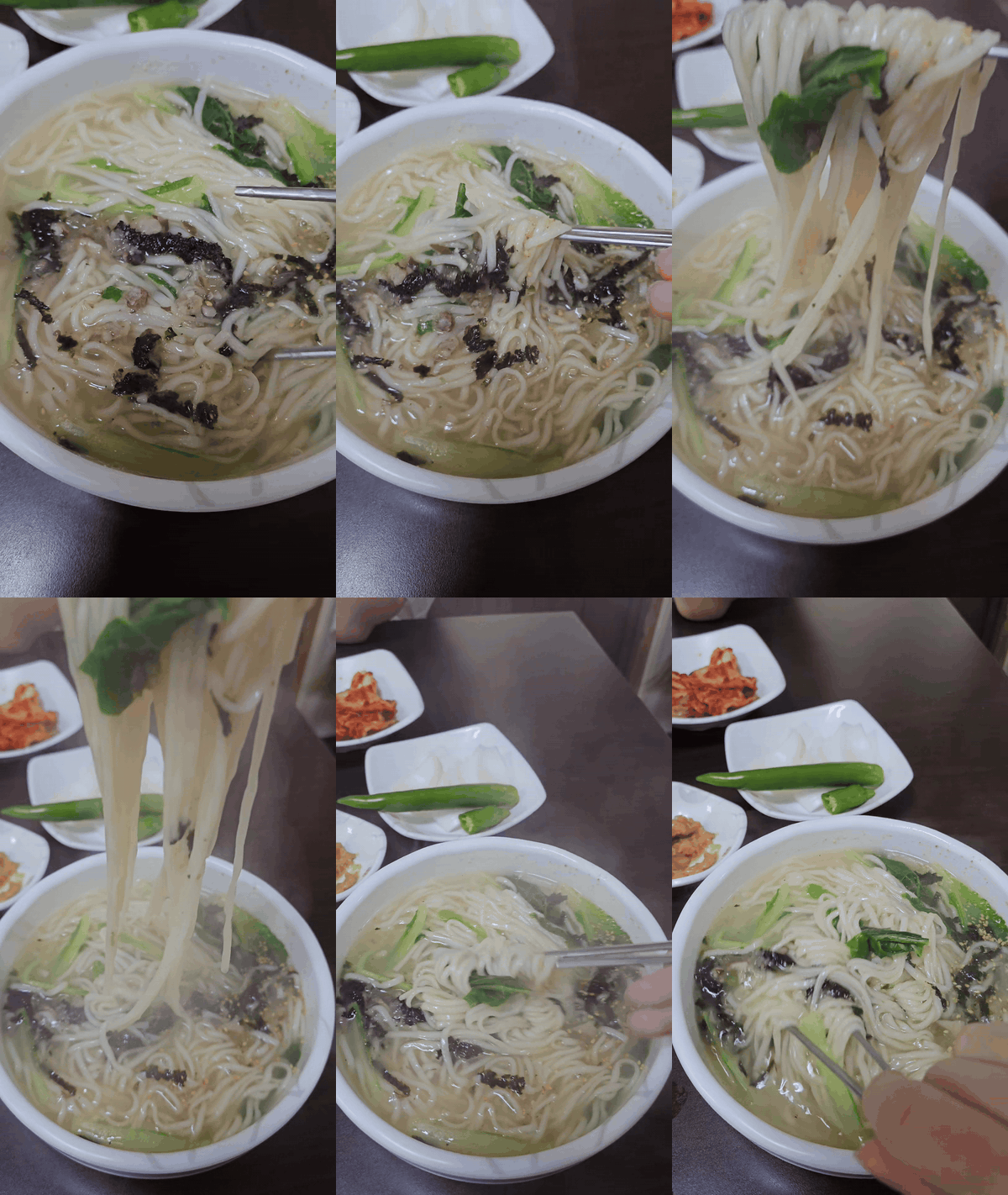
The seaweed and garnish were concentrated near the center, so I gently mixed them into the broth before eating.
The thin noodles separated easily and blended naturally with the toppings.
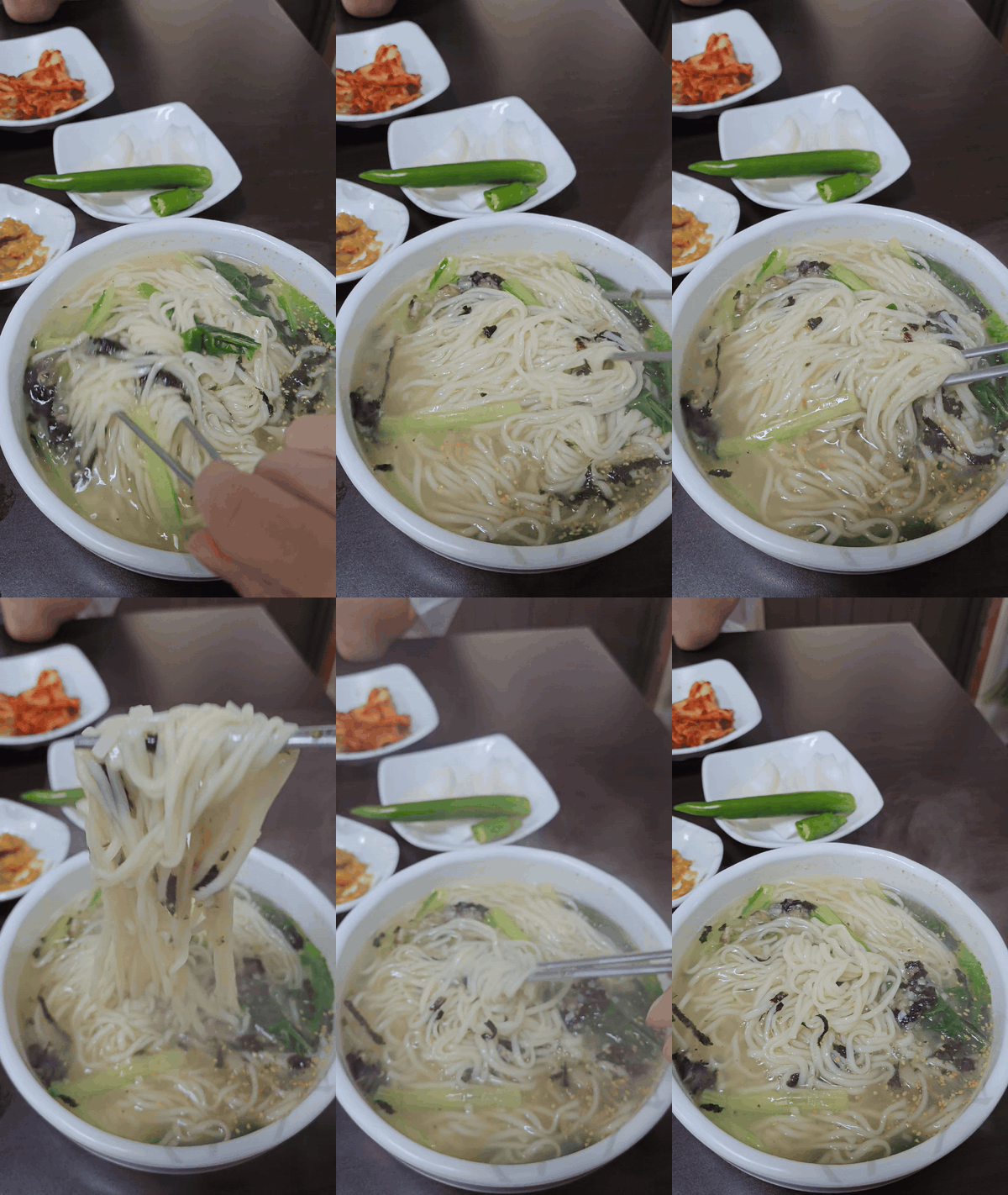
After stirring the bowl more thoroughly, the seaweed and sesame seeds spread throughout the soup.
Together with the barley rice and kimchi on the table, the meal felt simple but filling enough for lunch or dinner.
Janchi Guksu: Thin Noodles with a Strong Savory Aroma
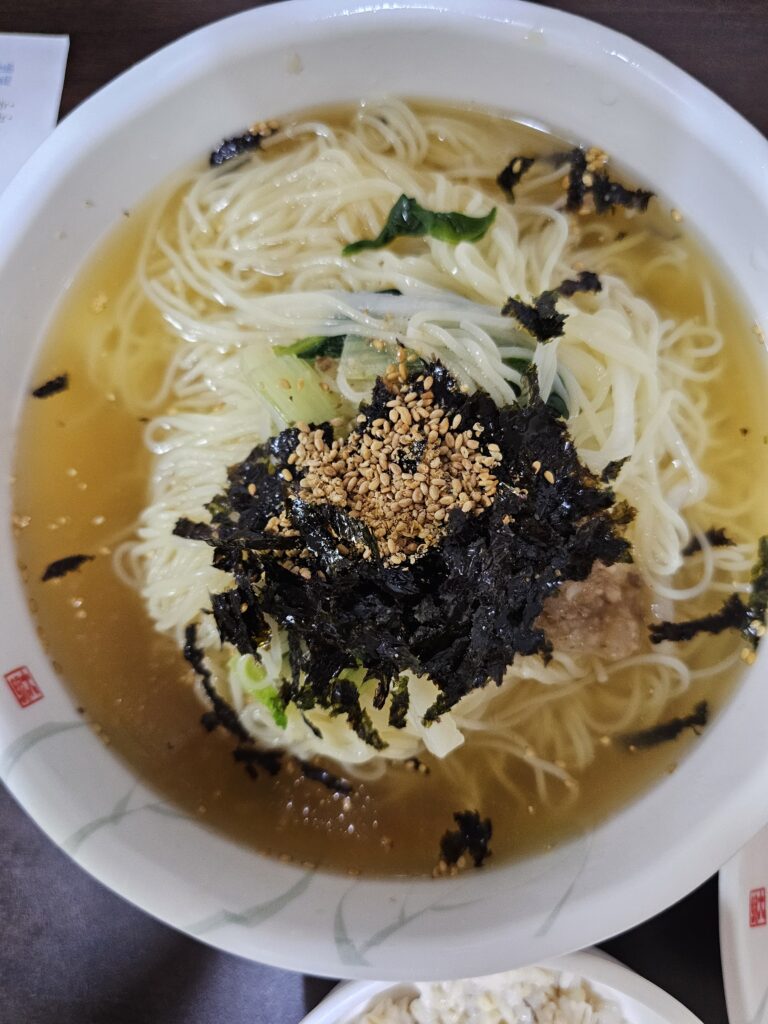
The second dish was janchi guksu.
I asked whether it could be served cool. The bowl was not icy like a fully chilled noodle dish, but it was slightly cool rather than hot.
I do not know whether this temperature option is always available, so ask the staff before ordering if you specifically want a cool bowl.
The broth had a much stronger aroma than I expected. It tasted to me like a deeply flavored anchovy broth, although I did not confirm the stock ingredients with the restaurant.
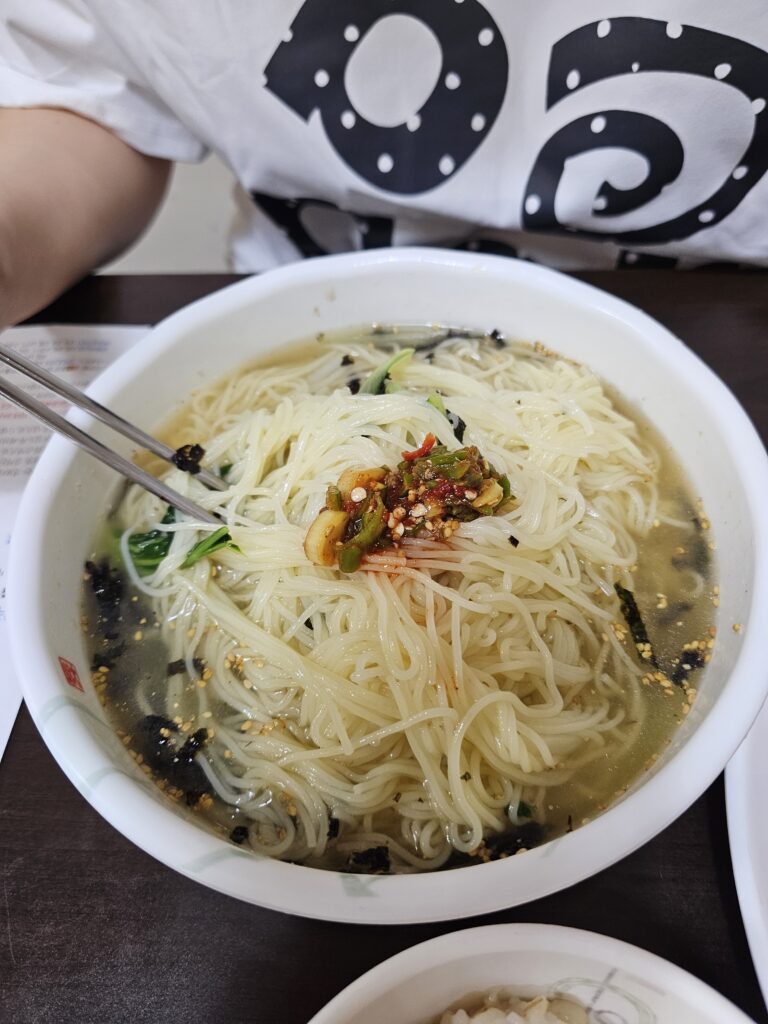
The noodles were very thin, smooth, and easy to lift.
There also appeared to be a generous amount of noodles in the bowl. Compared with the kalguksu, this dish felt more familiar and straightforward, with the broth making the strongest impression.
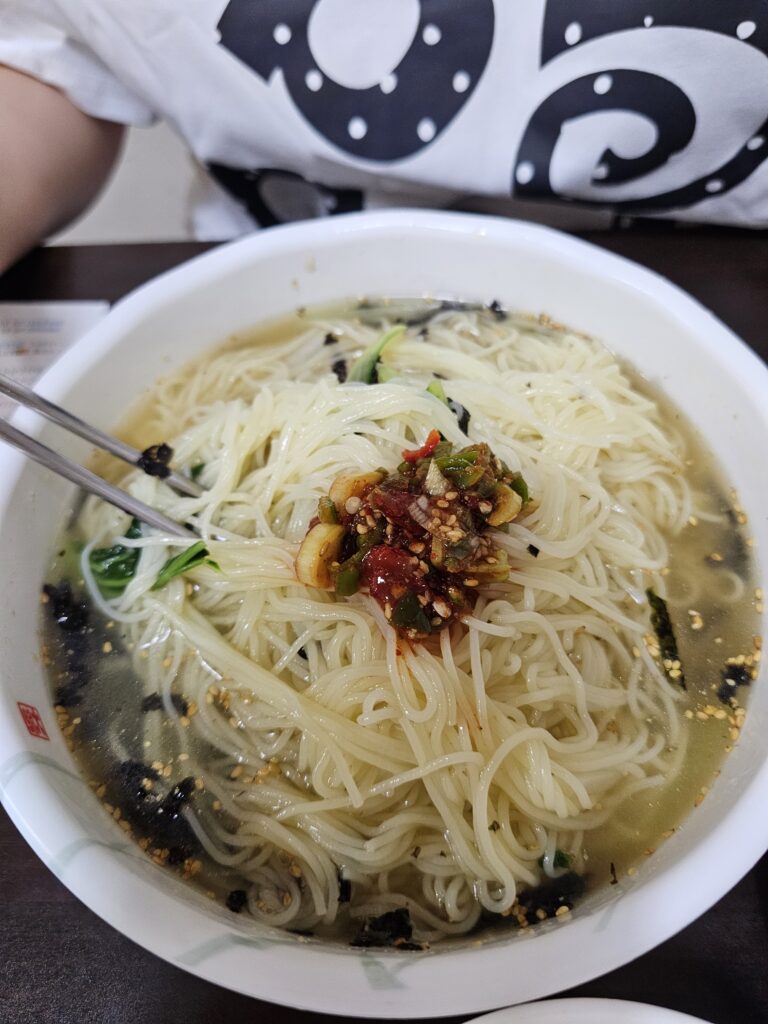
As with the kalguksu, I first tasted the broth on its own and then added some of the seasoned sauce.
Adding the sauce changed the balance of the bowl and gave the broth a more pronounced flavor. I preferred adding it little by little so that the original broth remained noticeable.
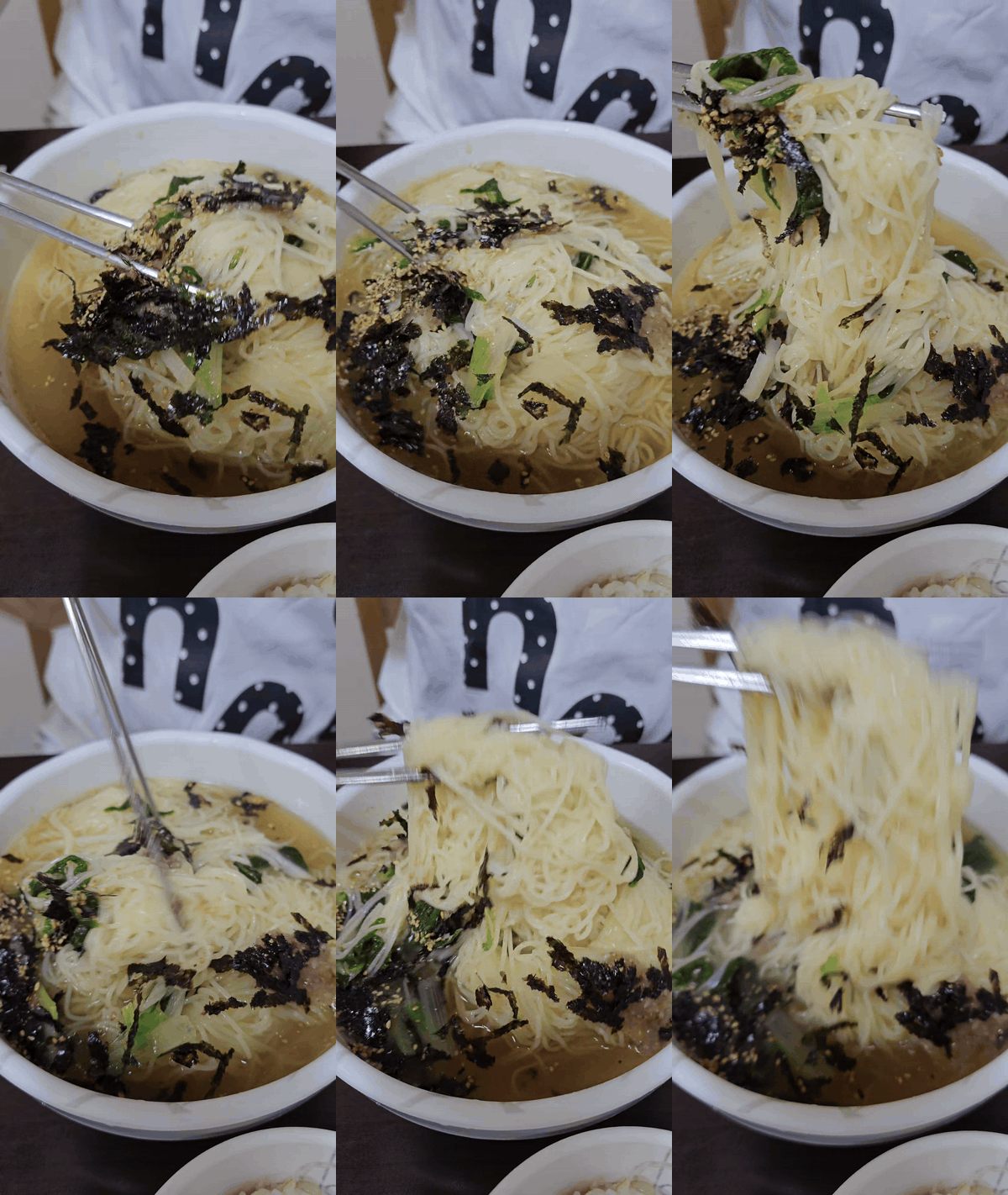
The thin noodles picked up pieces of seaweed and green vegetables as I lifted them.
The combination of smooth noodles and a strongly savory broth made this feel like a classic, satisfying bowl of janchi guksu.
What Foreign Visitors Should Know
This is a local restaurant, not a tourist-oriented dining space
The exterior is old and understated, while the interior is larger and busier than it first appears.
The lively atmosphere may feel noisy during busy periods, but that is part of the everyday neighborhood character of the restaurant.
Korean menu names may not be translated
The menu shown during my visit was written in Korean. It may help to save the Korean names of the dishes you want:
- Kalguksu: 칼국수
- Janchi guksu: 잔치국수
- Cold kalguksu: 칼냉국수 or 냉칼국수
- Kongguksu: 콩국수
- Bibim guksu: 비빔국수
- Pork platter: 돼지고기
- Pajeon: 파전
English-language service was not confirmed.
Barley rice comes before the noodles
A small serving of barley rice was included with the noodle order during my visit. This is not a separate full rice meal, but it makes the meal more substantial.
Parking requires caution
Do not rely on unmarked spaces in the surrounding alley. Check whether parking is legally permitted before leaving your car.
The price is reasonable, but not the cheapest market-style noodle meal
I often eat noodles at traditional markets such as Seomun Market, Chilseong Market, and Daemyeong Market, where some bowls can still cost around 6,000 KRW.
Compared with those market meals, 8,000 KRW for kalguksu did not feel exceptionally cheap.
However, the included barley rice and the restaurant’s emphasis on house-made kimchi and fermented condiments made the price easier to understand.
Final Recommendation
Halmae Kalguksu is a good option for travelers, foreign residents, or local visitors who want to try an everyday Korean noodle restaurant in Daegu rather than a carefully designed tourist venue.
The kalguksu stood out for its clear, refreshing broth and thinner-than-expected noodles. The janchi guksu had a stronger savory aroma and tasted more robust.
I would return, especially to try the cold kalguksu that was presented as a specialty. The pork and octopus dishes also appeared on the menu, and I would be interested in trying them on another visit.
For a casual local meal in Daegu’s Nam-gu district, especially if you enjoy simple Korean noodles, this is a place worth keeping in mind.
[FAQ]
Q1. What is kalguksu?
A1. Kalguksu is a Korean wheat noodle soup traditionally associated with knife-cut noodles. The thickness of the noodles and style of broth vary by restaurant. At Halmae Kalguksu, the noodles were thinner and softer than many broad market-style kalguksu noodles.
Q2. What is janchi guksu?
A2. Janchi guksu is a Korean noodle dish made with thin wheat noodles in a light savory broth. Anchovy-based broth is common. The version I tried had a strong savory aroma that tasted like anchovy broth to me, although the exact recipe was not confirmed.
Q3. How much did the noodles cost?
A3. At the time of my May 2026 visit, kalguksu was 8,000 KRW and janchi guksu was 7,000 KRW. Prices may have changed, so check the latest menu before visiting.
Q4. Is parking easy at Halmae Kalguksu?
A4. Parking was not clearly arranged. The restaurant is located inside a neighborhood alley, and nearby empty spaces may not be legal parking spaces. Check signs carefully or use a confirmed parking area.
Q5. What are the opening hours?
A5. The hours recorded during my visit were 11:00–21:00 for weekdays and weekends, with Sunday listed as the regular holiday. A printed leaflet also mentioned closure on public holidays. Confirm the latest hours before visiting.
Plan your own Korean food adventure
🌶️ Test your Korean spice tolerance — find your survival level in 7 questions
🎰 Spin the Korean Food Roulette — let the wheel pick your next meal
🍀 Draw Korean Lotto 6/45 numbers — lucky picks in official ball colors