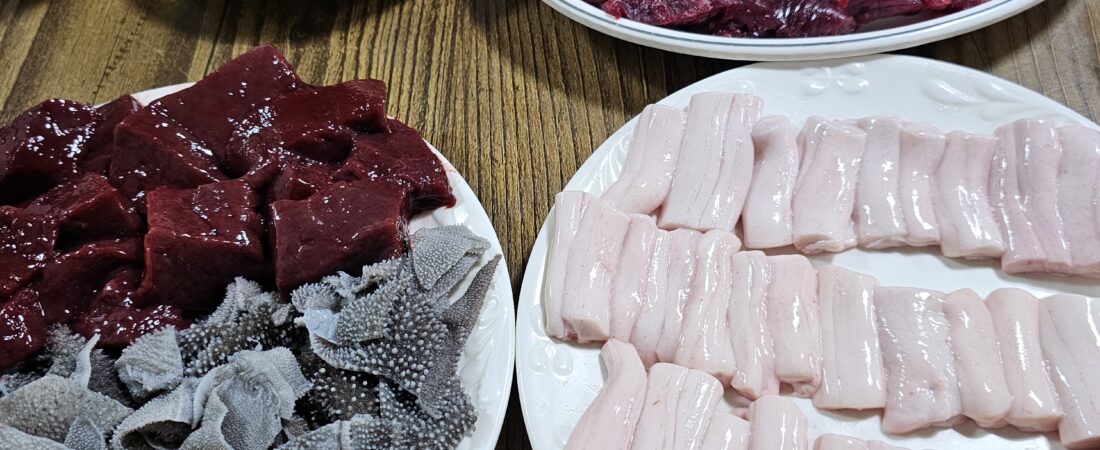
Trying Daegu-Style Raw Beef at Neoguri Sikdang
Neoguri Sikdang is a local restaurant in Nam-gu, Daegu, where I tried mungtigi, one of Daegu’s 10 signature foods. Mungtigi is a regional Korean raw beef dish known for its firm, springy, and chewy texture.
For international visitors, mungtigi is more than simply another raw beef dish. It is closely connected to Daegu’s local food culture, alongside dishes such as makchang, napjak mandu, and spicy jjimgalbi.
I visited on April 17, 2026, and paid for the meal myself. This guide covers what mungtigi is, how it differs from other Korean raw beef dishes, what I ate, and the practical information I recorded during my visit.
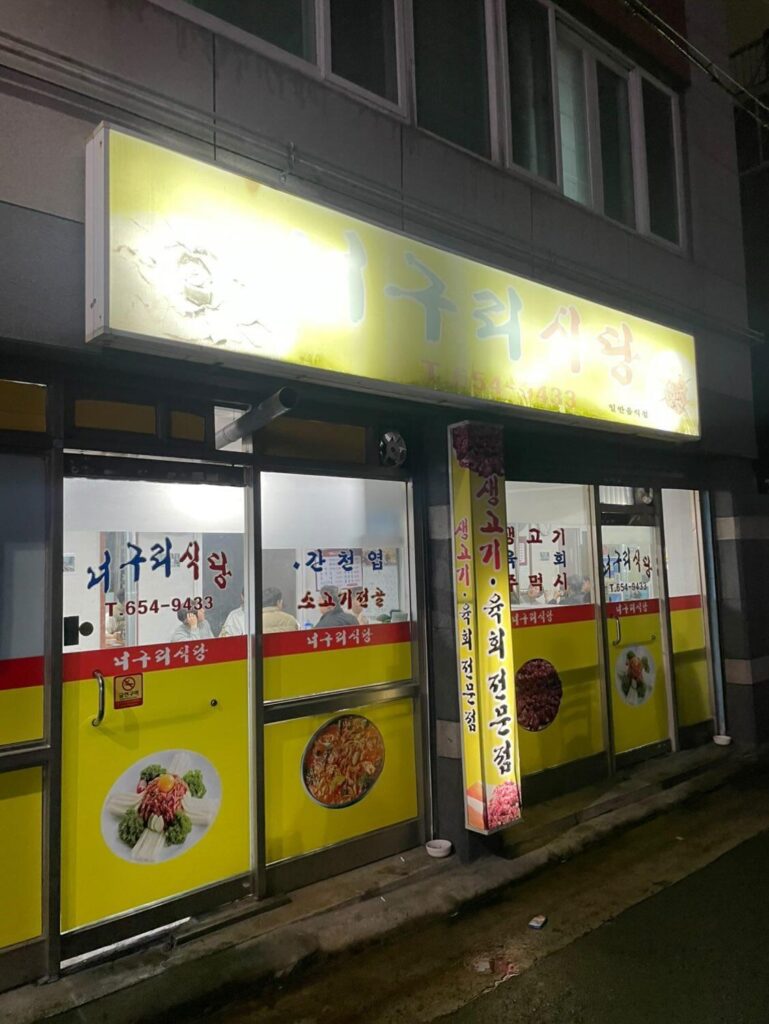
The restaurant is located at 5-2 Seongdang-ro 34-gil, Nam-gu, Daegu. Neoguri Sikdang(너구리식당)
I arrived after the surroundings had become dark, and the bright yellow Neoguri Sikdang sign was easy to notice in the alley. The exterior looked simple and well established rather than polished or modern.
The entrance also displayed photos and Korean text for raw beef, yukhoe, liver and tripe, and beef hot pot, immediately showing that this was a restaurant focused on beef dishes.
What Is Mungtigi?
Mungtigi is a Daegu-style dish made with pieces of very fresh raw beef.
The Korea Tourism Organization describes traditional mungtigi as using beef butchered less than 24 hours earlier. It is valued for a savory beef flavor and a tender but distinctly chewy texture.
That description explains the traditional character of the dish. However, I did not independently verify the exact slaughter or delivery time of the beef served at Neoguri Sikdang.
The name is associated with the idea of cutting meat into large or chunky pieces. Instead of being minced like Western-style beef tartare, mungtigi is served as visible slices or pieces that retain a firm bite.
For many first-time visitors, the texture is the most surprising part. It can feel springy, dense, slightly sticky, and much chewier than raw fish sashimi.
Mungtigi, Yuksashimi, and Yukhoe: What Is the Difference?
These terms can be confusing when you first see them on a Korean menu.
Yuksashimi is a general expression for sliced raw beef. Mungtigi belongs to the same broad category but usually refers more specifically to the thick-cut, chewy raw beef style associated with Daegu.
Yukhoe is another Korean raw beef dish, but it is commonly served in thinner strips with seasoning. Mungtigi places more emphasis on the natural beef flavor, substantial pieces, and resilient texture.
The exact cuts, thickness, seasoning, and handling methods can vary by restaurant. It would therefore be misleading to say that all yuksashimi is aged or that every restaurant prepares mungtigi in one identical way.
You may also see videos in which someone turns a plate of mungtigi upside down and the meat remains attached to the plate. This can demonstrate its naturally tacky texture, but it is not an official test of freshness or food safety.
Mungtigi may appear deep red or purplish. However, beef color changes according to its exposure to oxygen, so color alone should not be used to decide whether raw meat is fresh or safe.
Inside the Restaurant
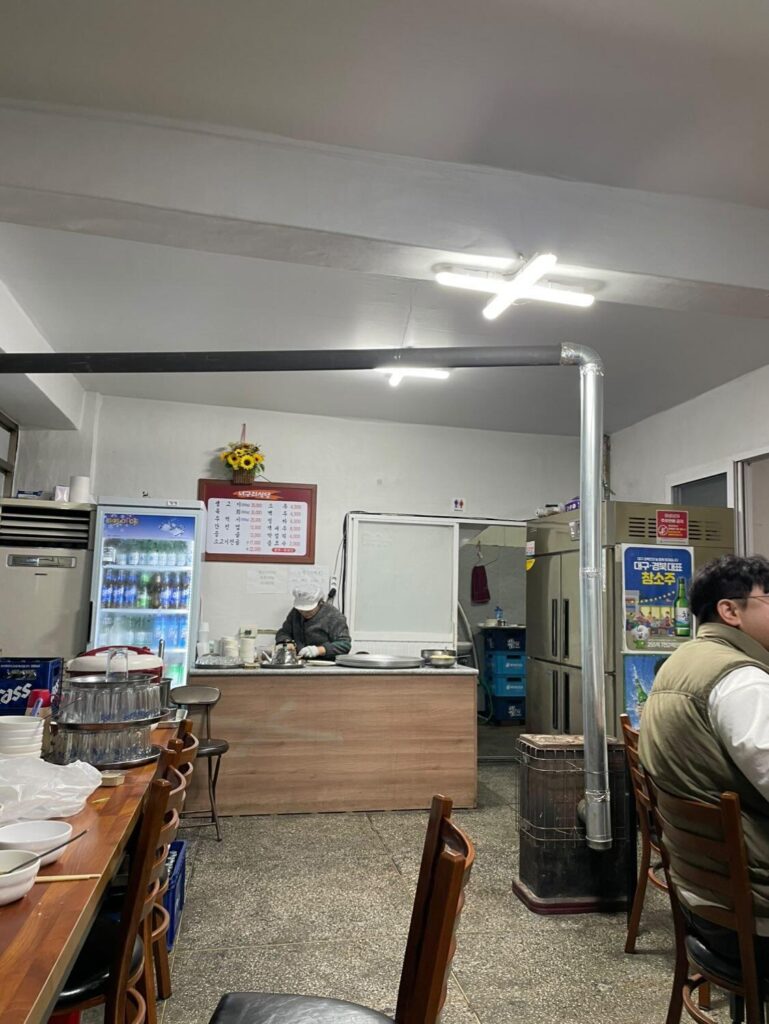
I could not photograph the entire dining room because other customers were present.
The restaurant had wooden tables and chairs, a heater with a visible pipe, refrigerators, and a compact food preparation area. I could also see a staff member slicing the raw beef behind the counter.
There were regular table seats as well as separate rooms, making the restaurant suitable for a group meal.
The room was busy and lively, with many older local customers. I personally enjoy this type of noisy, old-school Korean restaurant atmosphere because it feels very different from a carefully designed tourist restaurant.
The staff members were also friendly during my visit.
Quick Visitor Information
Address:
Neoguri Sikdang(너구리식당) , 5-2 Seongdang-ro 34-gil, Nam-gu, Daegu
Visit date:
April 17, 2026
Weekday hours observed at the time of my visit:
3:00 p.m.–11:00 p.m.
Weekend hours observed at the time of my visit:
2:00 p.m.–11:00 p.m.
Regular closing day:
Not confirmed
Break time:
Not confirmed
Last order:
Not confirmed
Public holiday hours:
Not confirmed
Telephone:
053-654-9433 within Korea
The restaurant may close earlier when its fresh meat is sold out. I was told that it could close as early as 7:00 or 8:00 p.m. depending on availability.
Because the schedule can be flexible, calling before visiting is the safest option. Ask whether mungtigi or fresh raw beef is still available before making the trip.
Parking directly in front of the restaurant may be possible when a space is available. Otherwise, you will need to find another parking option nearby.
Since many customers visit to eat raw beef with alcohol, arriving without a car may be more convenient.
Menu and Prices at the Time of My Visit
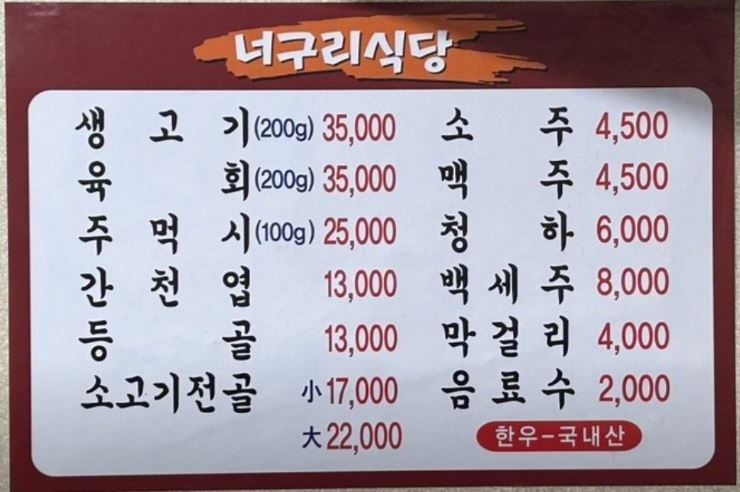
The menu board showed the following prices during my visit:
- Raw beef, 200 g: 35,000 KRW
- Yukhoe, 200 g: 35,000 KRW
- Jumeoksi, 100 g: 25,000 KRW
- Raw liver and cheon-yeop: 13,000 KRW
- Sodeungol: 13,000 KRW
- Beef hot pot, small: 17,000 KRW
- Beef hot pot, large: 22,000 KRW
Jumeoksi was listed on the menu, but I did not order it during this visit.
The dishes I tried were mungtigi, raw liver and cheon-yeop, sodeungol, and beef hot pot.
Prices and menu availability may have changed since April 2026, so check the latest information if exact pricing is important.
Our Full Table of Raw Beef Dishes
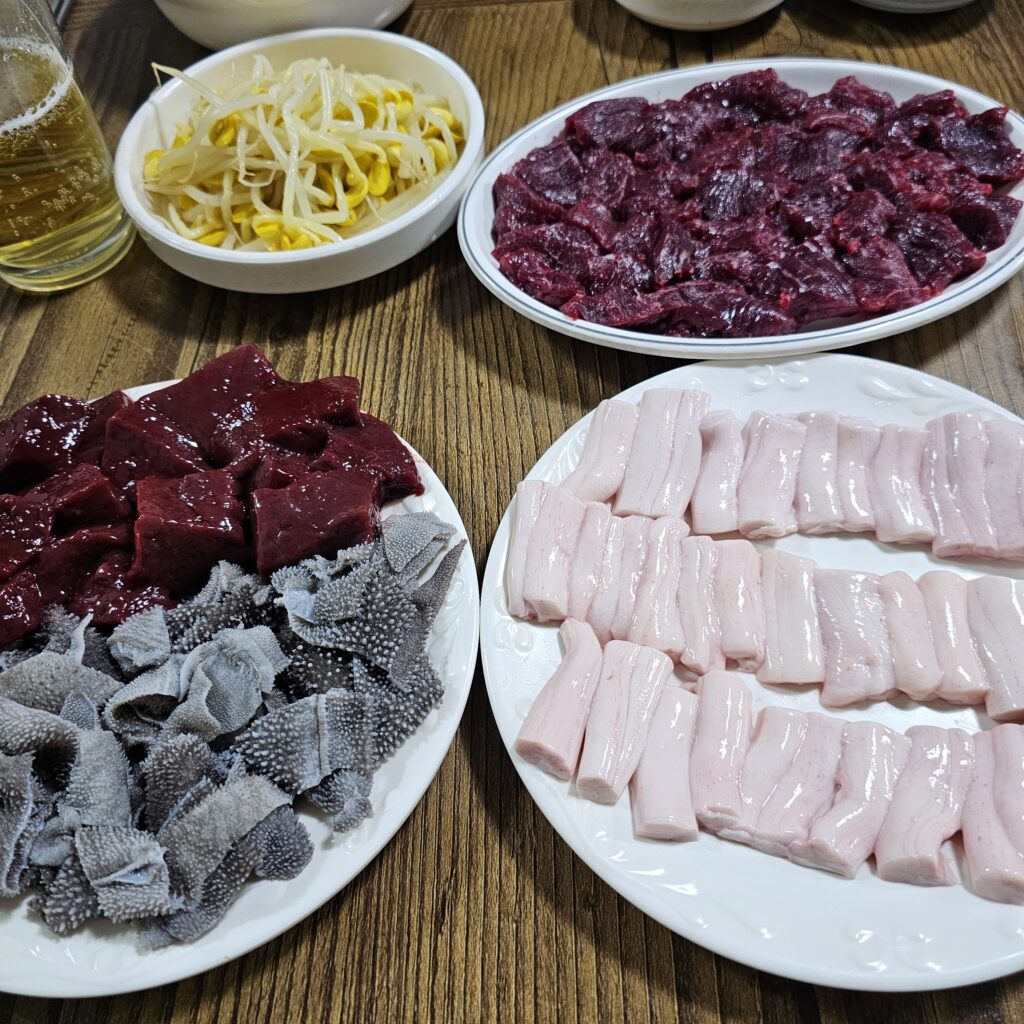
When everything arrived, the different cuts and textures made the table look especially interesting.
The mungtigi, liver, cheon-yeop, and sodeungol each had a visibly different shape and appearance. This was not simply a meal with one plate of raw beef. It was an opportunity to compare several beef delicacies with very different textures.
Visitors who are not accustomed to Korean raw organ dishes may find some of these menu items unfamiliar, so there is no need to order all of them on a first visit.
Mungtigi is the easiest place to begin if your main goal is to try Daegu’s signature raw beef.
Raw Liver and Cheon-yeop
The raw liver was in very good condition during my visit.
Poor-quality liver can feel loose or overly soft, but this liver was springy and had a slightly crisp bite. It also had a pleasantly rich and nutty flavor.
Cheon-yeop is beef omasum, one of the compartments of a cow’s stomach. Its flavor is relatively mild, and I mainly noticed the sesame oil served with it.
The enjoyable part was its texture. It had a firm, crunchy bite that made it more interesting to eat than its mild flavor might suggest.
Raw liver and other uncooked organ meats are not suitable for everyone, so visitors should consider their own comfort level and health before ordering.
Sodeungol Had the Most Unusual Texture
Sodeungol is a beef spinal-cord delicacy.
Its pale pink appearance reminded me a little of jelly, which made it look unexpectedly cute on the plate.
The flavor itself was not especially strong. The main attraction was the texture, which felt jelly-like but also slightly crisp or grainy when chewed.
It is a menu item for adventurous eaters who enjoy comparing unfamiliar textures rather than looking for a strong beef flavor.
The Basic Side Dishes and Garlic Sauce
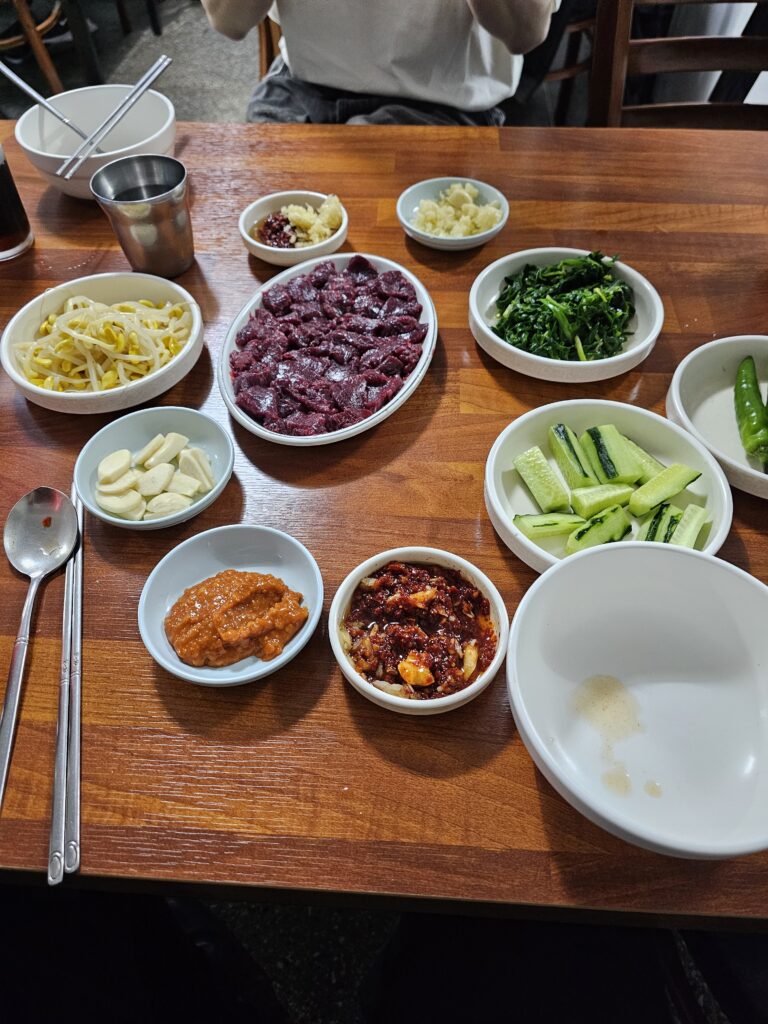
The table also included simple Korean side dishes and vegetables such as seasoned bean sprouts, spinach, cucumber, chili peppers, and raw garlic.
The most important accompaniment for me was the red dipping sauce served with the mungtigi.
It contained a generous amount of minced garlic. I asked for additional garlic and mixed even more into the sauce.
The stronger garlic flavor worked very well with the savory raw beef. Anyone who enjoys garlic may want to try the same combination.
The exact side-dish selection may vary, so this should be treated as the spread served during my visit rather than a guaranteed fixed set.
Why the Mungtigi Was My Favorite
Mungtigi was easily the best dish of the meal and the main reason Neoguri Sikdang remains one of my favorite raw beef restaurants in Daegu.
When raw beef is not trimmed carefully, tough connective tissue can remain in the slices. You may then spend far too long chewing one piece.
That was not a problem here.
The tough parts had been trimmed carefully, leaving a firm and satisfyingly chewy texture rather than an unpleasantly stringy one.
Each piece felt springy and slightly sticky against the mouth, followed by a clean, savory beef flavor. It had the substantial chew that I look for in good Daegu-style mungtigi.
The garlic-heavy dipping sauce made it even better. The raw beef itself was not hidden under strong seasoning, but the sauce added enough intensity to keep every bite interesting.
A Warming Beef Hot Pot After the Raw Dishes
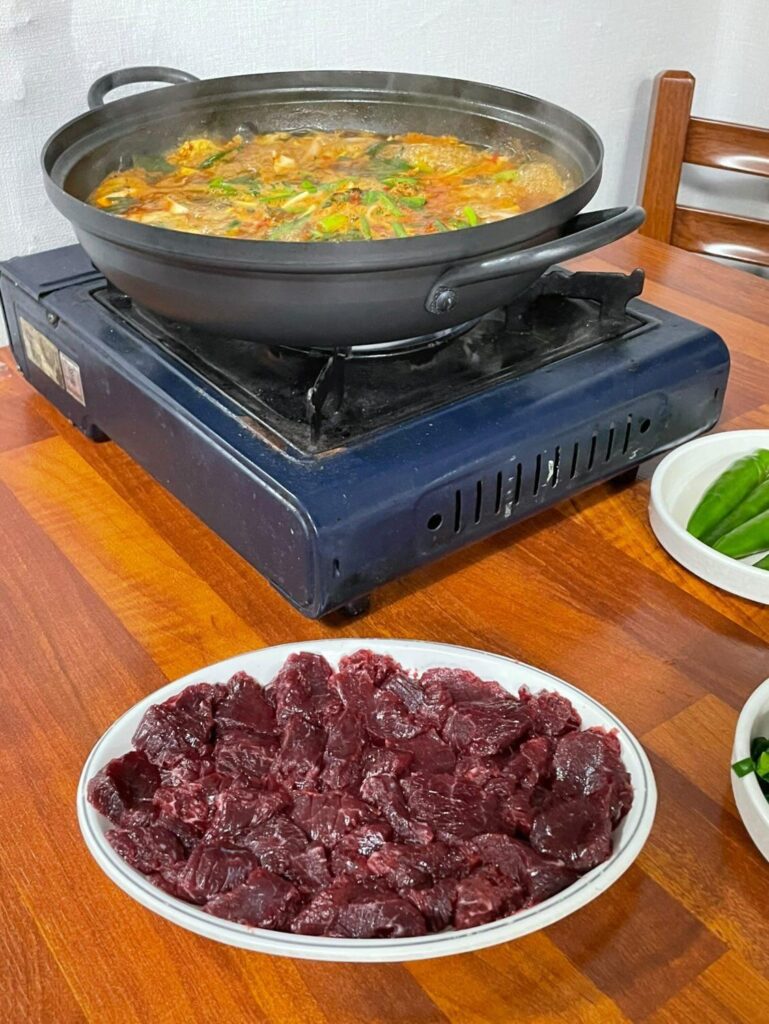
While we were eating the raw beef dishes, the beef hot pot was bubbling on a portable gas burner beside us.
It had a red, warming broth, and we added more minced garlic to this dish as well.
Some time has passed since the visit, so I cannot honestly describe every detail of the broth or seasoning. I do remember that I enjoyed it very much.
The contrast was especially satisfying: cold, chewy raw beef followed by a hot and comforting soup.
For visitors who feel that an entire meal of raw dishes may be too much, adding a cooked hot pot can make the meal feel more balanced and filling.
One More Look at the Mungtigi
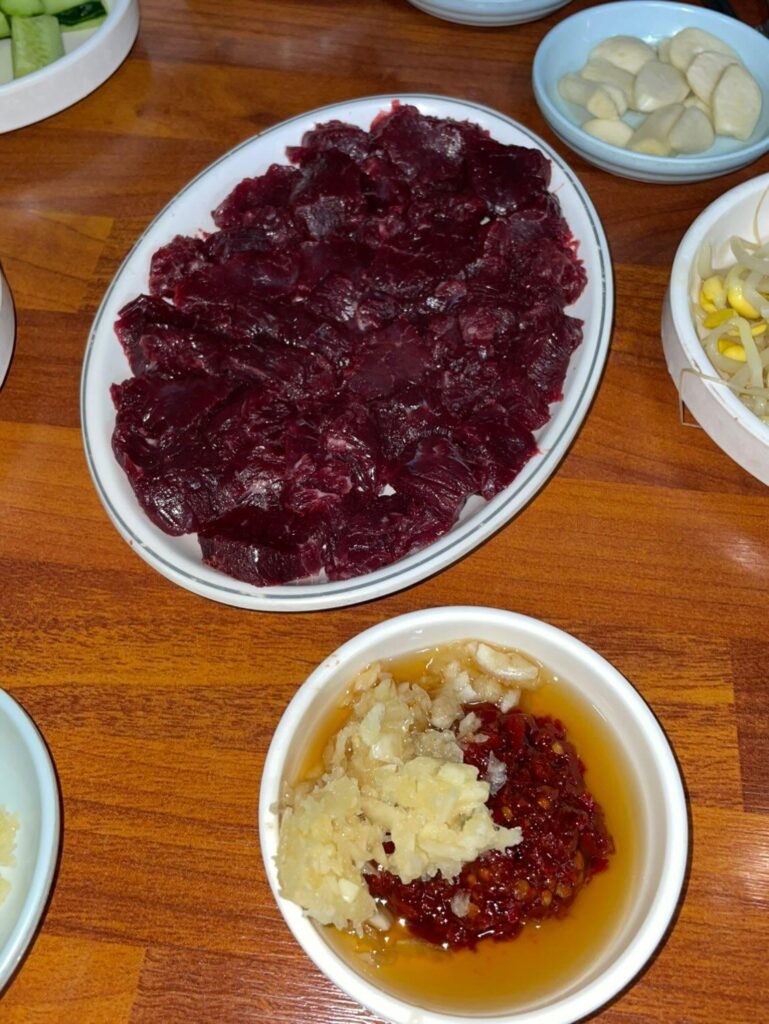
The final photo gives a closer look at the sliced mungtigi and its red garlic sauce.
The grain of the beef is visible, and the minced garlic in the sauce shows why this combination was so memorable for me.
These photos were taken before I began documenting restaurant visits seriously for my blog. I did not record a video, and I have fewer close-up shots than I would normally take now.
Please keep that in mind when viewing the photos. I plan to document texture, preparation, and serving details more carefully in future restaurant guides.
What International Visitors Should Know Before Eating Raw Beef
Mungtigi is served raw, so it carries the general food-safety risks associated with uncooked meat.
Raw or undercooked meat is a higher-risk food choice. Pregnant travelers, young children, adults aged 65 or older, and people with weakened immune systems should consider choosing fully cooked dishes instead.
Color alone is not a reliable safety test. Beef can look purplish before exposure to oxygen and become brighter red after contact with air.
The plate-flipping demonstration sometimes associated with mungtigi is also not proof that the meat is safe. It only shows that the surface has a sticky texture.
When eating any raw meat dish, choose a restaurant you trust and make your decision based on your own health and comfort level.
Is Neoguri Sikdang Worth Visiting?
Neoguri Sikdang is not a polished or modern tourist restaurant.
Its appeal comes from the busy local atmosphere, old-school interior, friendly service, and carefully trimmed mungtigi.
The liver, cheon-yeop, and sodeungol were interesting because of their very different textures, while the beef hot pot gave the meal a warm and filling finish.
The mungtigi was still the clear highlight.
I would recommend this restaurant to travelers who already enjoy raw beef, visitors who want to try a food closely associated with Daegu, and anyone who prefers lively local restaurants over stylish dining rooms.
I would visit again.
Call before going to confirm the hours and ask whether the fresh raw beef is still available.
Plan your own Korean food adventure
🌶️ Test your Korean spice tolerance — find your survival level in 7 questions
🎰 Spin the Korean Food Roulette — let the wheel pick your next meal
🍀 Draw Korean Lotto 6/45 numbers — lucky picks in official ball colors