A Casual Local Meal Inside Seomun Market in Daegu
If you are looking for Daegu traditional market food, Seomun Market is one of the easiest places to start. It is one of Daegu’s most well-known traditional markets, with many local food options, snacks, and casual restaurants inside the market area.
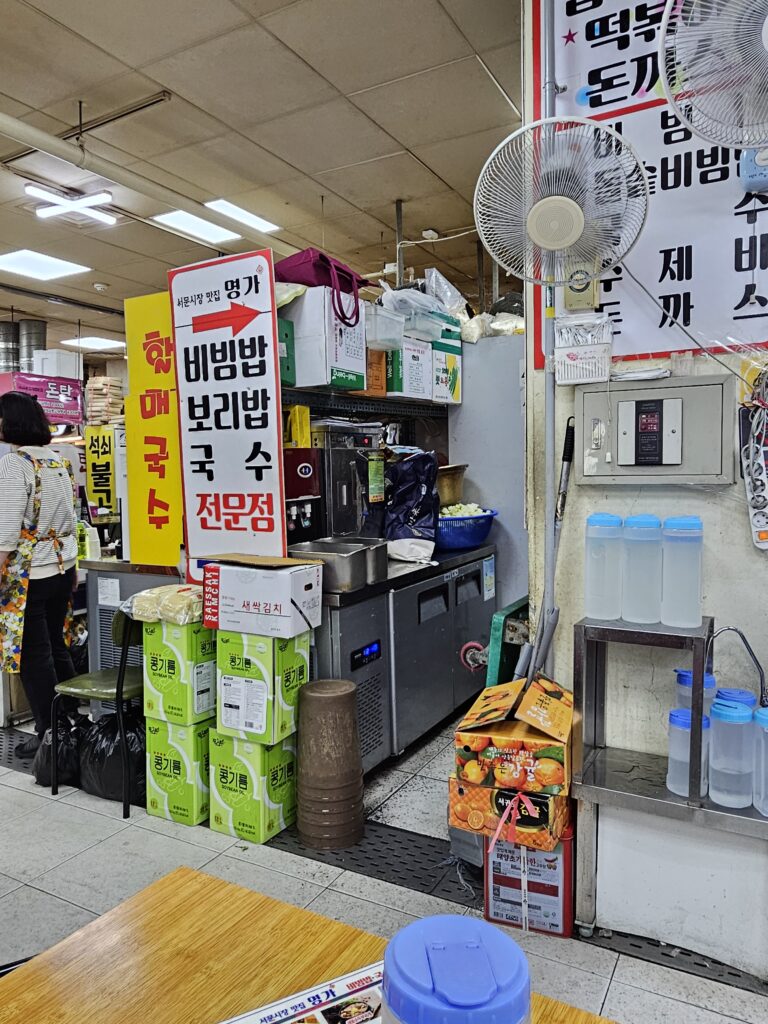
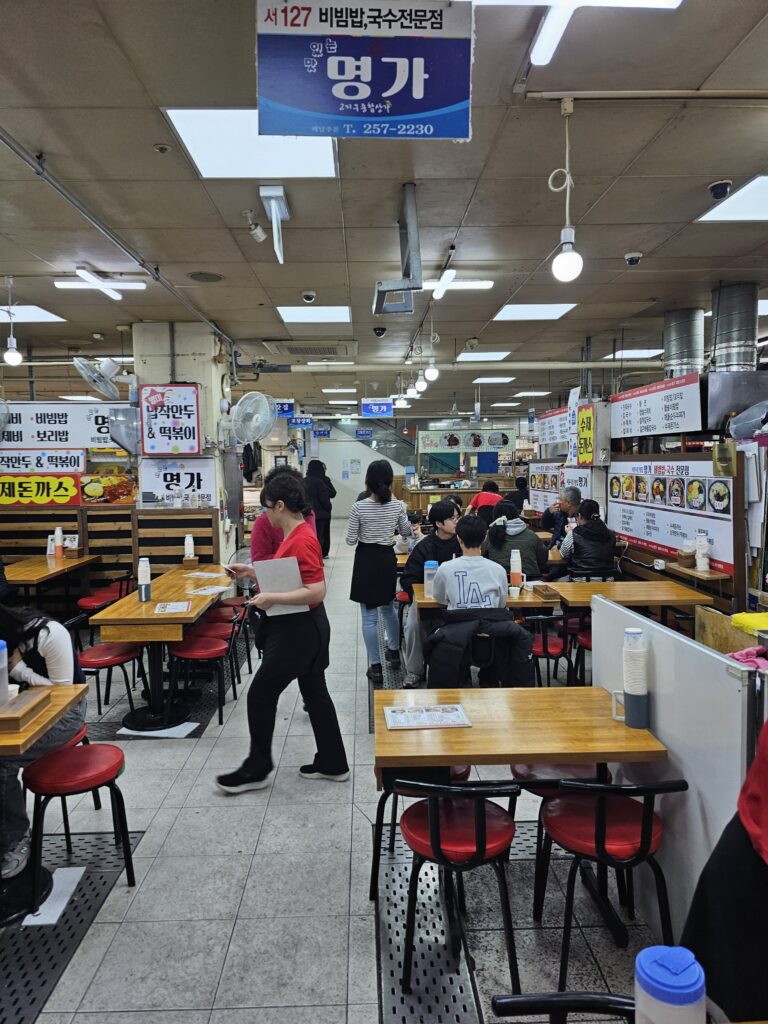
On this visit, I stopped by Myeongga, a casual restaurant located on basement level 1 of Seomun Market District 2.
At first, I thought it would be a simple market-style snack restaurant. But after eating there, I understood why people kept coming in.
It was not a polished or trendy restaurant. It had the busy, casual feeling of a food area inside a traditional market. For me, that was part of the charm. It felt like a comfortable place to sit down, order several familiar Korean dishes, and enjoy a real local meal in Daegu.
Basic Information
Place name: Myeongga
Korean name: 명가
Location: Seomun Market District 2, basement level 1
Address: 25, Keunjang-ro 26-gil, Jung-gu, Daegu, South Korea
Area: Jung-gu, Daegu
Menus I tried: pork cutlet, bibim mandu, janchi guksu, and tteokbokki
This article is based on my visit experience. Details such as opening hours, phone number, delivery availability, and current prices may change, so check the latest information before visiting if those details are important to you.
Prices at the Time of My Visit
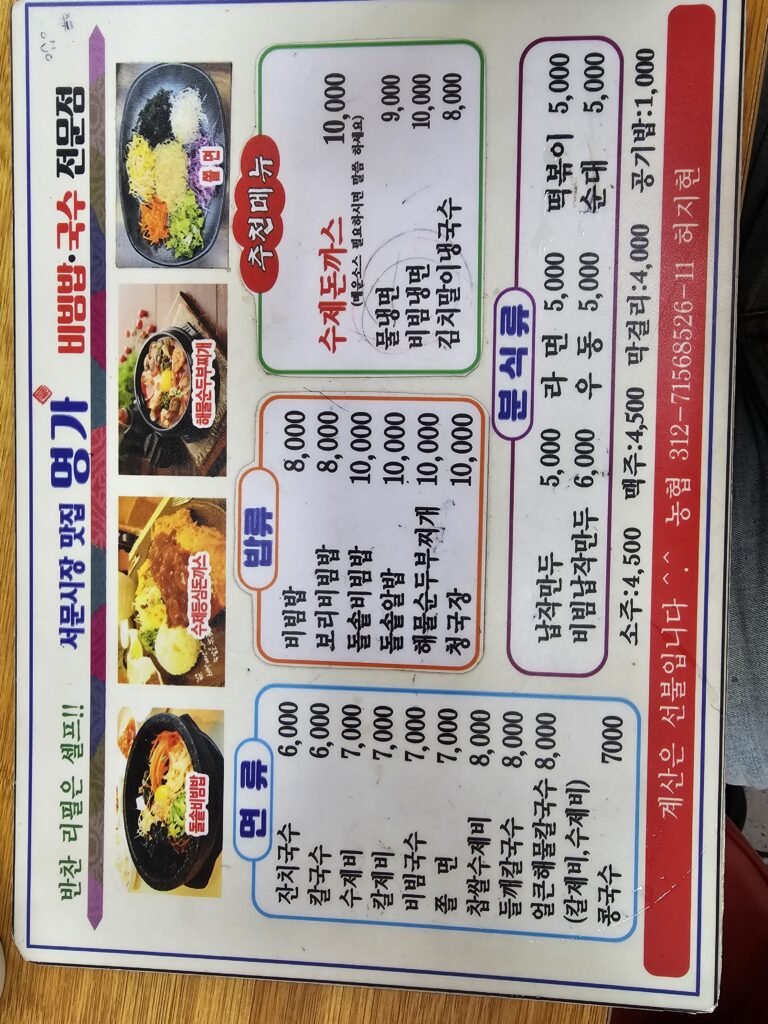
At the time of my visit, the prices were:
- Handmade pork cutlet: 10,000 KRW
- Bibim mandu: 6,000 KRW
- Janchi guksu: 6,000 KRW
- Tteokbokki: 5,000 KRW
Prices can change, but I included them because they help visitors understand the general budget for this kind of meal inside the market.
What Kind of Restaurant Is Myeongga?
Myeongga feels like a local market restaurant rather than a tourist-focused place.
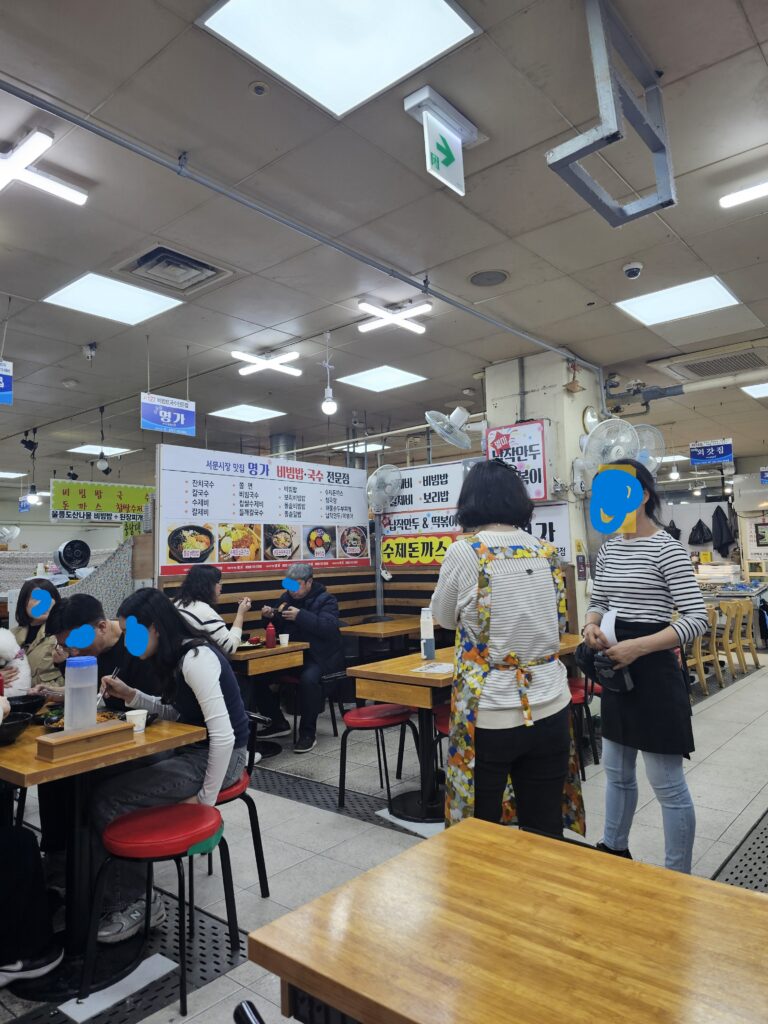
The seating area had simple tables and red stools, and the atmosphere was lively. People were eating quickly, staff were moving around, and the signs around the restaurant showed different casual Korean dishes like bibimbap, barley rice, noodles, dumplings, and tteokbokki.
If you like quiet restaurants with modern interiors, this may not be your style.
But if you want a real local market meal in Daegu, this kind of place can be more interesting than a polished restaurant. It has that everyday Korean market feeling where people come in, eat a filling meal, and continue shopping or exploring the market.
What I Ordered
I tried four dishes:
- Handmade pork cutlet
- Bibim mandu
- Cold janchi guksu
- Tteokbokki
This was a good combination because each dish had a different role. The pork cutlet was crispy and filling, the bibim mandu was tangy and refreshing, the cold noodles helped balance the meal, and the tteokbokki added a chewy spicy-sweet flavor.
Handmade Pork Cutlet: The Most Surprising Dish
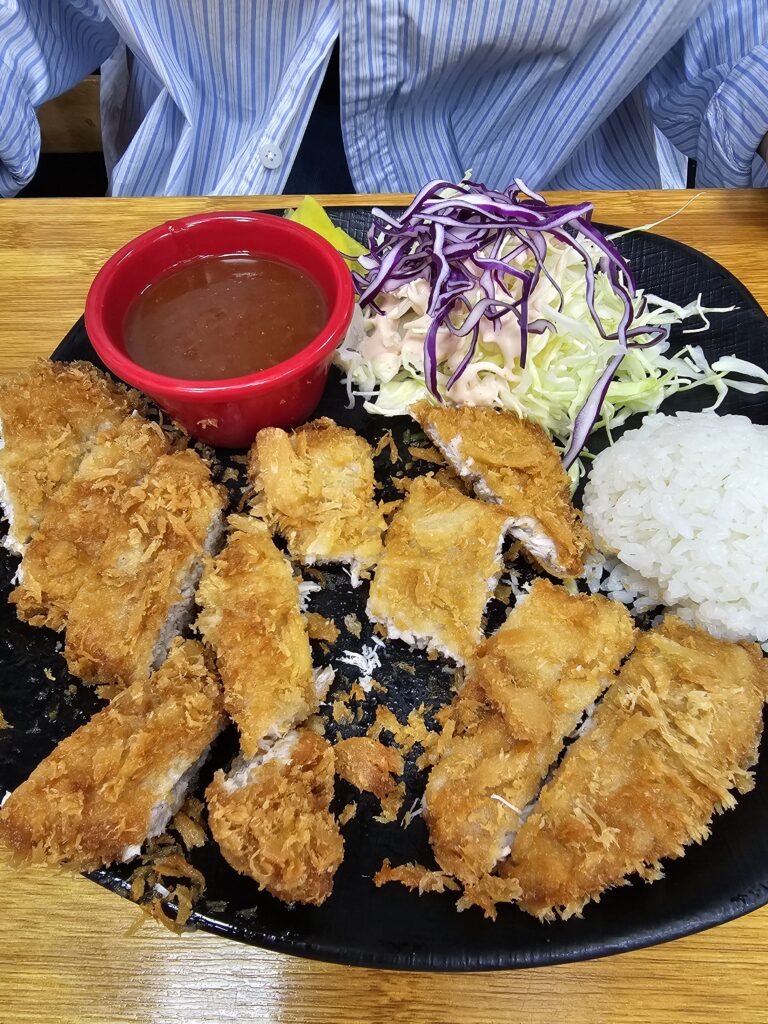
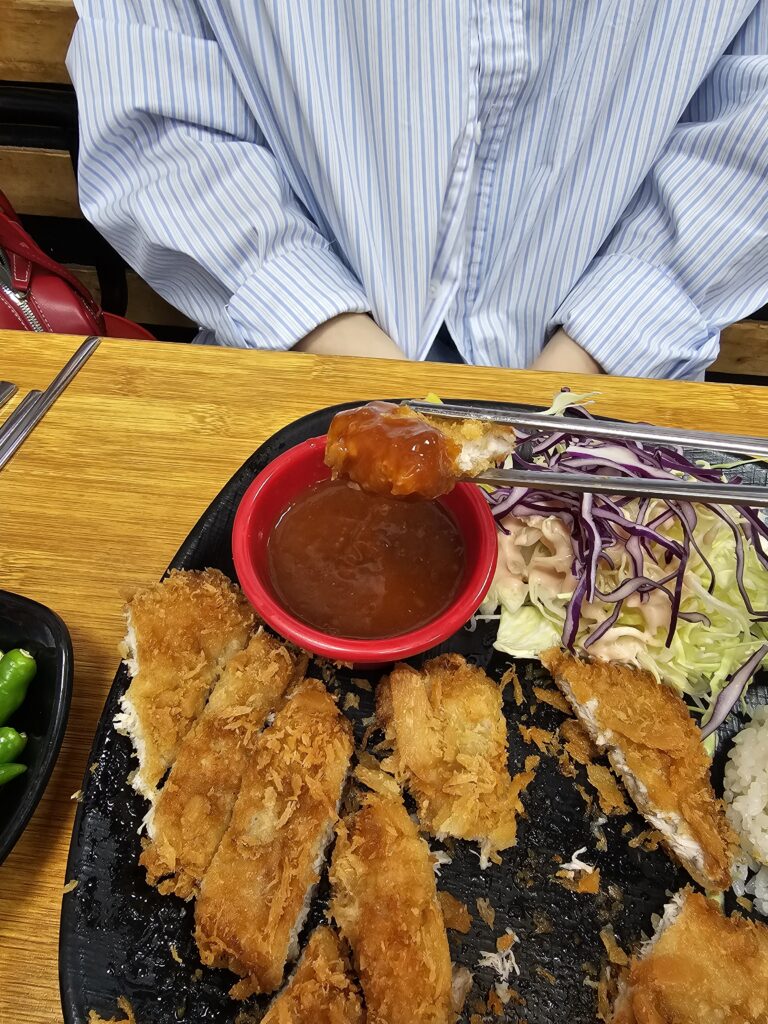
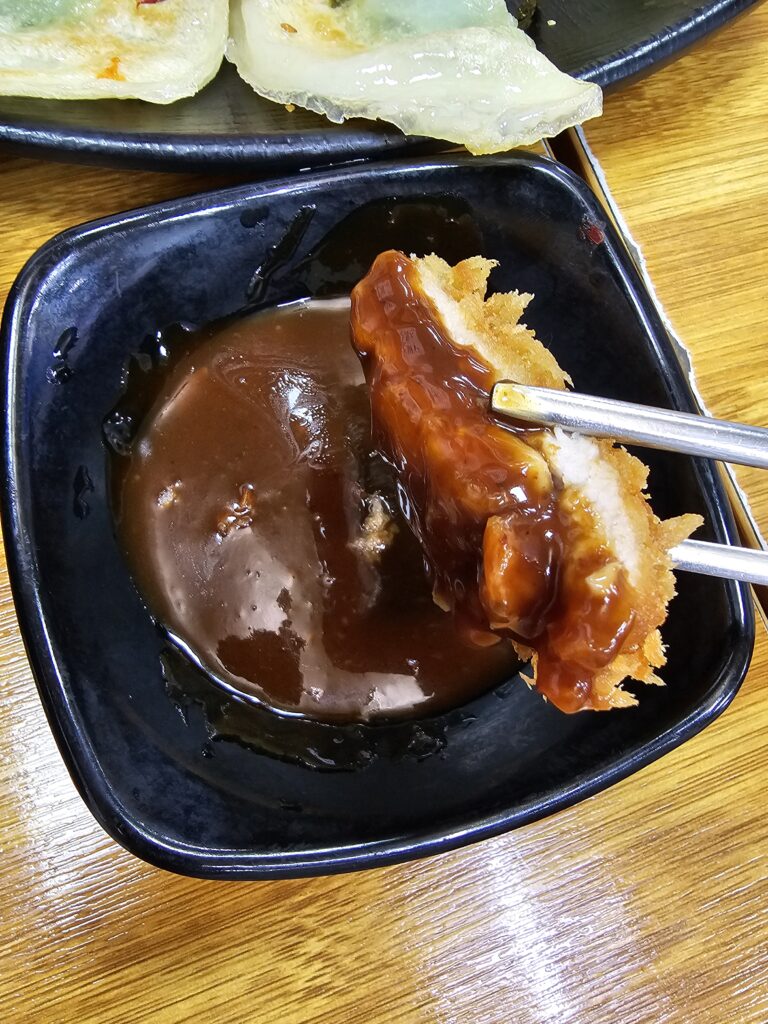
The pork cutlet was honestly the dish that surprised me the most.
Because the restaurant had a casual market-style feeling, I expected the pork cutlet to be just okay. But it was much crispier than I expected.
The meat was thick enough to feel satisfying, but it was not tough. The outside had a good crunch, and the inside was softer than I thought it would be. It did not feel weak compared to a regular pork cutlet restaurant.
The plate came with rice, shredded cabbage, and sauce. There were also two types of sauce: a classic rich pork cutlet sauce and a spicier sauce for people who like a little heat.
Personally, I would not treat this as “just a snack-bar pork cutlet.” It was good enough to be one of the main reasons I would remember this place.
Bibim Mandu: A Daegu-Style Dish Worth Trying
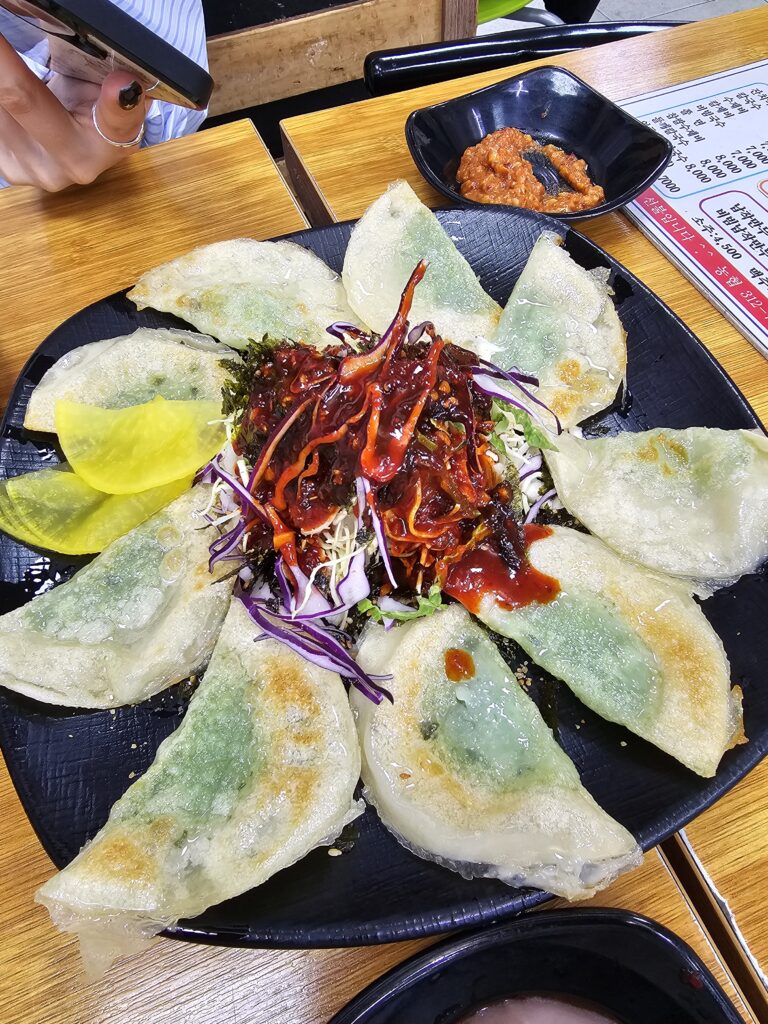
Bibim mandu is a dish that foreign visitors may not understand right away, but it is worth knowing if you are visiting Daegu.
“Mandu” means Korean dumplings, and “bibim” means mixed. In Daegu, bibim mandu often comes with flat dumpling skins and a spicy, sweet, and tangy vegetable mix.
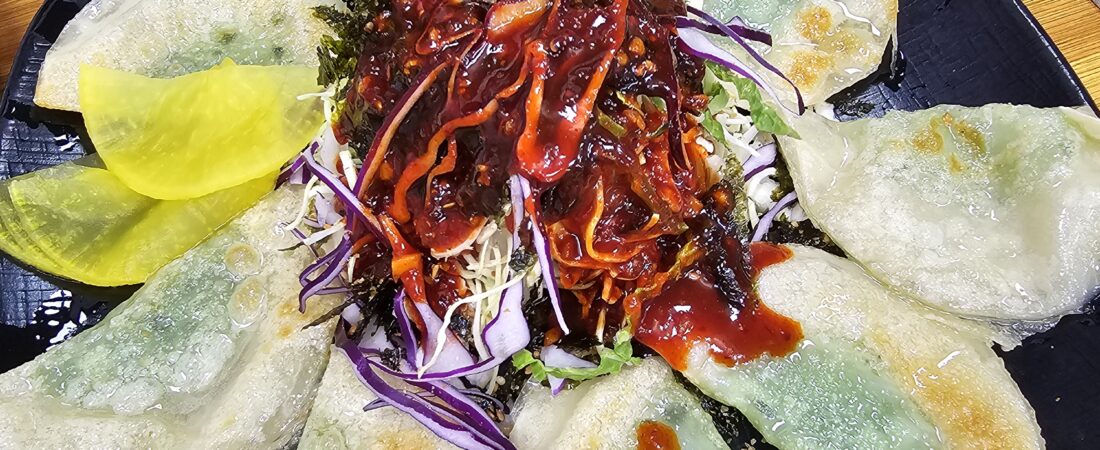
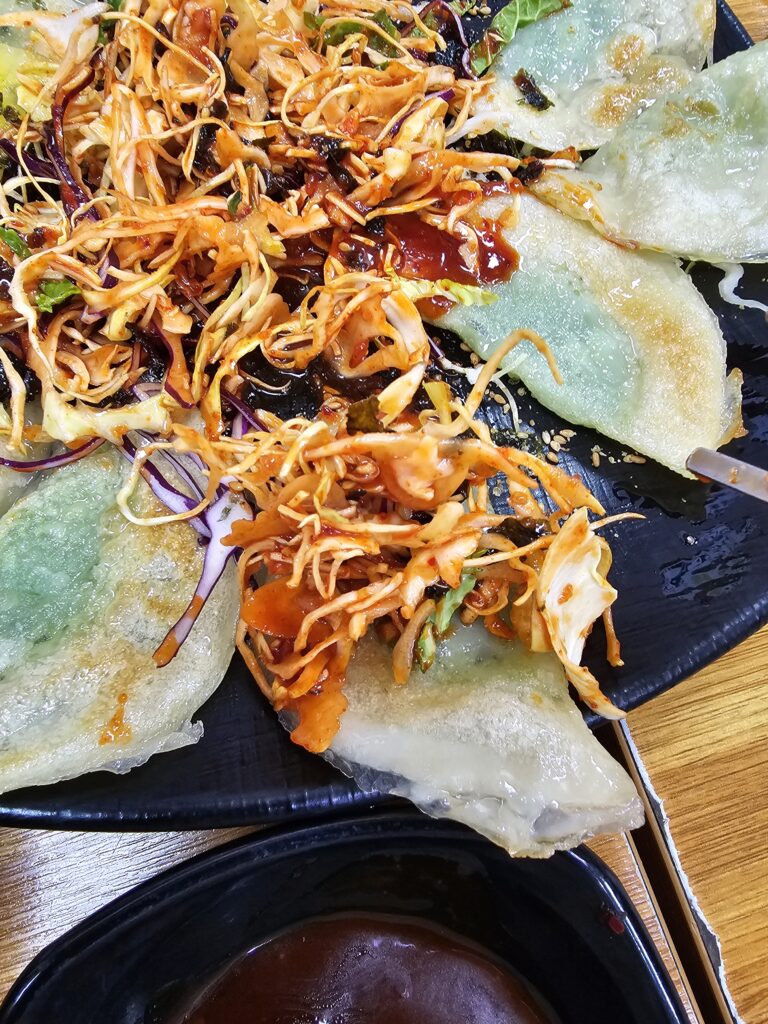
At Myeongga, the bibim mandu came with flat dumpling pieces arranged around the plate and seasoned vegetables piled in the middle.
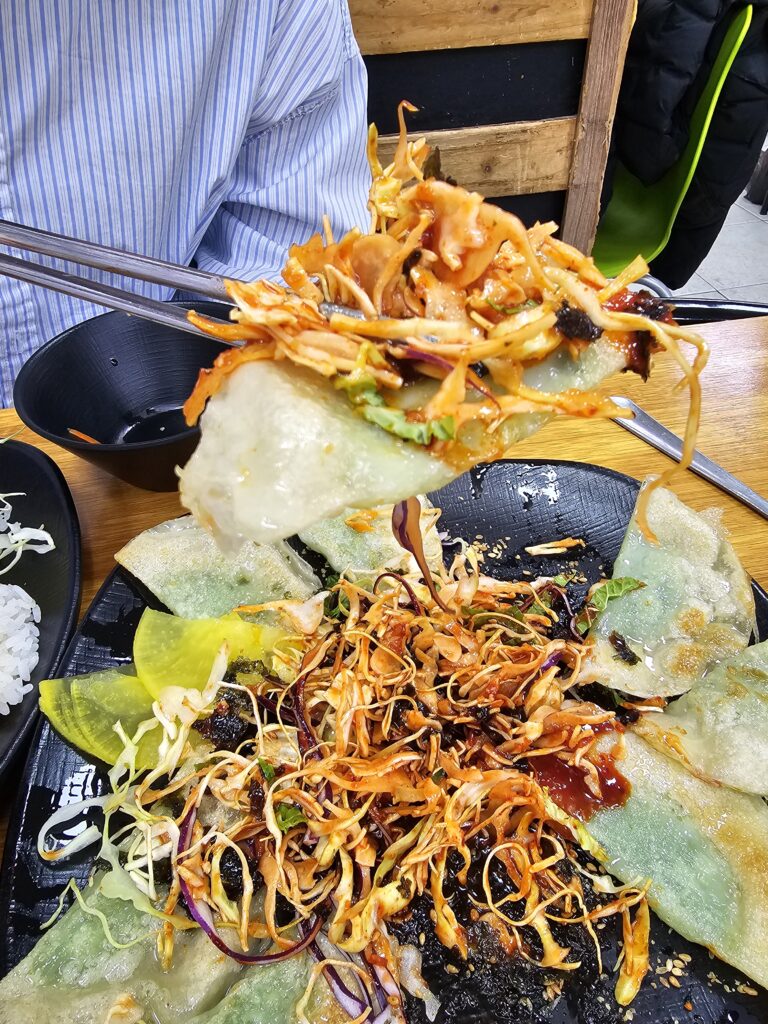
At first, the sauce looked strong, so I wondered if it would be too sweet or too intense. But it was actually well balanced. It had a sweet-and-sour flavor, but the sweetness was not too heavy.
That balance matters because bibim mandu can become tiring if the sauce is too sweet. Here, it stayed refreshing enough to keep eating.
The cabbage and sauce went well with the flat dumpling skins, and the texture was pleasantly chewy. When eaten together, the tangy vegetables and soft dumpling skins made a nice contrast.
This dish was especially good between bites of pork cutlet. When the meal started to feel a little rich, the bibim mandu helped refresh the palate.
Cold Janchi Guksu: Simple, Cool and Easy to Eat
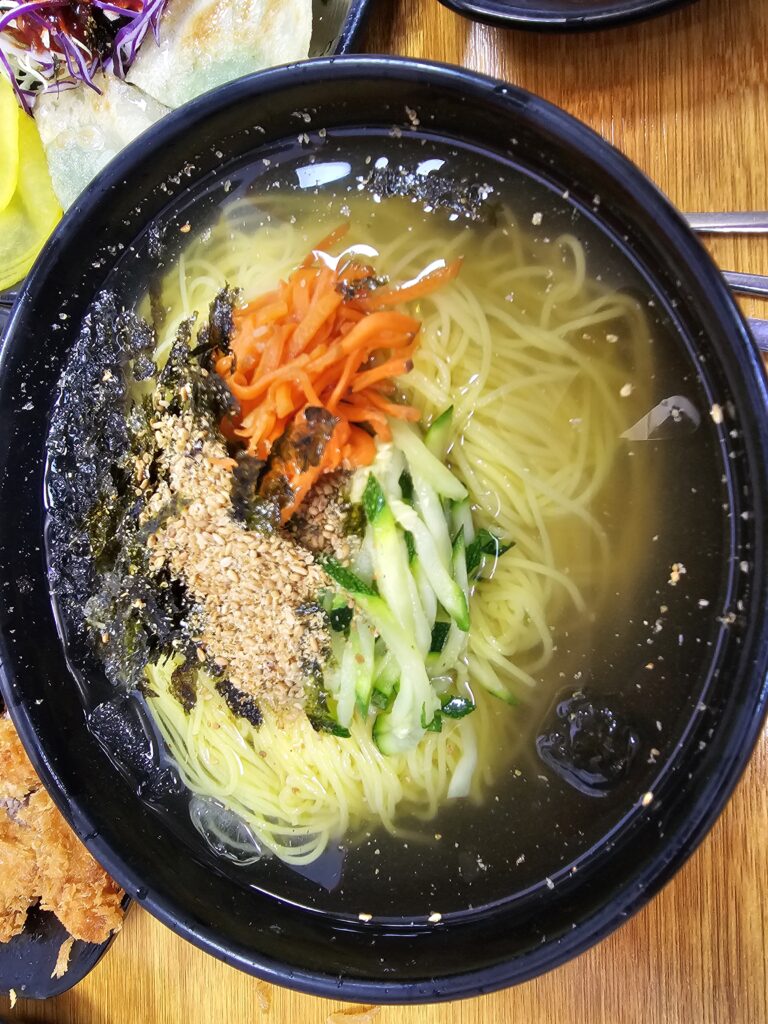
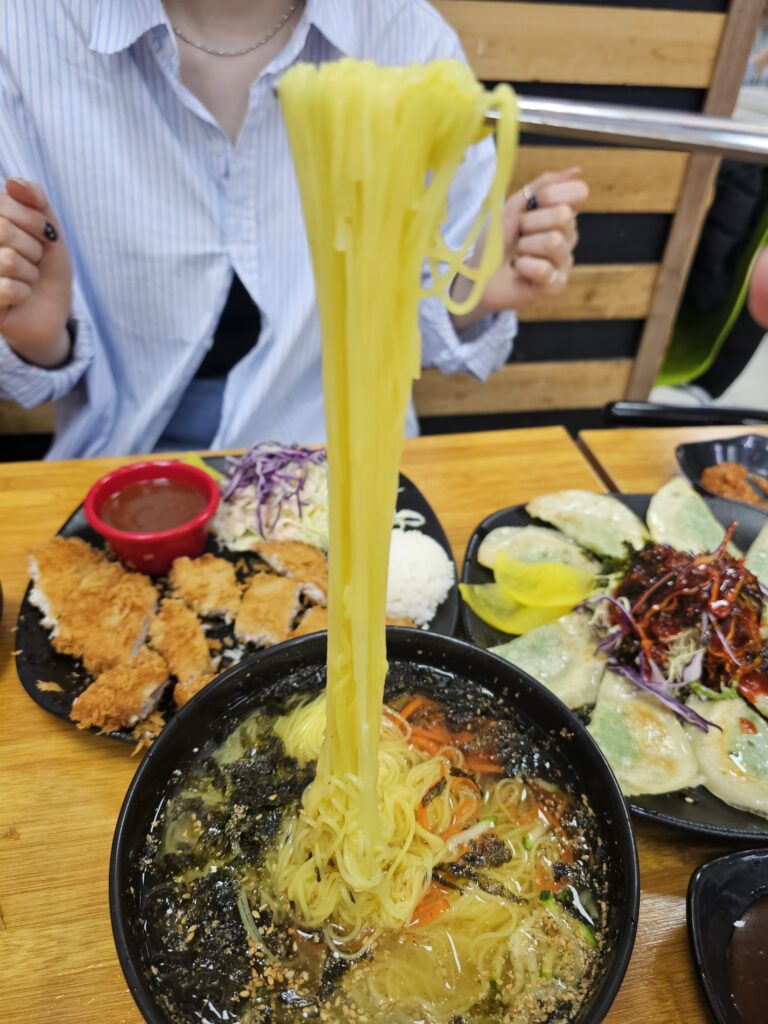
I originally wanted kimchi-mari guksu, but it was not available that day. So I asked if janchi guksu could be served cold, and they prepared it with ice.
Janchi guksu is a simple Korean noodle dish that is usually light and easy to eat. This cold version was not flashy or heavily seasoned, but that was exactly why it worked well with the rest of the meal.
The noodles had a nice chewy texture when lifted with chopsticks, and the cool broth made the whole meal feel more balanced.
The pork cutlet was crispy and rich.
The bibim mandu was tangy and flavorful.
The cold noodles helped reset everything in between.
If you are ordering several dishes at Myeongga, a simple bowl of noodles like this can make the meal feel less heavy.
Tteokbokki: A Memorable Extra Dish
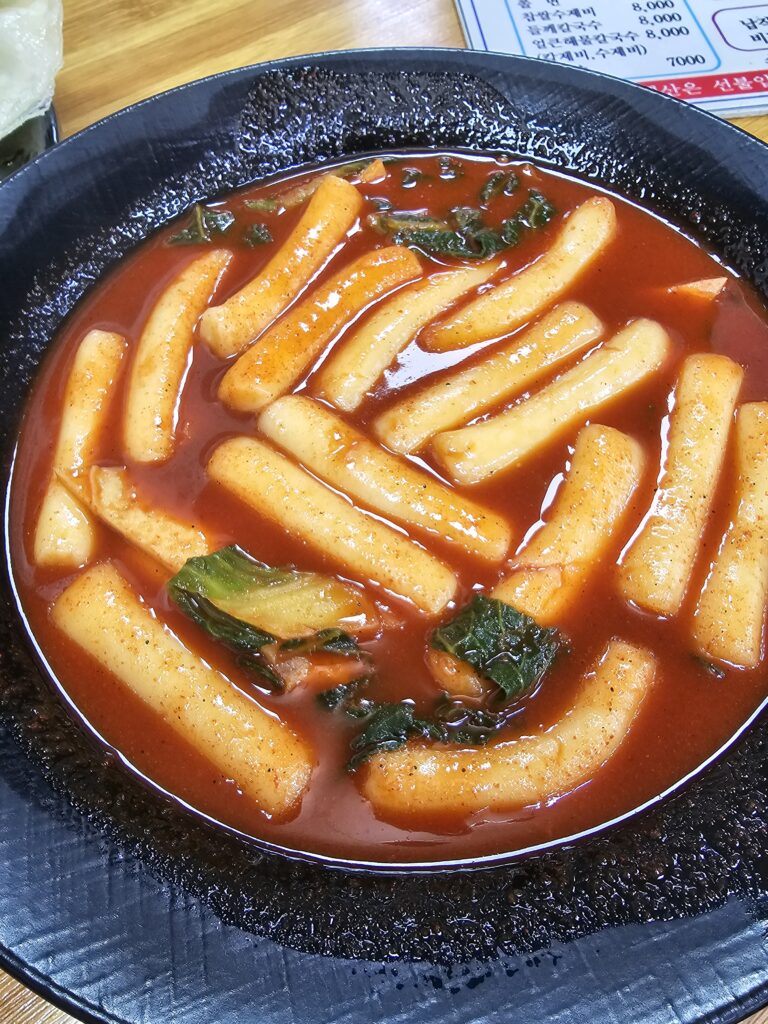
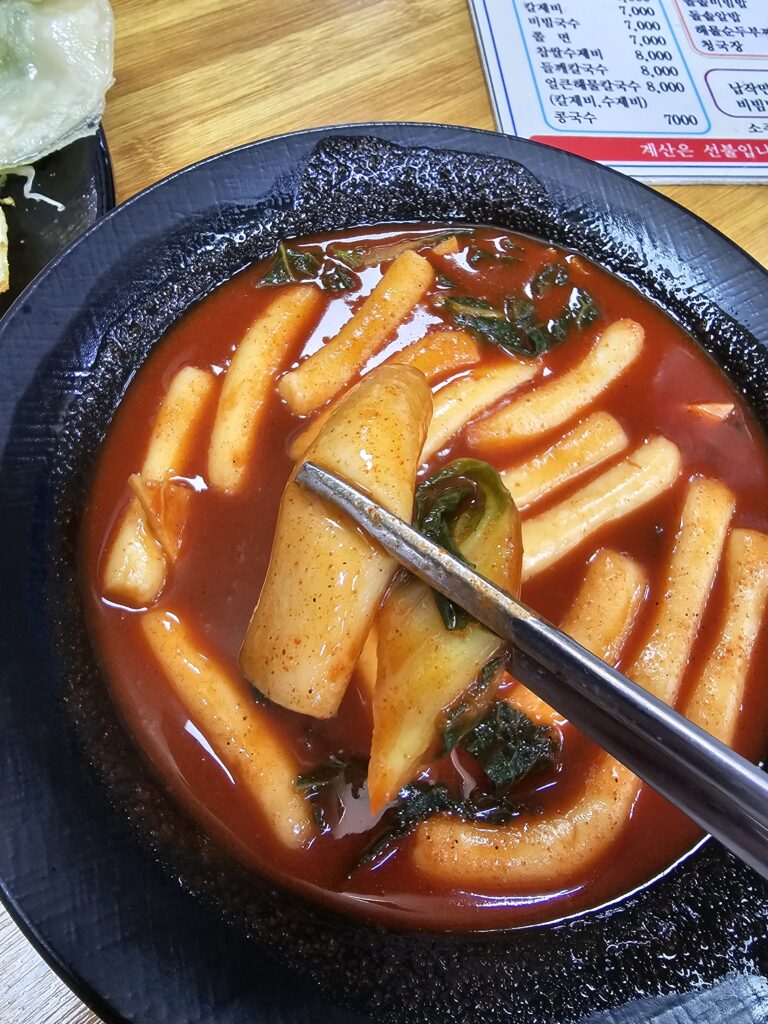
Tteokbokki is one of Korea’s most famous comfort foods. It is made with chewy rice cakes in a spicy-sweet sauce.
On this visit, the tteokbokki became one of the most memorable parts of the meal.
The sauce had a slightly curry-like note with a peppery kick. Personally, it reminded me a little of the style of Gungjeon Tteokbokki, but that was only my own impression of the flavor.
The best part was the texture of the rice cakes. They were soft, warm, and chewy. The rice cakes did not feel hard or dry, and the sauce coated them nicely.
Even if I had not planned to focus on tteokbokki that day, this was the kind of dish I would consider ordering again.
Side Dishes and Origin Label
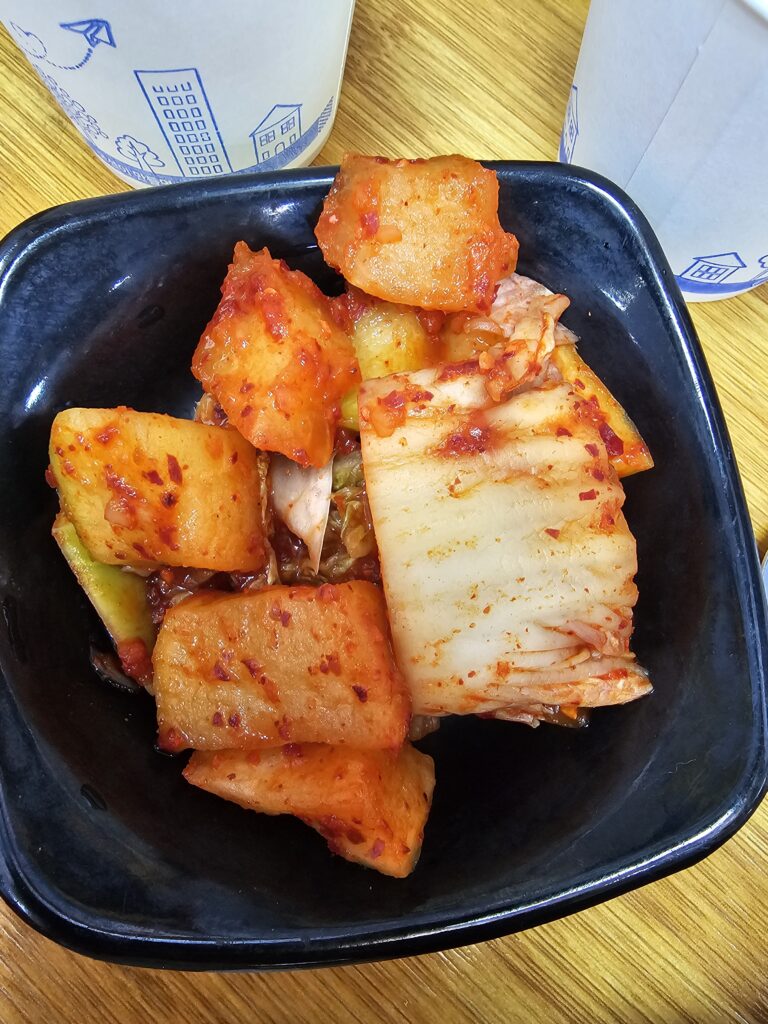
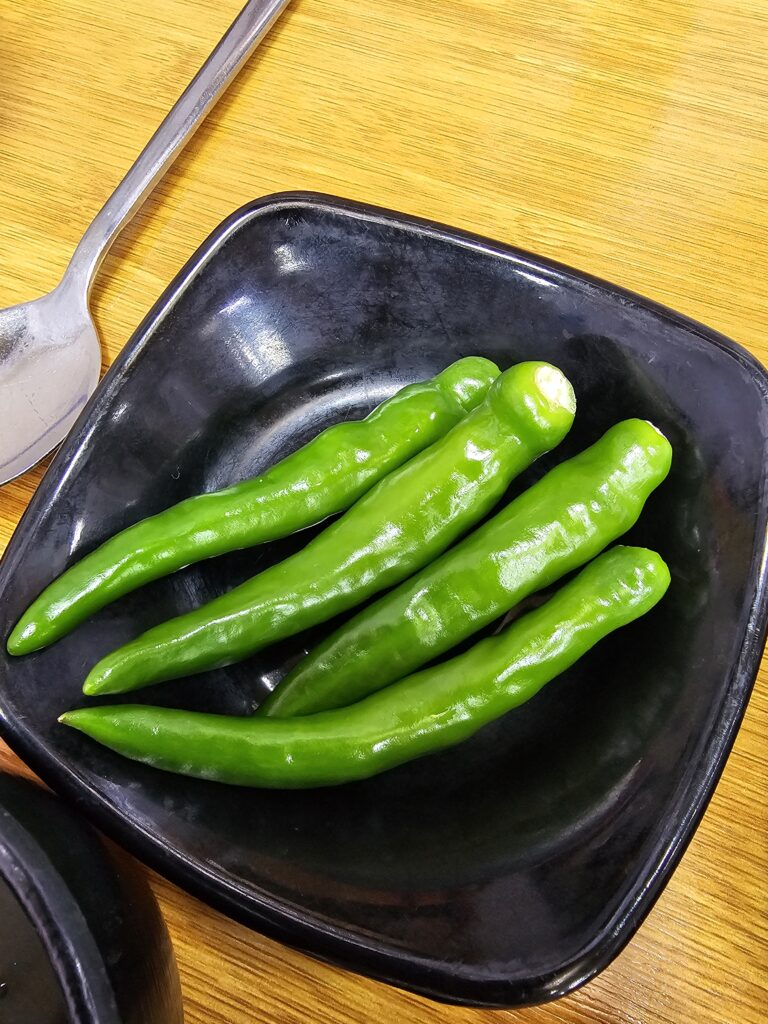
There were simple side dishes like green chili peppers and kimchi.
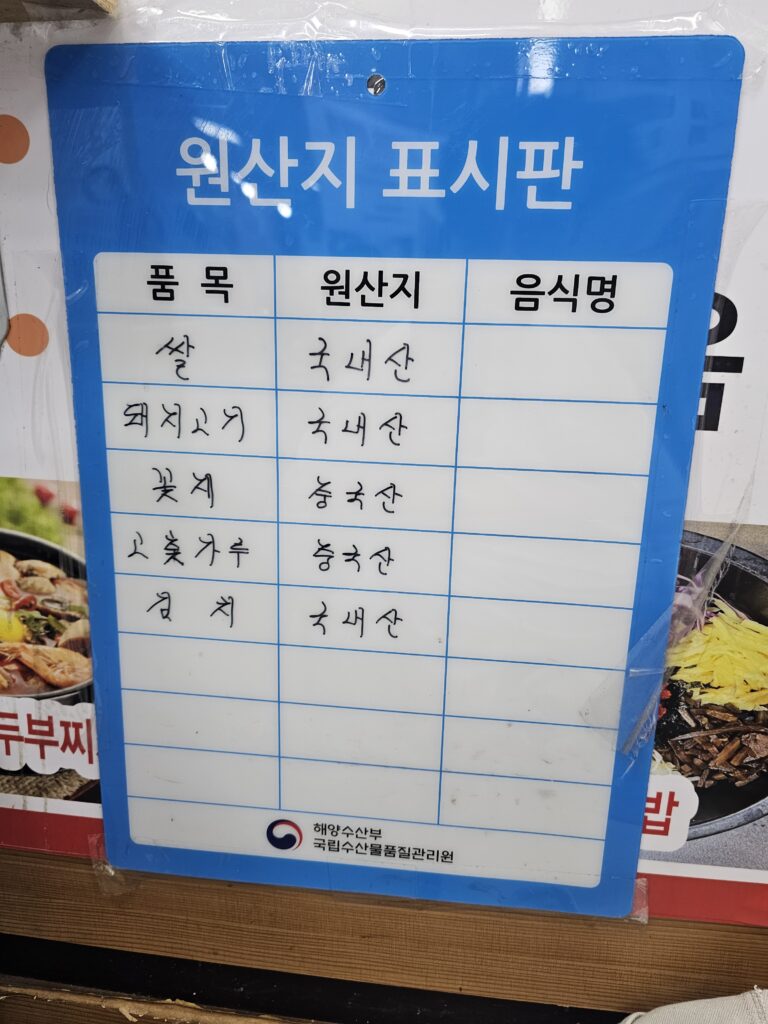
I also saw an origin label inside the restaurant. Based on the sign, rice, pork, and kimchi were marked as domestic. I would still recommend checking the label directly if ingredient origin is important to you, because restaurant notices can change.
For most travelers, this is not the main reason to visit, but it was nice to see the information displayed.
Why the Meal Worked Well
What I liked most about this meal was the balance.
The pork cutlet was crispy and filling.
The bibim mandu was tangy and refreshing.
The cold janchi guksu was simple and cooling.
The tteokbokki was chewy, warm, and flavorful.
Together, the dishes made a very satisfying casual meal.
This is the kind of place that works well if you want to try several Korean market foods without moving from stall to stall. It also works if you are with someone who wants noodles while you want something fried or spicy.
Who I Would Recommend This Place To
Myeongga is a good option for:
- Visitors looking for food inside Seomun Market
- People who want a casual Korean market meal
- Travelers who want to try pork cutlet, noodles, dumplings, and tteokbokki in one place
- Solo visitors who want a simple meal
- People visiting with friends who have different food preferences
- Anyone curious about Daegu-style bibim mandu
It is also a good option if you want something more filling than a quick street snack but still want to stay inside the market.
Who Might Not Like It
This may not be the best choice if you prefer:
- A quiet restaurant
- A modern interior
- A slow café-like atmosphere
- A place with detailed English service information
Myeongga has a busy market food-area atmosphere. That is part of the experience, but it may not suit everyone.
Tips for Foreign Visitors
If you are visiting Seomun Market and want to eat at Myeongga, here are a few things to know.
First, this is a local market restaurant, so the atmosphere can be busy and casual.
Second, some menu names may not be familiar if you do not know Korean food. Here are the main dishes from this visit:
- Donkkaseu: Korean-style pork cutlet
- Bibim mandu: flat dumpling skins with spicy, sweet, and tangy seasoned vegetables
- Janchi guksu: simple Korean noodles in a light broth
- Tteokbokki: chewy rice cakes in spicy-sweet sauce
Third, practical details like opening hours, phone number, and delivery availability should be checked before visiting.
Finally, if price accuracy is important, check the current menu when you arrive. The prices above are from the time of my visit.
Final Thoughts
Myeongga was much better than I expected.
I went in thinking it would be a simple casual meal inside the market, but the pork cutlet was surprisingly crispy, the bibim mandu was well balanced, and the cold janchi guksu worked nicely with the other dishes.
The tteokbokki also left a strong impression because the rice cakes were soft and the sauce had a unique flavor.
If you are visiting Seomun Market in Daegu and want a real local meal rather than a polished tourist restaurant, Myeongga is worth considering.
It is casual, busy, and simple, but that is exactly what made it feel like a proper market food experience.
Plan your own Korean food adventure
🌶️ Test your Korean spice tolerance — find your survival level in 7 questions
🎰 Spin the Korean Food Roulette — let the wheel pick your next meal
🍀 Draw Korean Lotto 6/45 numbers — lucky picks in official ball colors