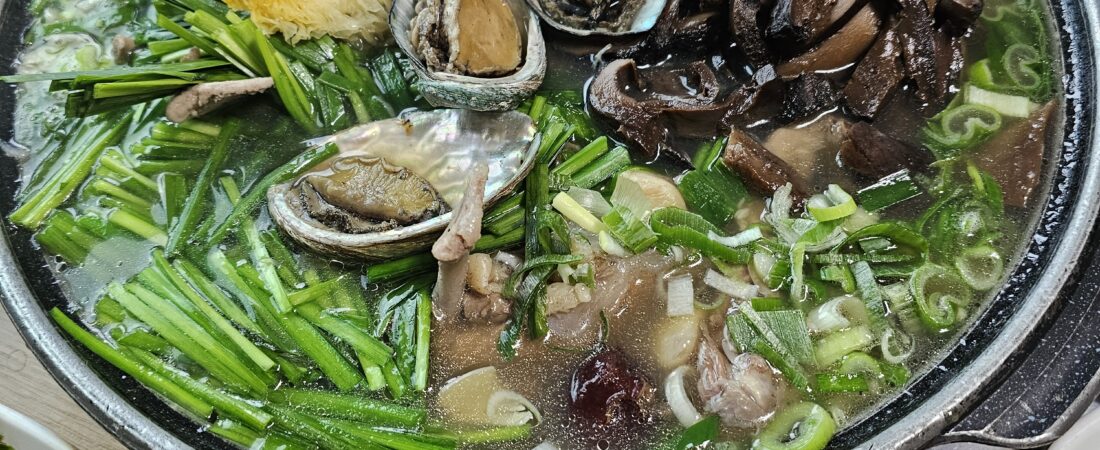
Janggun Sikdang (장군식당) is a long-running Korean restaurant in Okpo-eup, Dalseong-gun, Daegu, near Songhae Park and the road toward Yongyeonsa Temple. For travelers looking for herbal duck baeksuk in Daegu, it offers more than a large pot of soup: there is a carefully maintained garden, a dedicated parking area, spacious group seating, a jokgu court, and a karaoke setup for gatherings.
I visited with my grandmother on a rainy day in early July. We ordered neungi duck baeksuk, a slow-simmered duck dish served with mushrooms, abalone, vegetables, broth, and sticky rice.
What Is Neungi Duck Baeksuk?
Baeksuk is a Korean dish in which a whole chicken or duck is gently simmered in a light broth until the meat becomes tender. Unlike heavily seasoned stews, baeksuk is usually mild, so the flavor comes from the meat, broth, mushrooms, green onions, chives, and other ingredients cooked together.
Neungi refers to an aromatic mushroom used in Korean mountain-style cooking. Janggun Sikdang also describes its food as yakseon cuisine. Yakseon is best understood as Korean cooking that uses a wide range of herbs, roots, mushrooms, and traditional ingredients. It should not be treated as medical treatment, but it does help explain why the broth here felt more ingredient-focused than an ordinary meat soup.
The owners told us that they grow, tend, or gather many of the ingredients themselves. They mentioned mushrooms, Siberian ginseng, cudrania wood, and several other ingredients I was not familiar enough with to remember accurately. What stayed with me was the care in the explanation and the sense that the broth had been prepared with many components rather than one or two simple seasonings.
Quick Visitor Info
Address: 116 Yongyeonsa-gil, Okpo-eup, Dalseong-gun, Daegu
Hours observed on July 1, 2026:
- Tuesday to Sunday: 11:00–19:00
- Regular closing day: Monday
- Break time: Not confirmed
- Last order: Not confirmed
- Lunar New Year, Chuseok, and other public-holiday hours were not confirmed. Calling before the visit, preferably two or three days ahead for a group, is the safer option.
Price at the time of my visit:
- Yuhwang-ori neungi baeksuk with abalone and sticky rice: 78,000 KRW
The menu and price may have changed since the visit. The restaurant had a large dedicated outdoor parking area. Fees, reservation rules, and operating times for the jokgu court, private rooms, and karaoke equipment should be confirmed directly.
Arriving at Janggun Sikdang on a Rainy Day
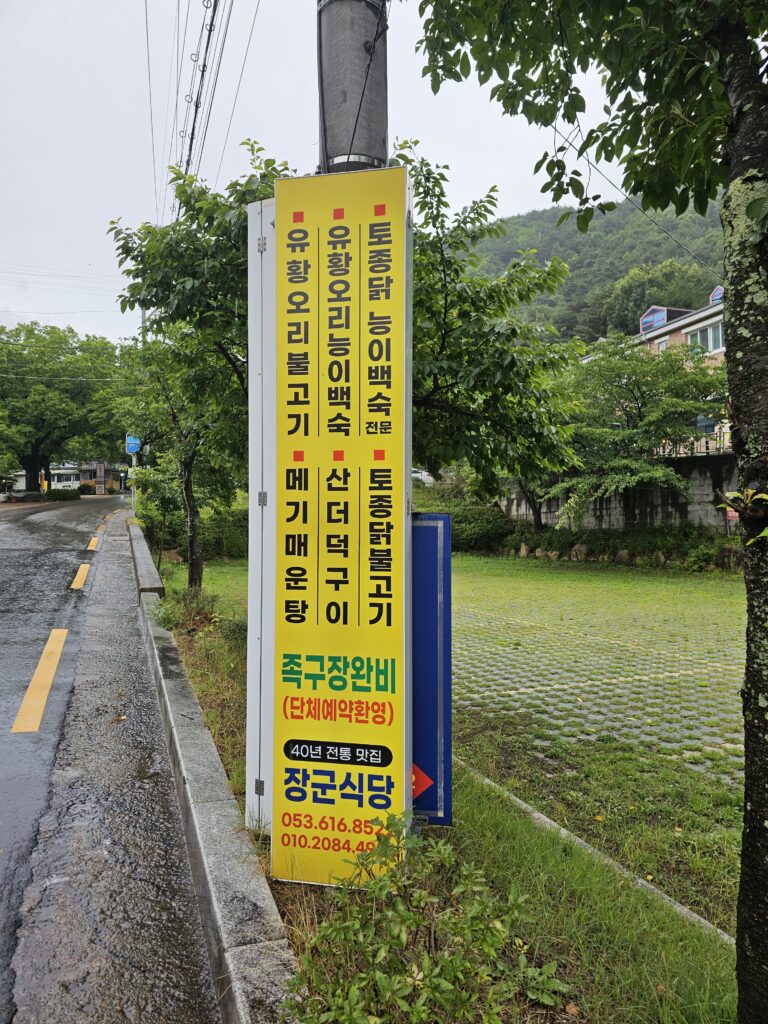
A large yellow roadside sign made the entrance easy to recognize. It listed yuhwang duck dishes, native chicken dishes, deodeok, mushroom dishes, group reservations, and a jokgu court, so the restaurant’s main style was clear before we even parked.
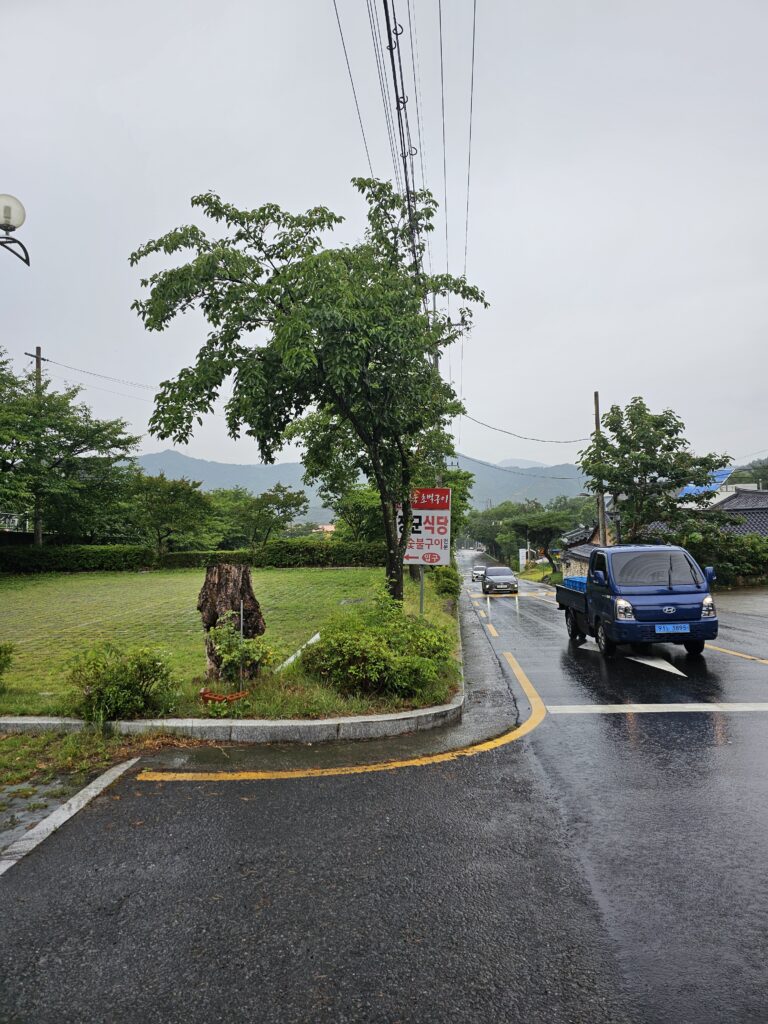
From the main road, the entrance sign pointed into a quieter lane. With wet pavement, trees, and a mountain ridge in the background, the approach felt more like heading toward a countryside restaurant than entering a typical city dining area.
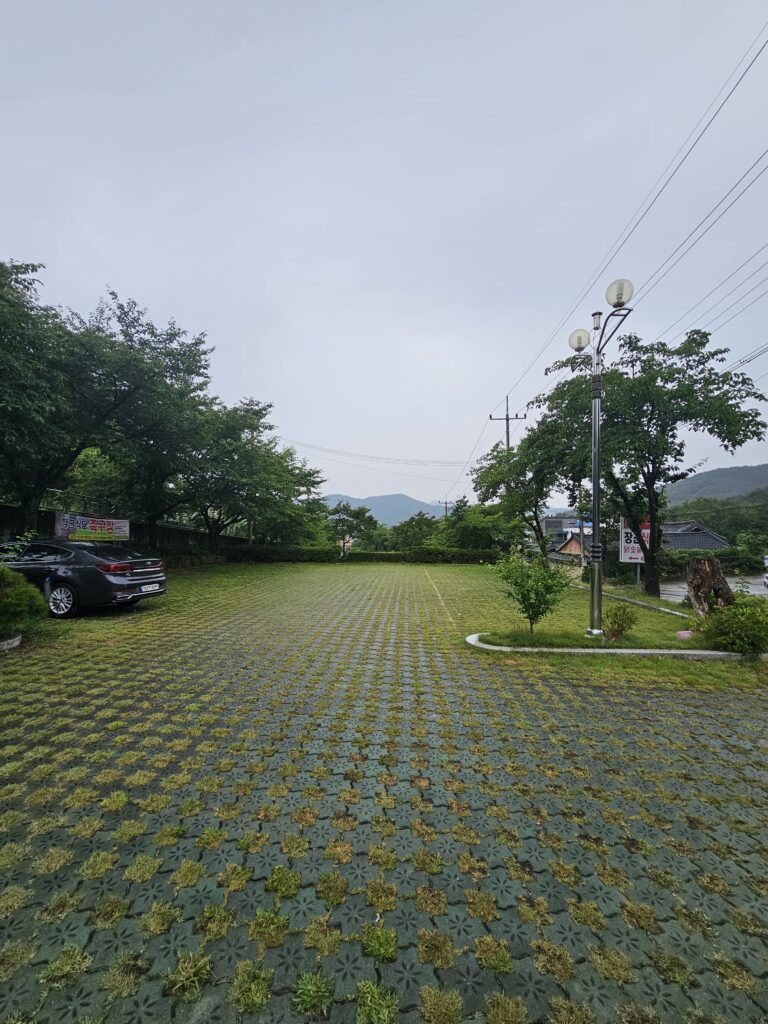
The dedicated parking lot was broad and surfaced with grass blocks. It looked practical for several cars arriving together, although weekend congestion and large-bus access should still be checked in advance.
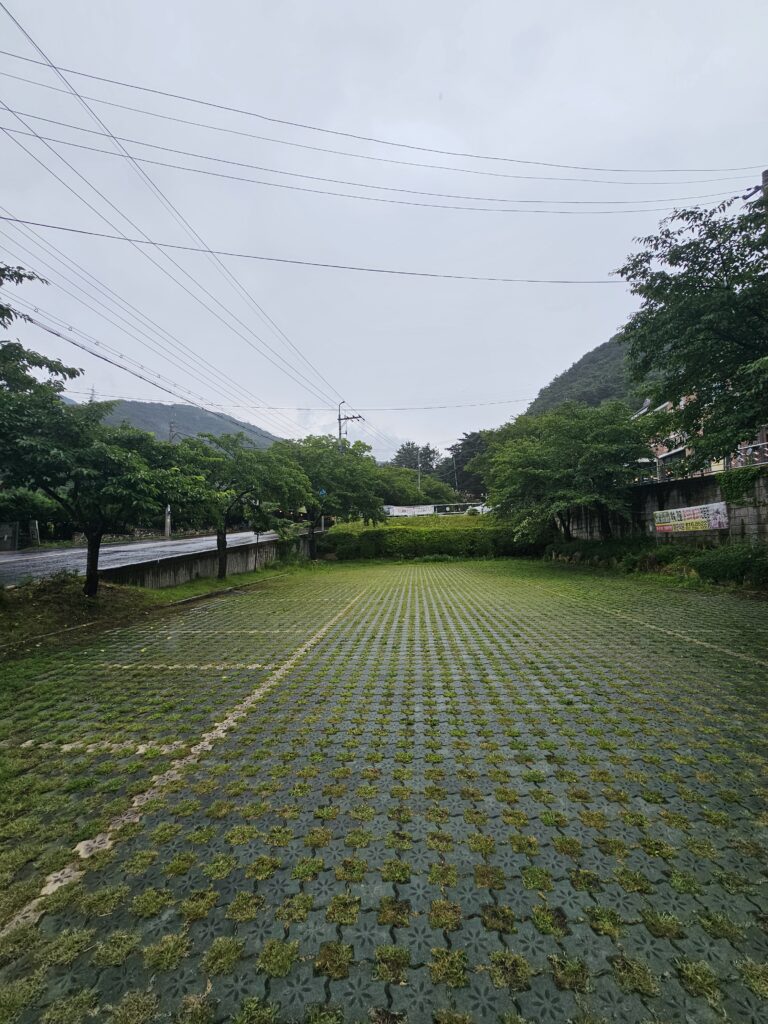
Looking across the parking area from the opposite side made its size easier to understand. The surrounding trees and hills kept the space from feeling like a plain paved lot.
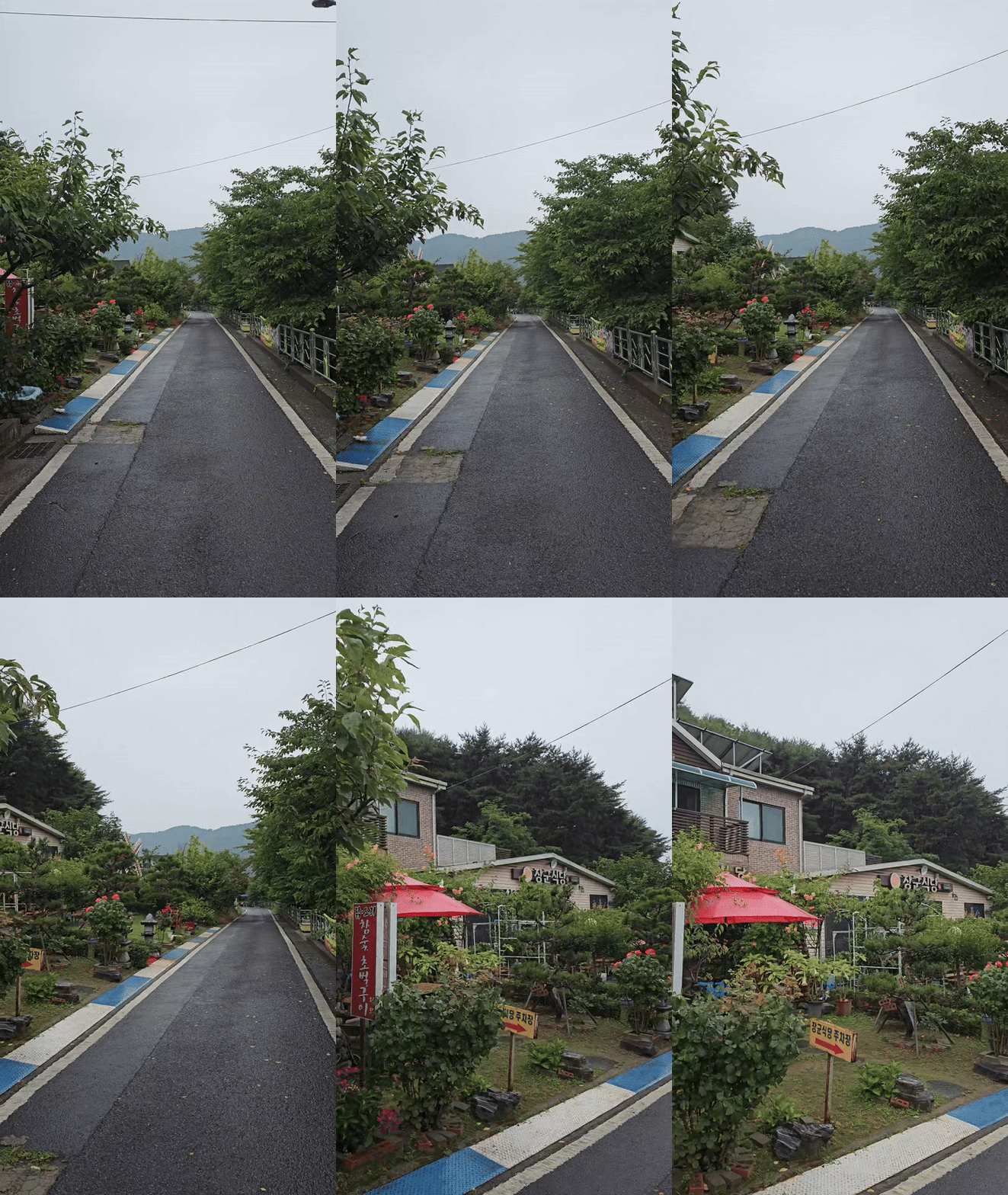
From the parking area, a short wet lane led toward the restaurant. Flowers, potted plants, and small garden details appeared along the way, so the walk from the car already felt like part of the visit.
A Restaurant Entrance That Feels Like a Personal Garden
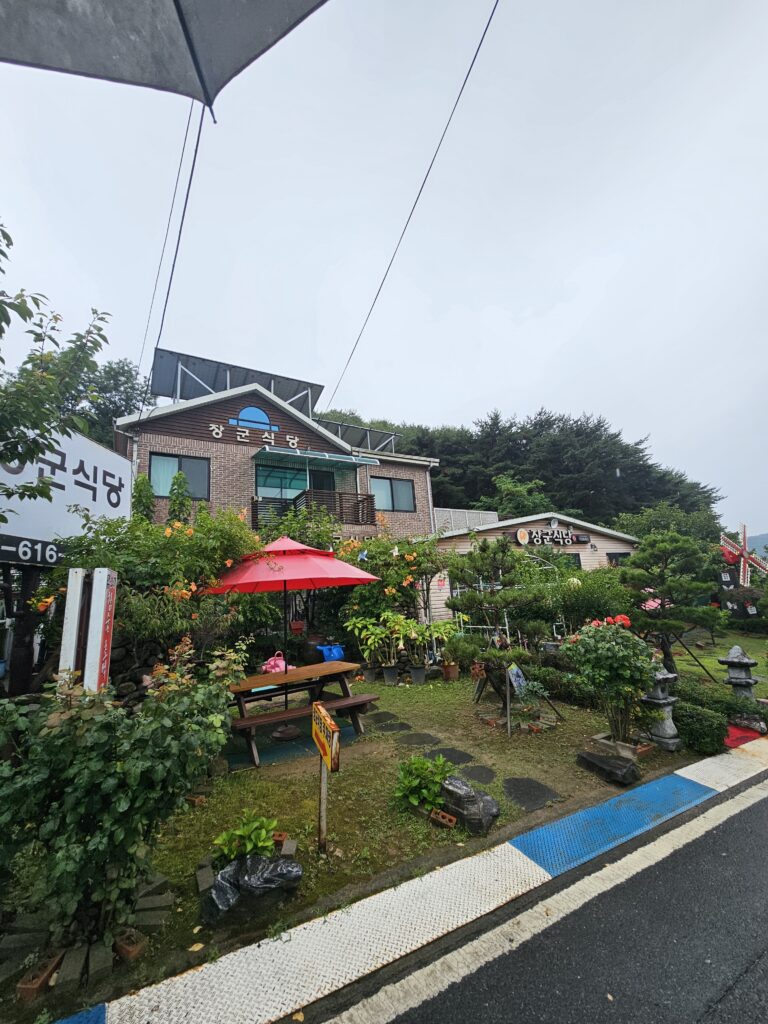
The first full view of the building included red umbrellas, outdoor tables, potted plants, trees, and bright flowers. It felt less like a commercial entrance and more like a garden that had been gradually cared for over many years.
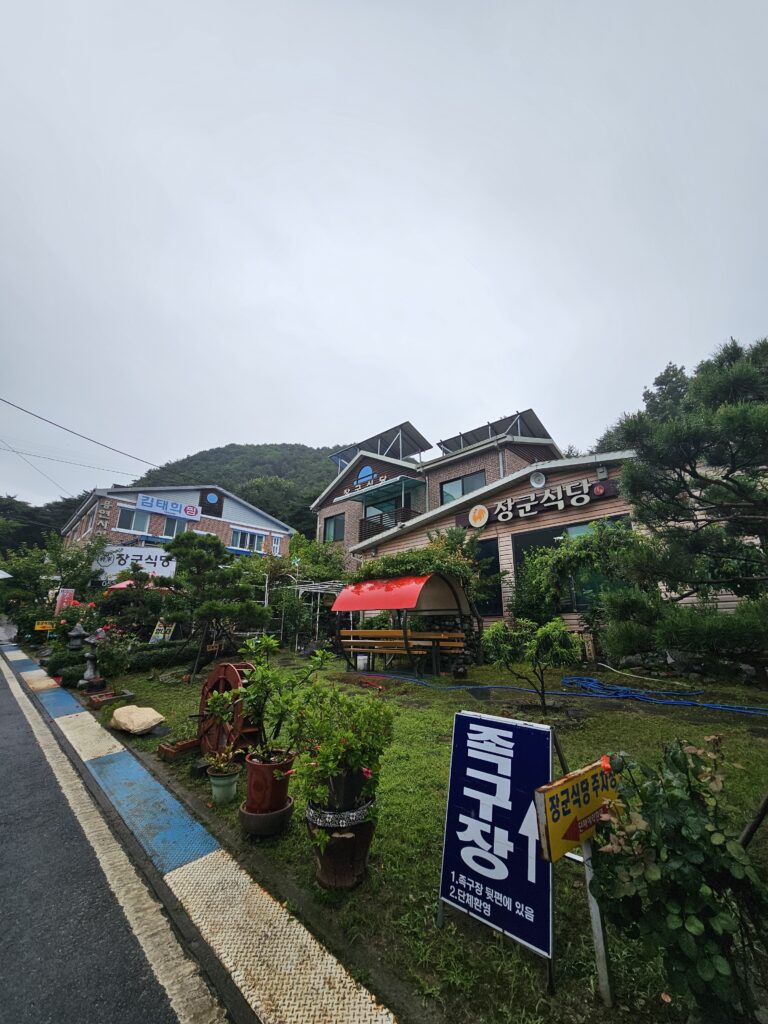
A wider angle showed trimmed trees, a covered outdoor bench, a decorative windmill, and a sign pointing toward the jokgu court. The space had many elements, but it still looked organized rather than cluttered.
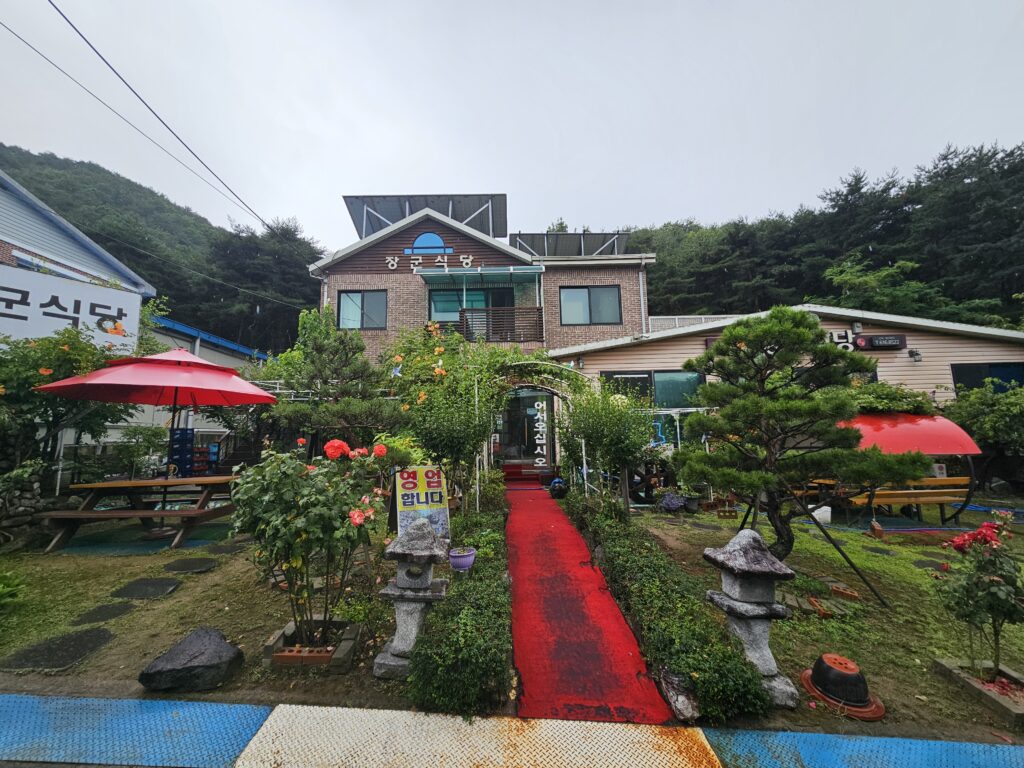
A red path led straight to the entrance between flowers and stone lanterns. The rain deepened the colors of the path and greenery, giving the entrance a calm, slightly nostalgic atmosphere. A sign referred to a long history, and the menu displayed “Since 1989.”
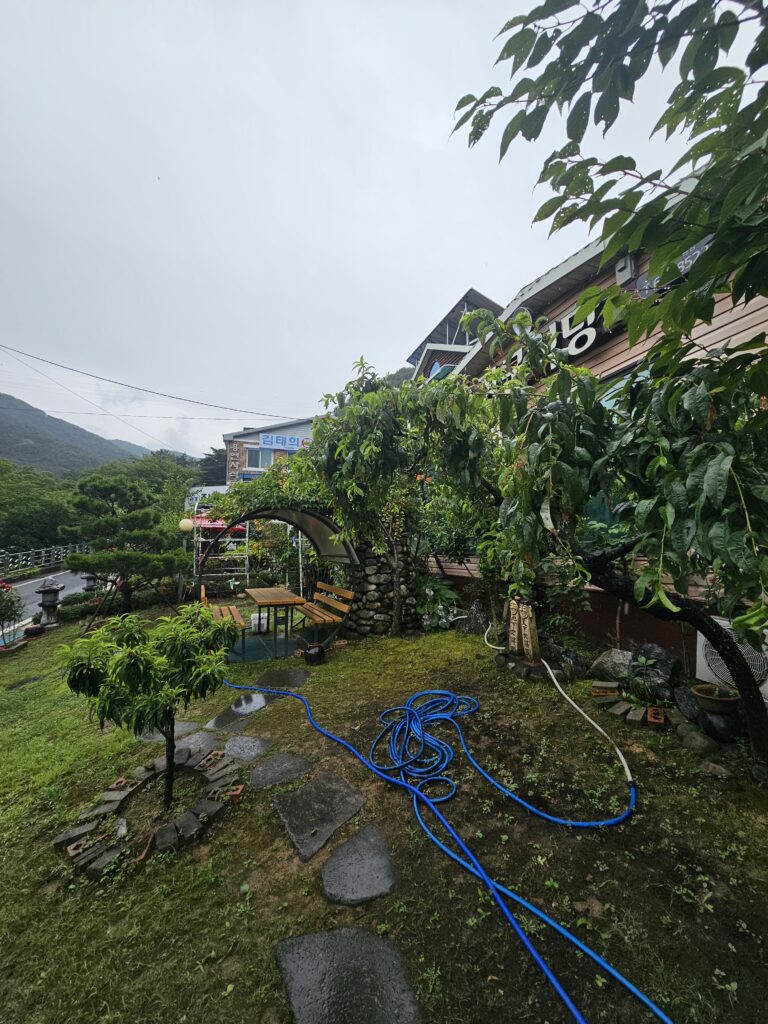
The owners said they personally care for the flowers and trees around the restaurant. The stepping stones, benches, potted plants, and garden hose all made the area feel actively maintained rather than staged only for photographs.
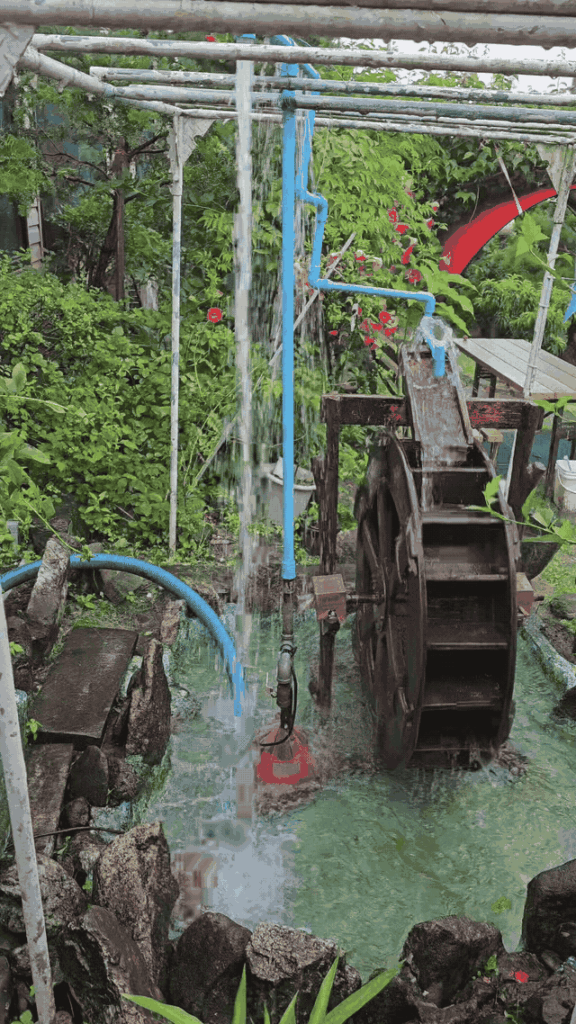
Near the entrance, water poured beside a large wooden waterwheel. The rain and flowing water together made the garden feel noticeably cooler, which was especially pleasant in July.
Jokgu Court and Outdoor Rest Areas
Jokgu is a Korean team sport similar to foot-volleyball. Players send the ball over a low net mainly with their feet and head. It is common at company outings, military gatherings, and casual group events.
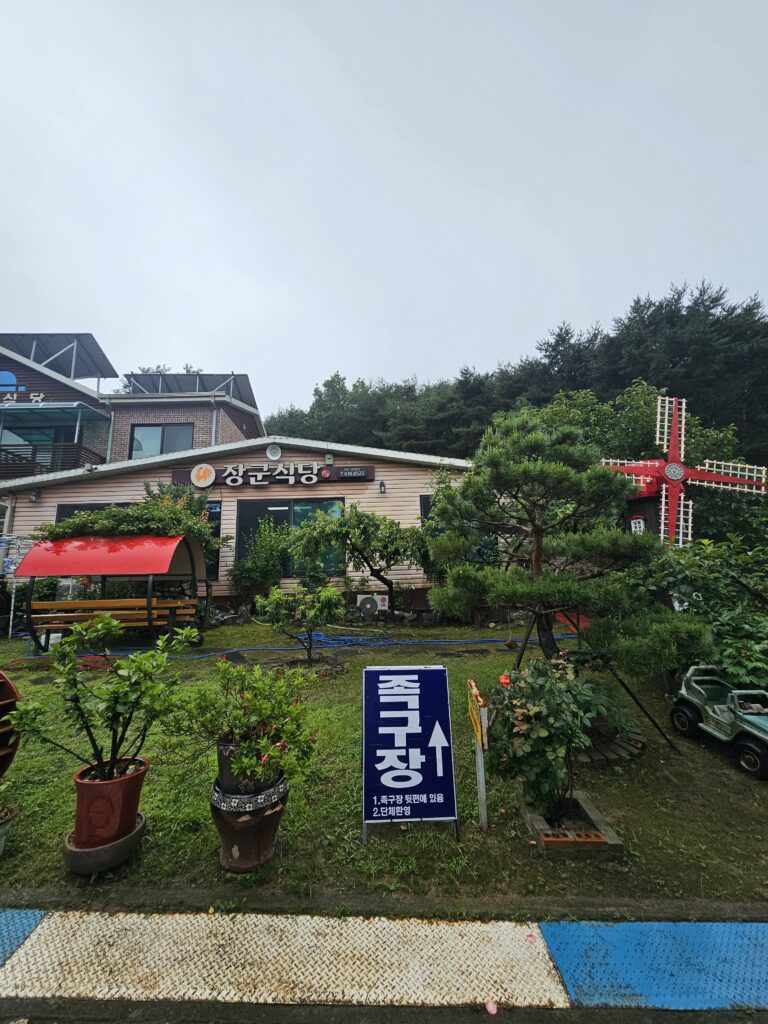
A sign in front of the restaurant pointed toward the jokgu court. The owner kindly offered to show us the way before we went inside to eat.
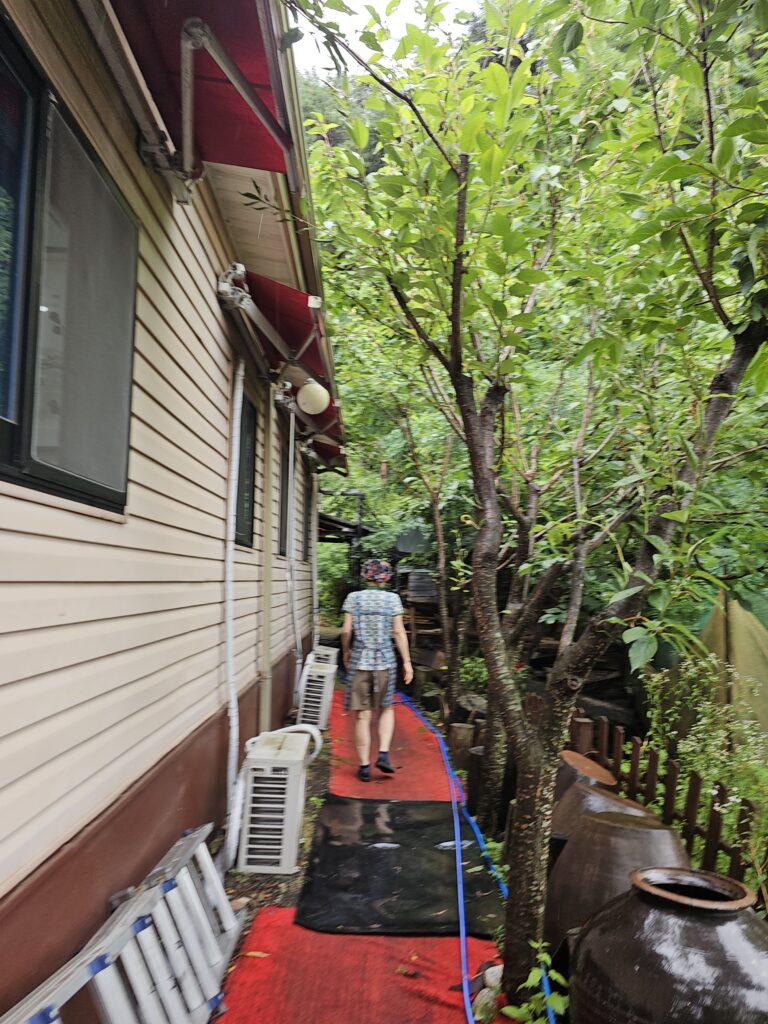
The path ran along the side of the building, past trees, large earthenware jars, outdoor equipment, and a red floor mat. One person is visible in this image, so the face should be blurred before publication if identifiable.
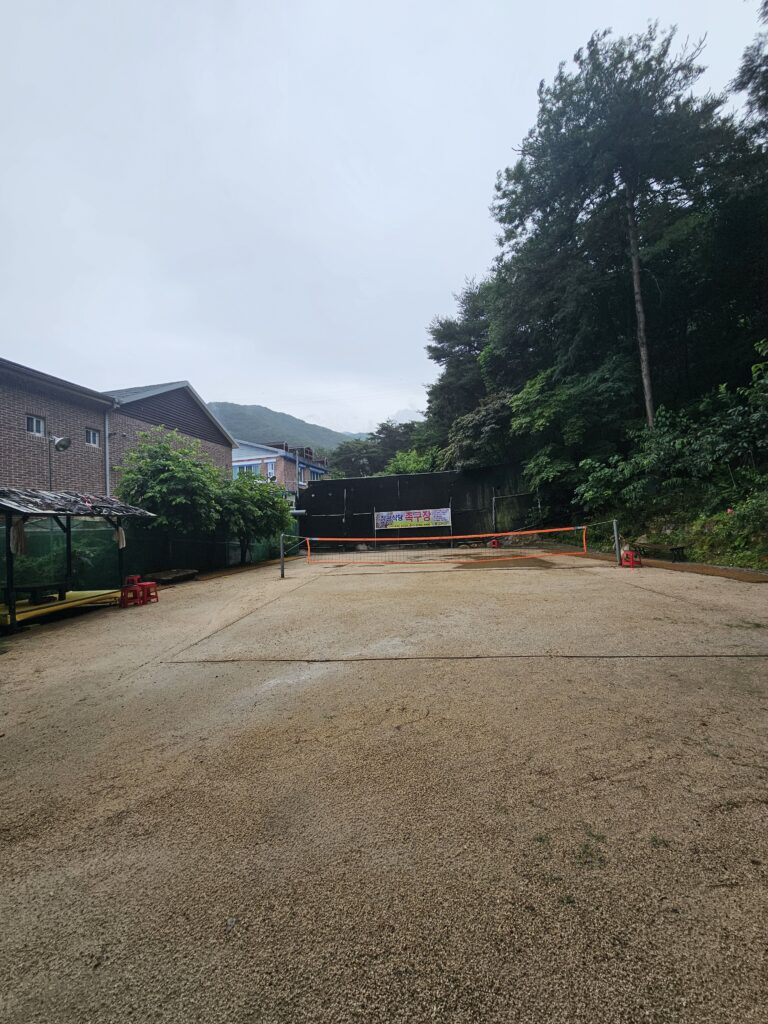
The court was much larger than I expected, with a net across the center and simple rest areas along the sides. It looked suitable for a company outing, club gathering, hiking group, or extended-family event.
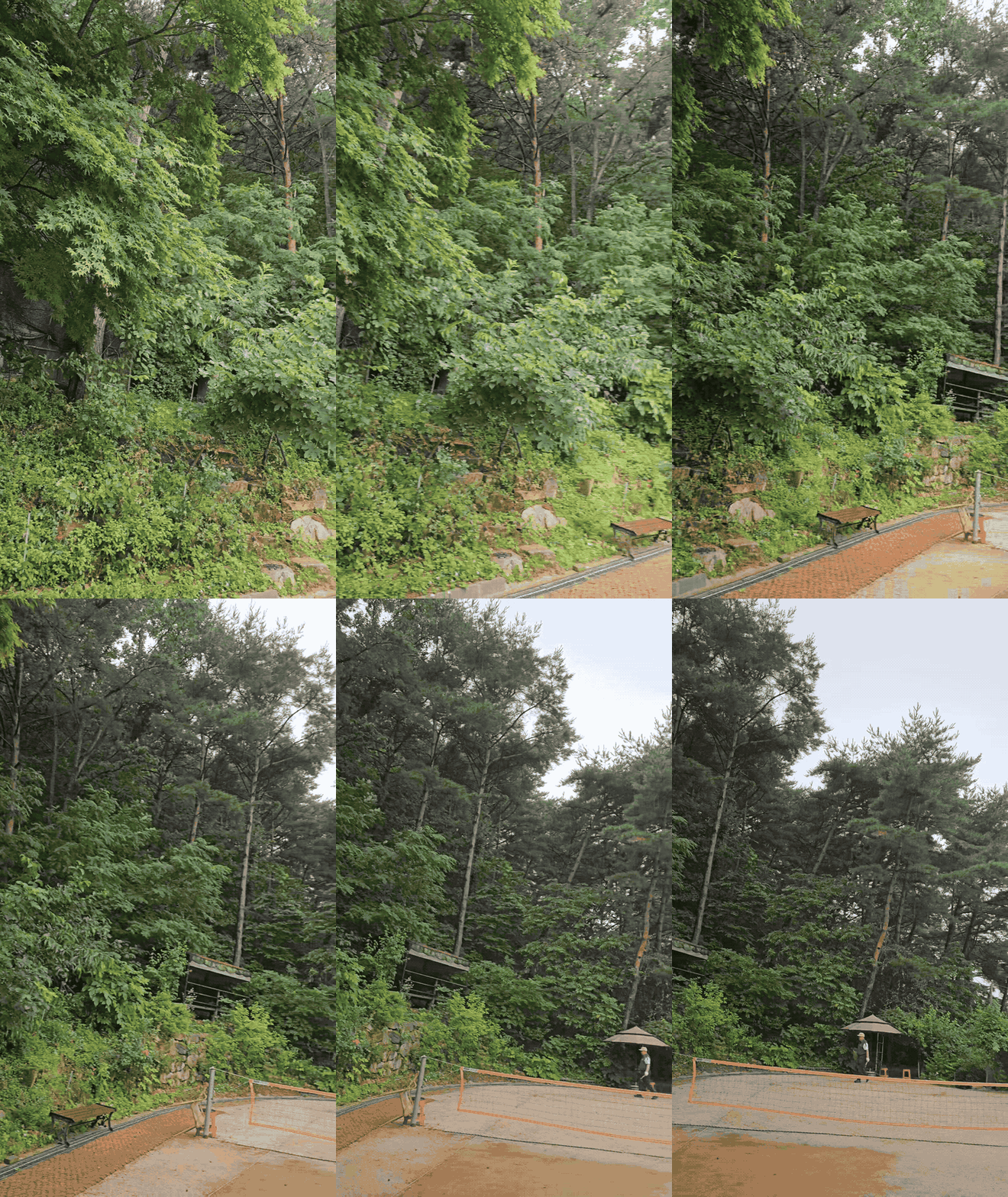
Tall trees and dense summer greenery surrounded the court. Even though it was an exercise area, it felt closer to a clearing in the woods than a sports facility in the city.
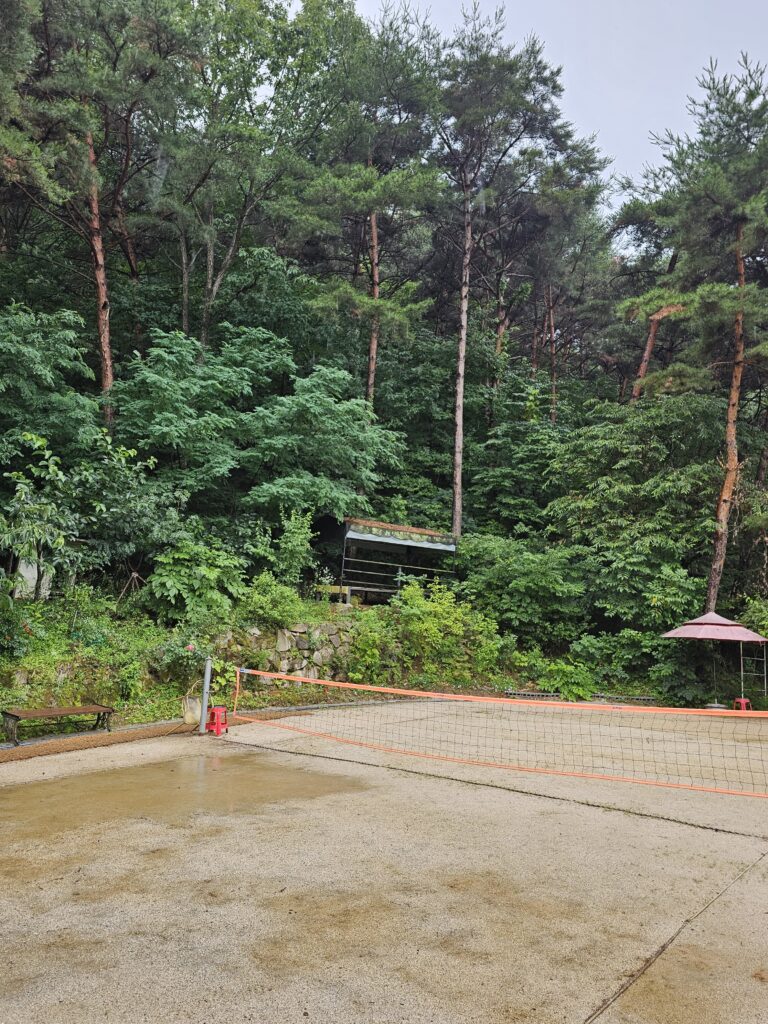
Benches and a simple umbrella shade were placed beside the court, allowing people who were not playing to sit, watch, or rest. Equipment availability and wet-weather use were not confirmed.
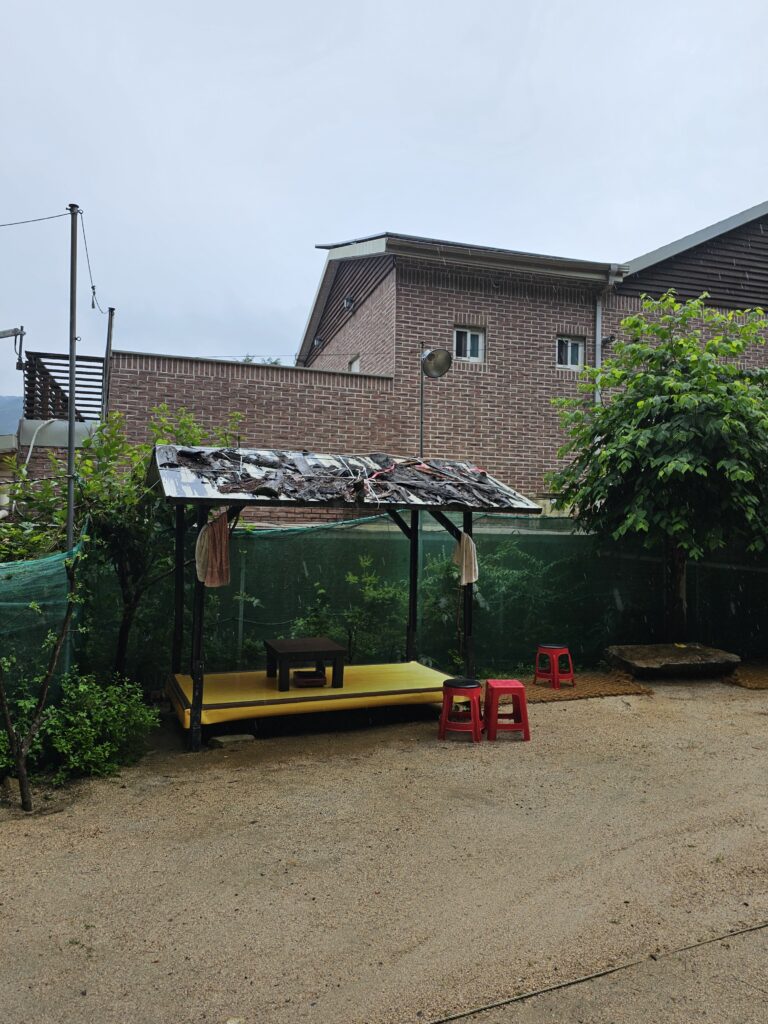
A small roofed platform stood beside the court with a low table and plastic stools. It looked useful for taking a break or talking between games, but outside food and alcohol rules were not confirmed.
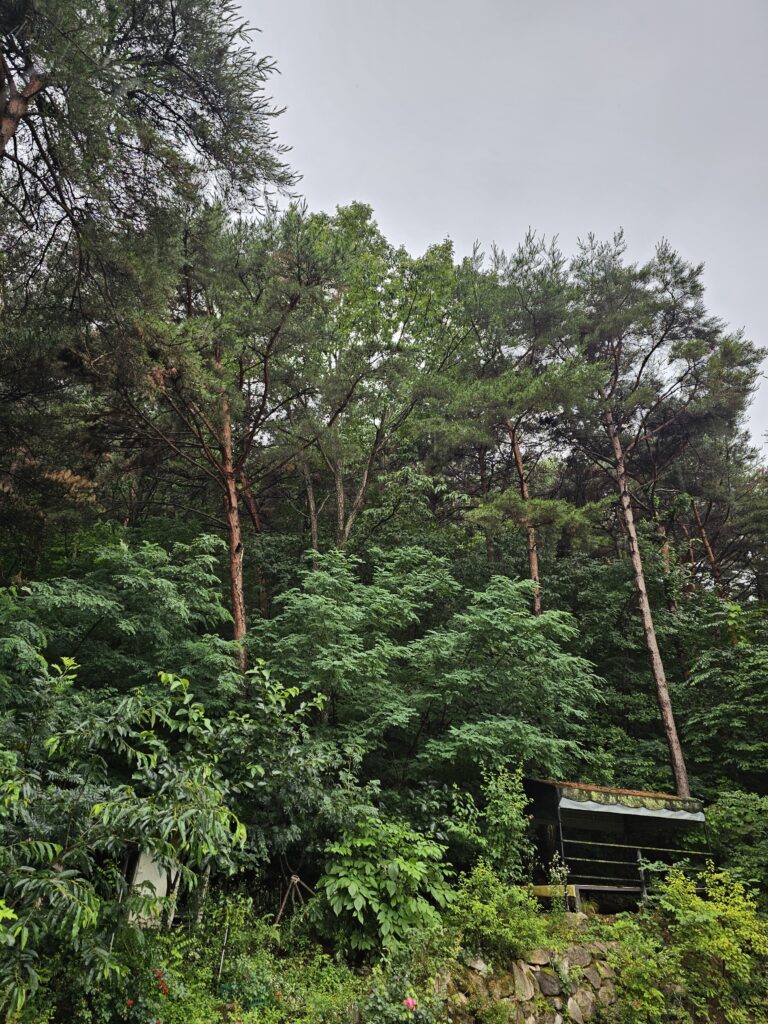
A second, larger-looking rest platform sat higher against the wooded slope. It appeared more suitable for a group to sit together after playing.
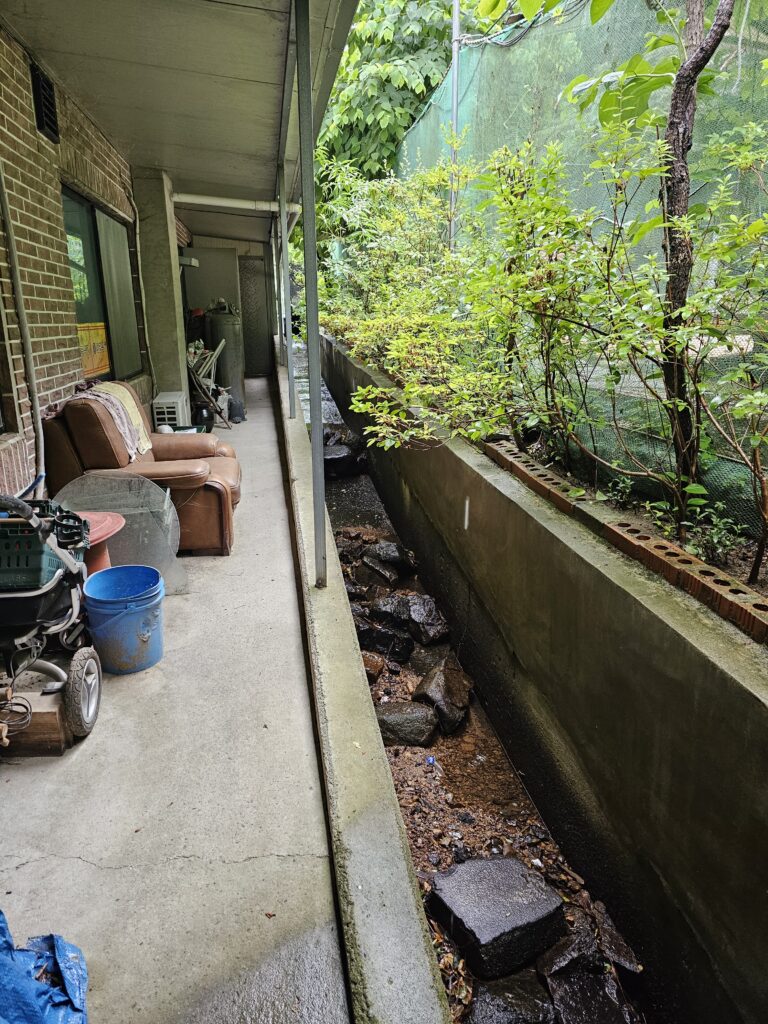
A concrete water channel ran behind the building. The owner explained that water normally flows here and that guests may be able to rinse their hands or feet, but the channel had been temporarily blocked for cleaning during our visit. Because safety and water conditions can vary, it is best to ask before using it.
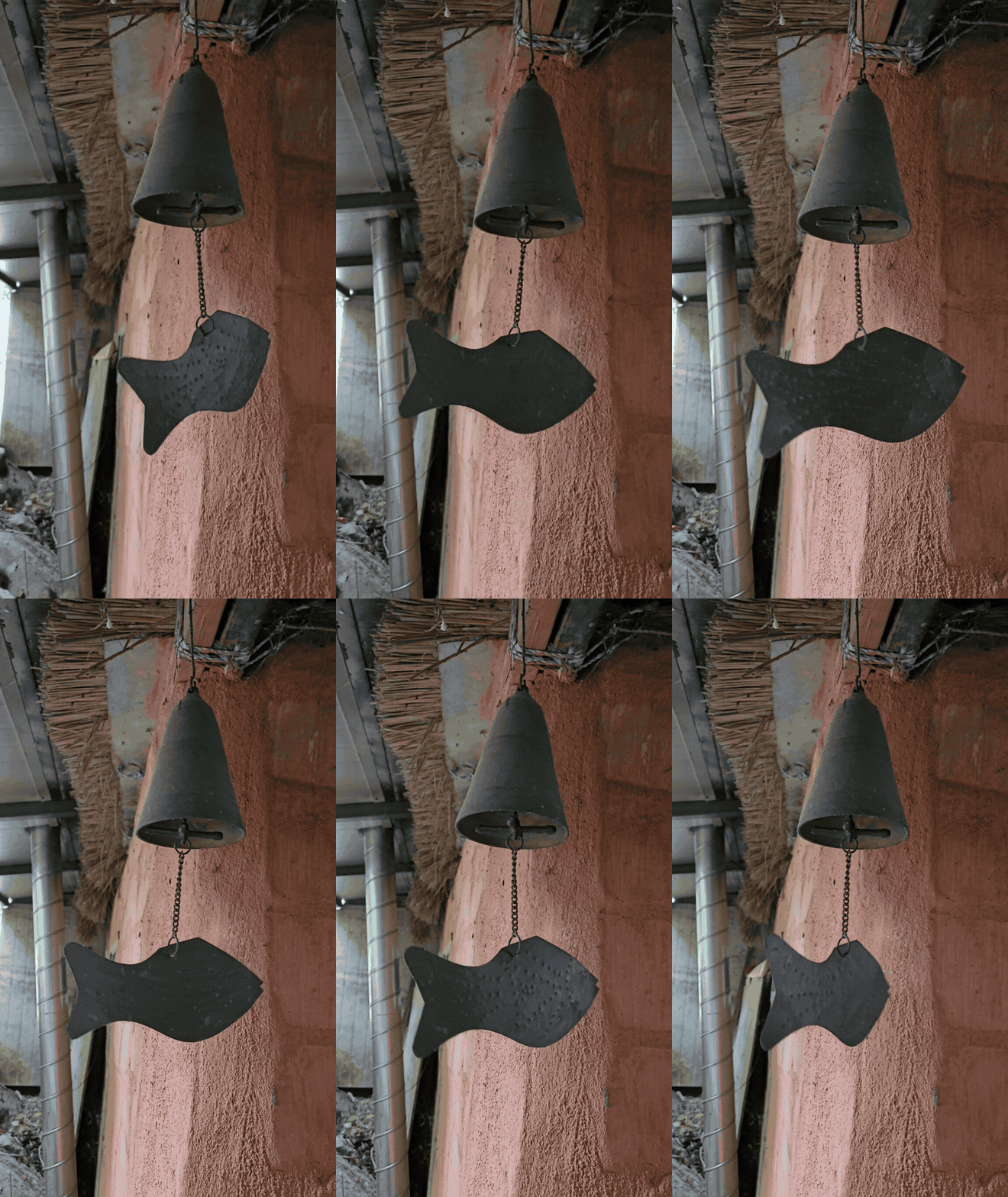
On the way back, I noticed a small metal bell with a fish-shaped ornament. It was a minor detail, but it added to the feeling that there were many handmade or personally chosen decorations around the property.
Spacious Interior for Families and Groups
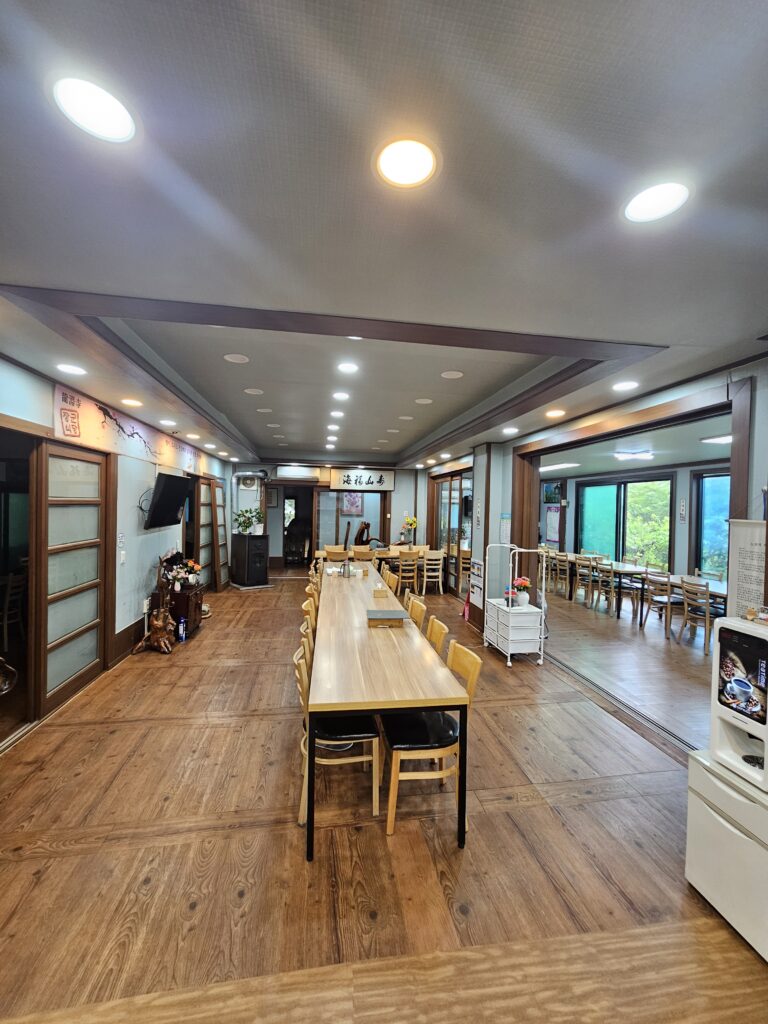
Inside, a long table occupied the center of the main hall, with additional seating areas on both sides. The lighting was bright, the wood-toned furniture felt warm, and the room was much larger than the exterior suggested.
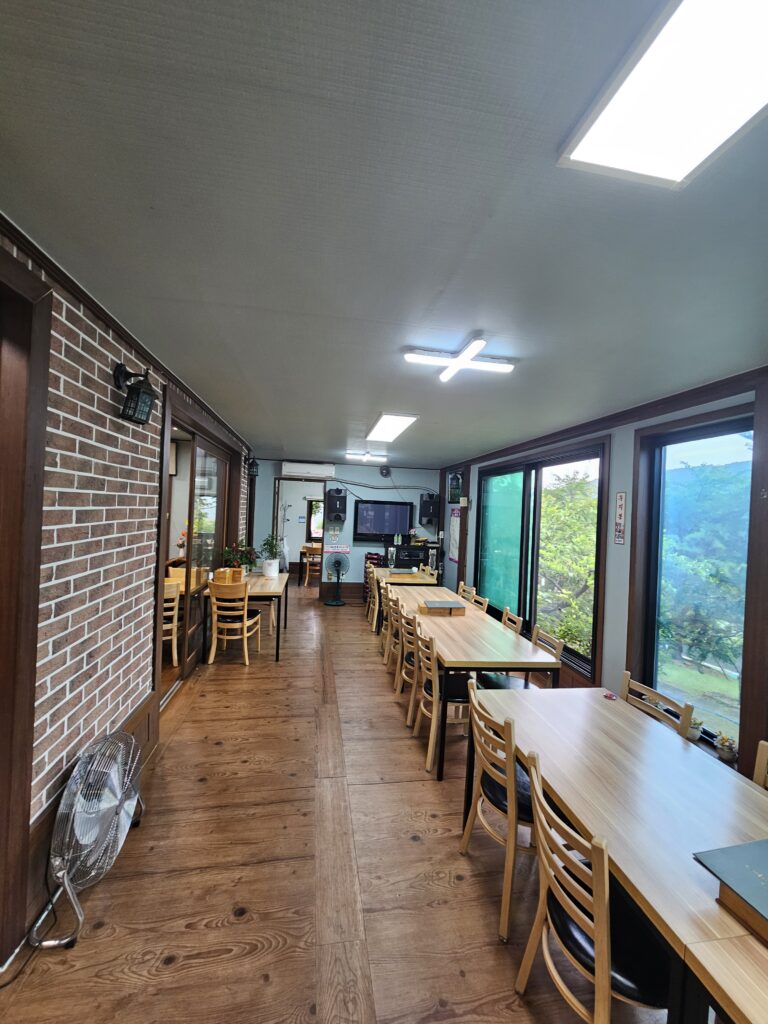
Several long tables ran beside the windows. The layout looked easy to rearrange for a family gathering, company dinner, hiking club, or other large group. A large screen and sound equipment were visible at the far end.
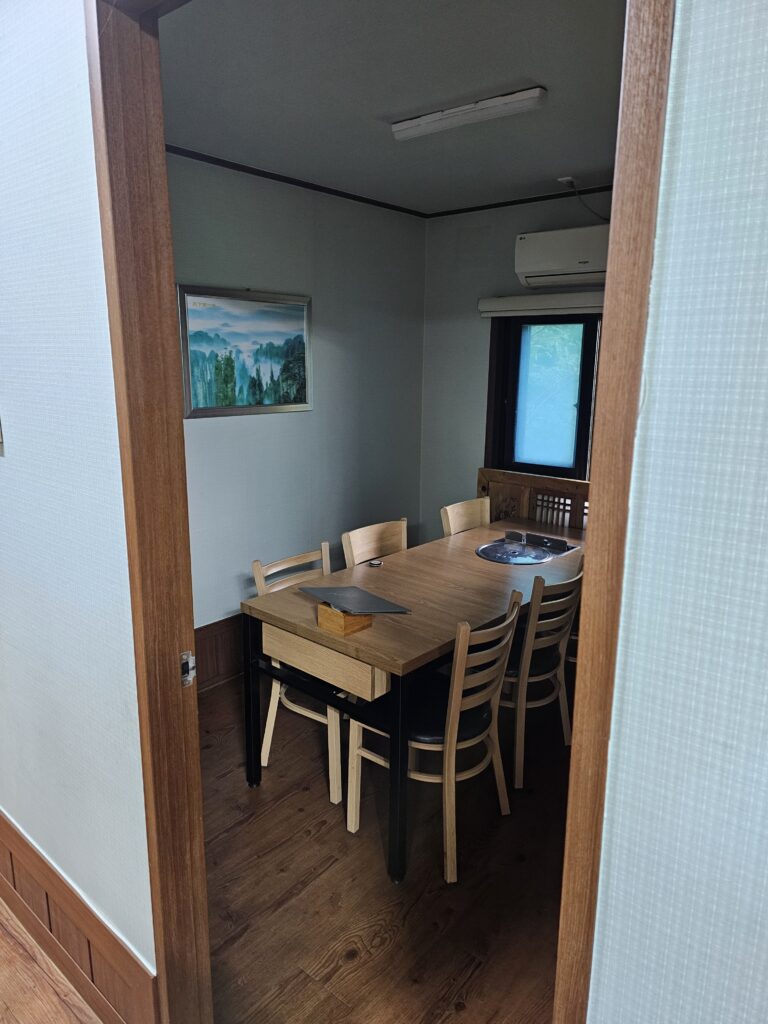
There were also separate rooms with doors, tables, chairs, air conditioning, and built-in tabletop burners. These rooms may suit guests who want more privacy, but minimum group size and reservation rules were not confirmed.
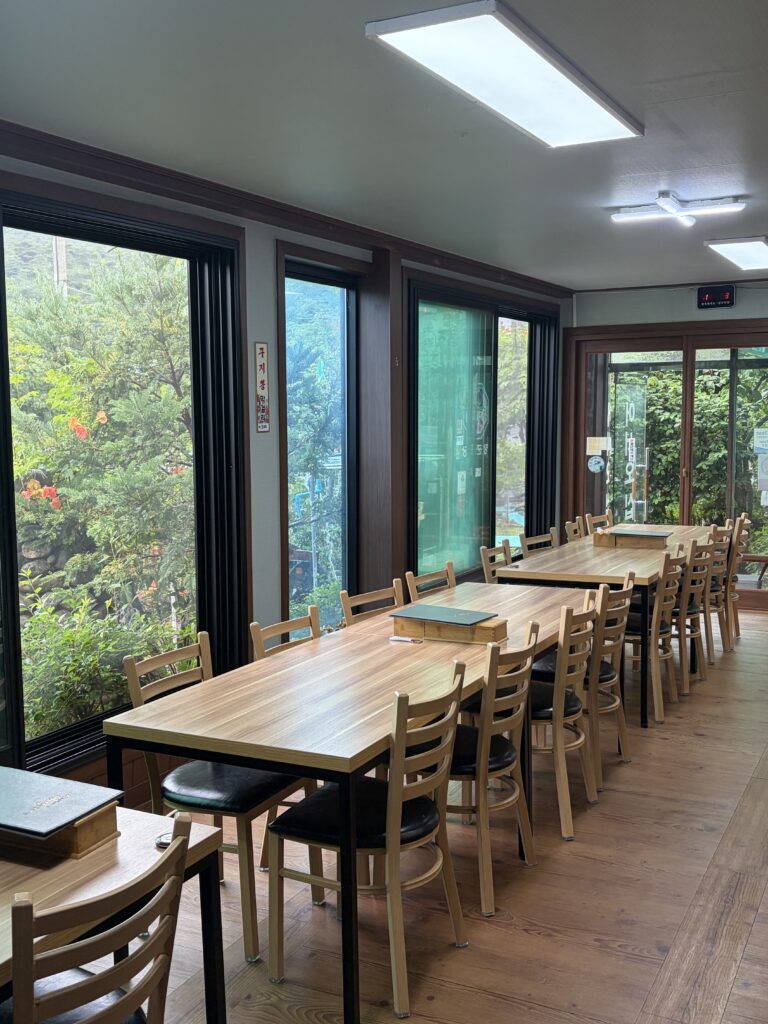
The large windows were one of my favorite parts of the interior. Rain fell outside, wet leaves moved in the wind, and the soft sound of rain made the room feel calmer while we waited for the food.
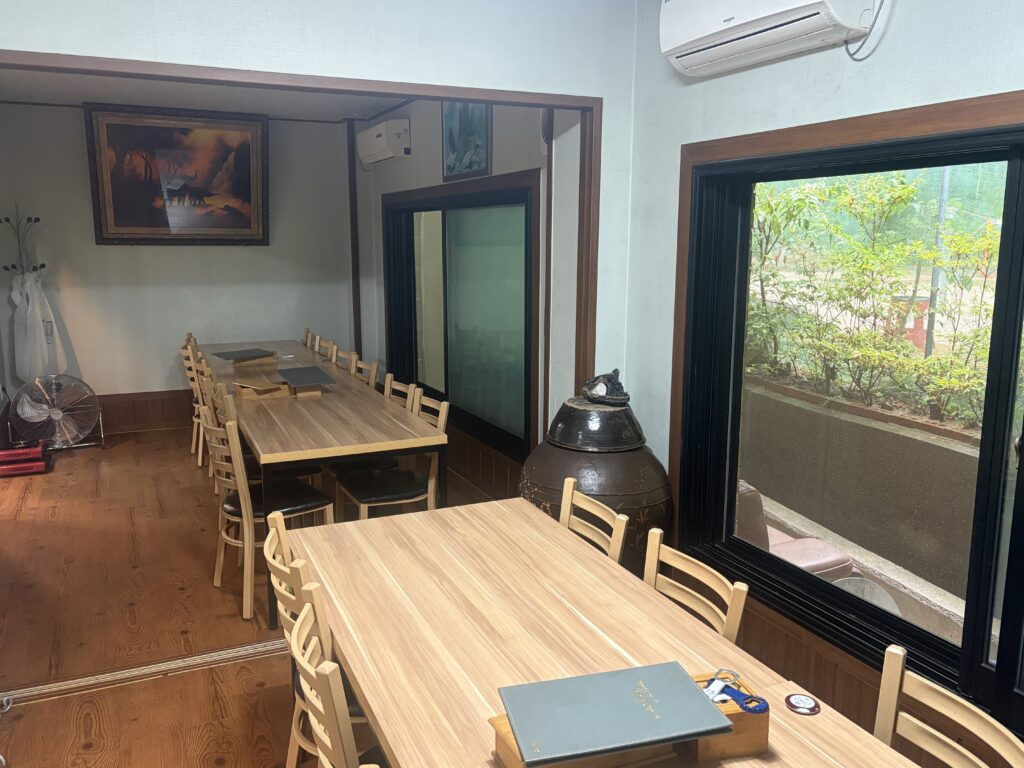
Another seating area faced the direction of the jokgu court and water channel. The owner said guests can watch companions outside from this side, and when water is flowing, the sound should make the space feel even cooler.
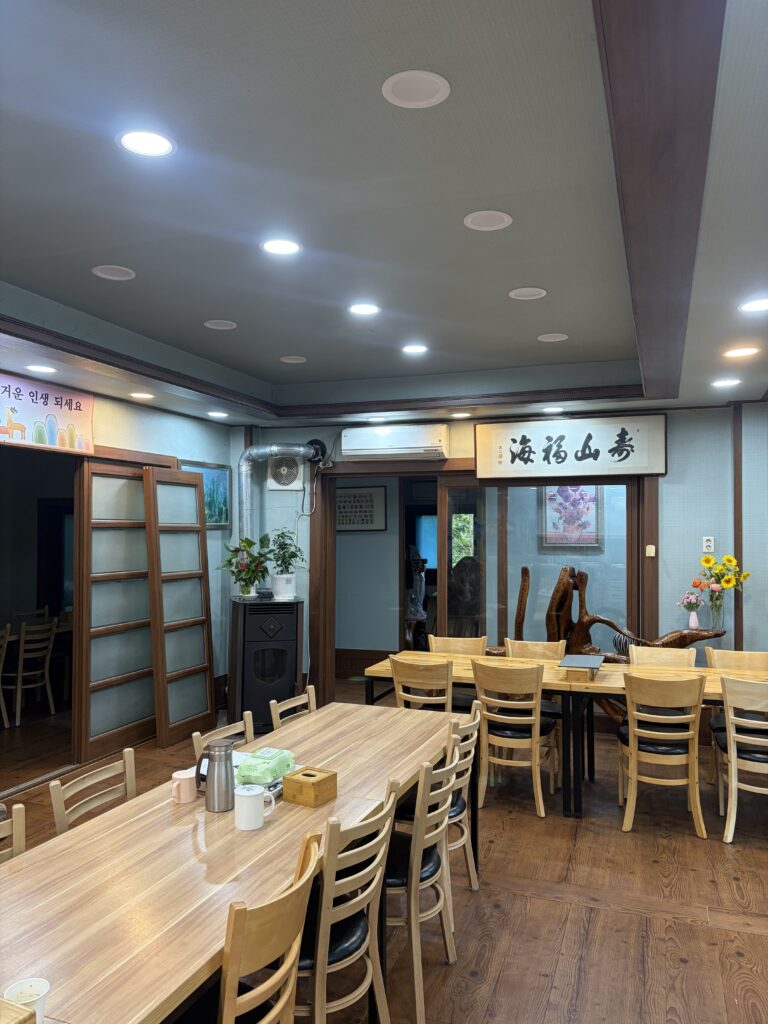
The main hall used simple wooden tables and chairs, with calligraphy, paintings, flowers, and carved wood decorations. It did not feel like a newly designed restaurant, but it was tidy and comfortable in the familiar style of a long-running Korean dining room.
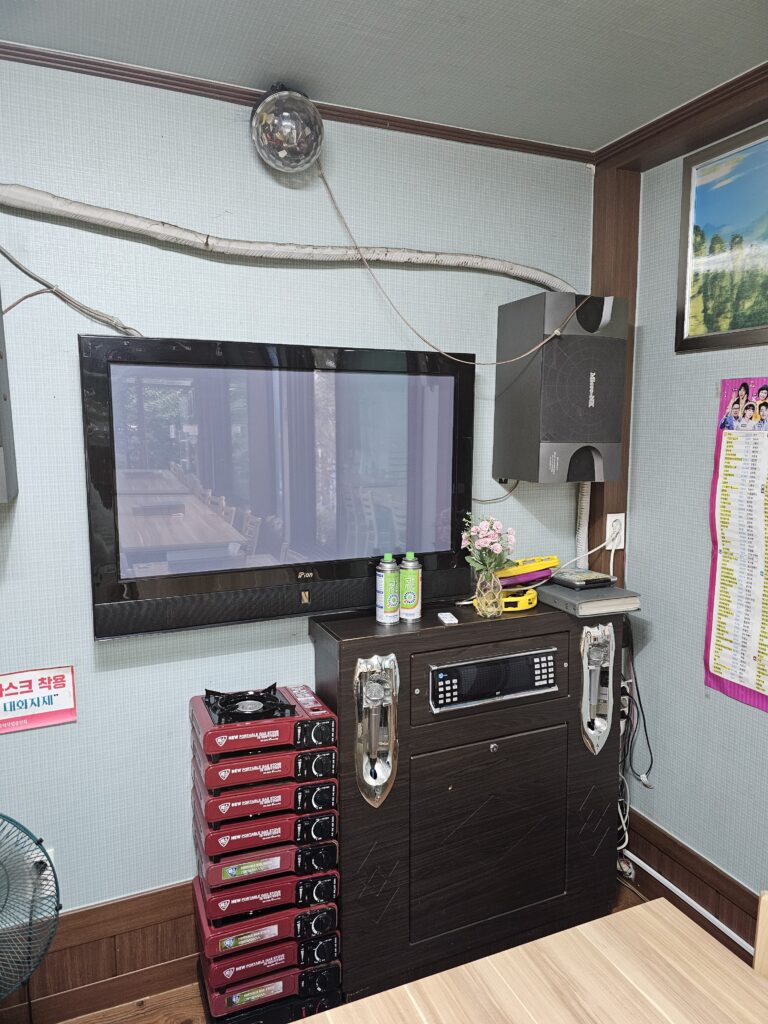
A television, speakers, karaoke controller, microphones, song list, and portable gas burners were set up in one corner. The owner said new songs are updated, but usage fees, available hours, and reservation conditions need to be checked.
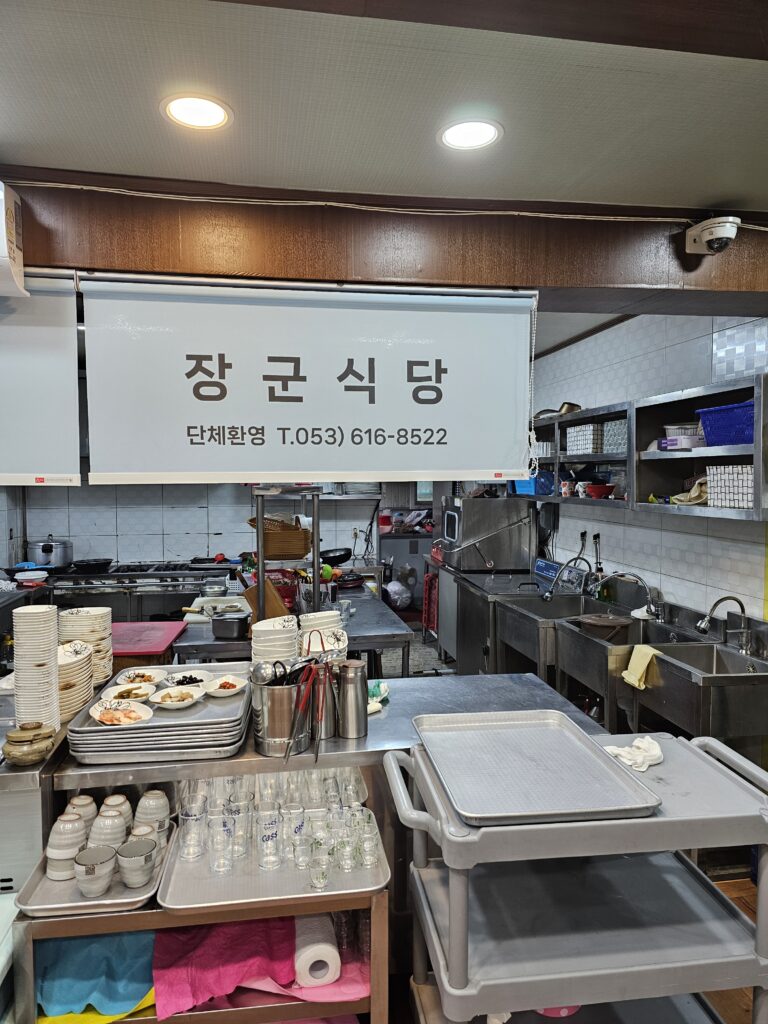
The kitchen was open to the dining room rather than fully hidden. From where we stood, the sinks, work surfaces, dishes, and trays were visible and appeared orderly during the visit. That is an observation from one moment, not a general hygiene certification.
Menu and the Restaurant’s Yakseon Style
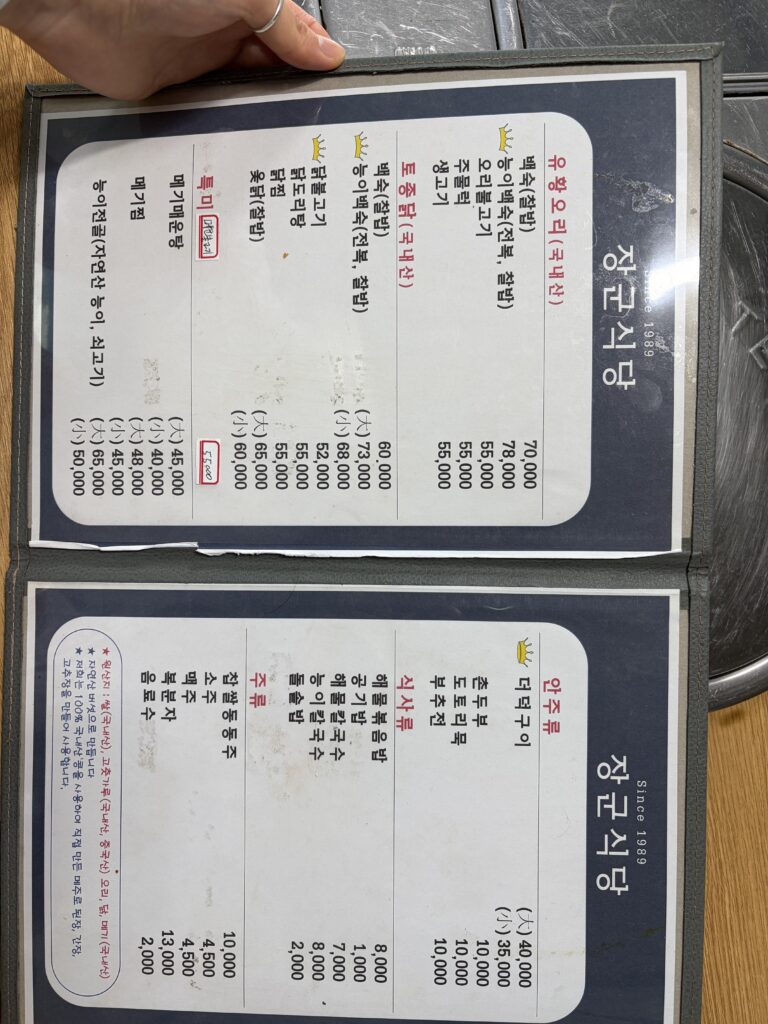
The menu focused on yuhwang duck, native chicken, baeksuk, mushroom dishes, duck bulgogi, deodeok, acorn jelly, chive pancakes, and other Korean dishes suited to sharing. We chose yuhwang duck neungi baeksuk. At the time of my visit, the menu listed it at 78,000 KRW with abalone and sticky rice.
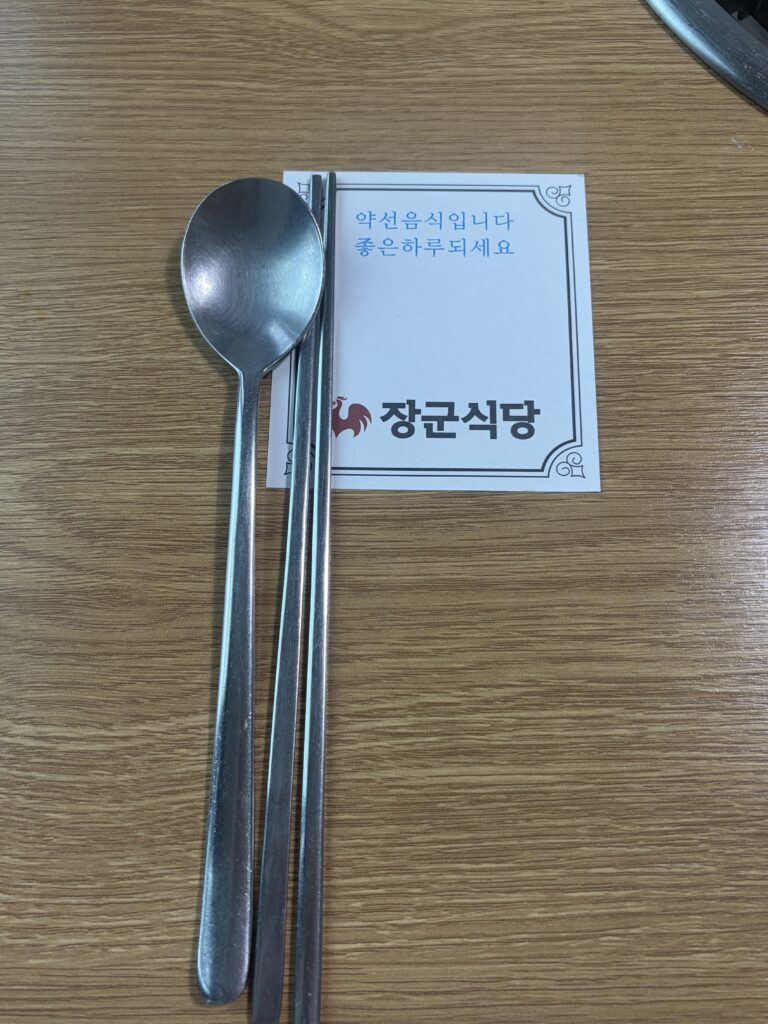
The paper under the spoon and chopsticks read, “This is yakseon food.” That small detail matched the owner’s explanation that many mushrooms, roots, branches, and other ingredients go into the broth.
Side Dishes Before the Main Pot
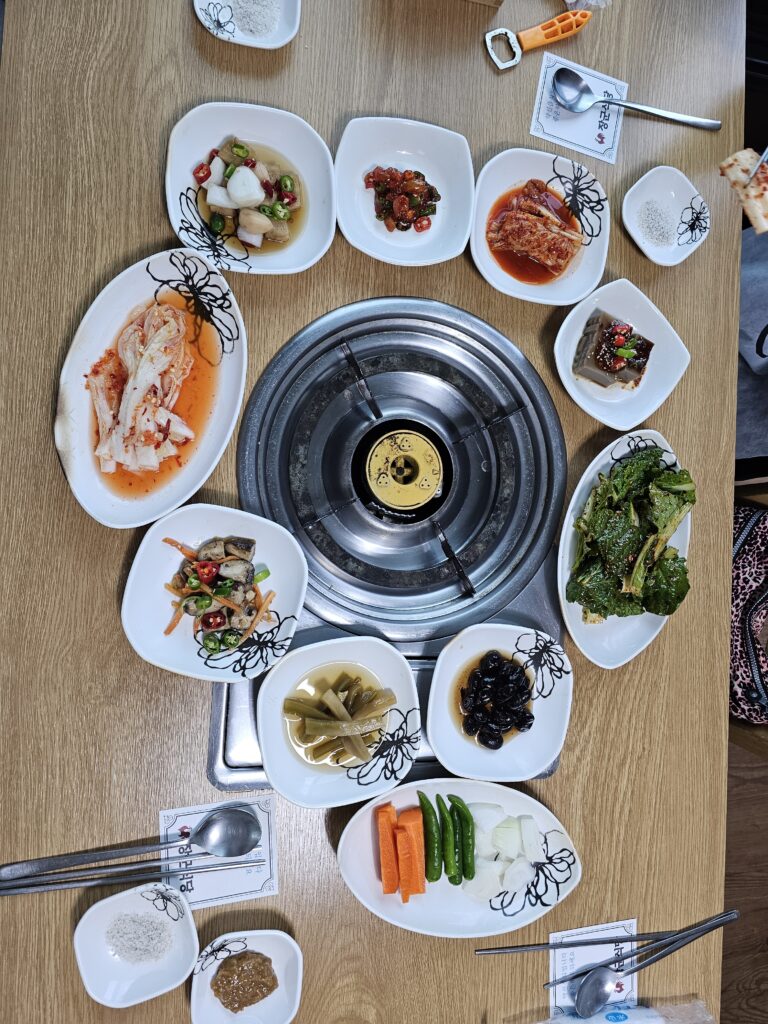
Before the duck arrived, the table filled with banchan, the small side dishes served with Korean meals. The spread included kimchi, water kimchi, seasoned leafy salad, pickled stems, black beans, acorn jelly, onions, a mushroom side dish, squid jeotgal, raw vegetables, salt, and a soybean-based dipping paste.
My favorite was the fresh jaeraegi-style leafy salad. The sweet-and-sour seasoning cut through the richness of the duck, and the owner said the vegetables were grown directly and mixed fresh when we asked for more.
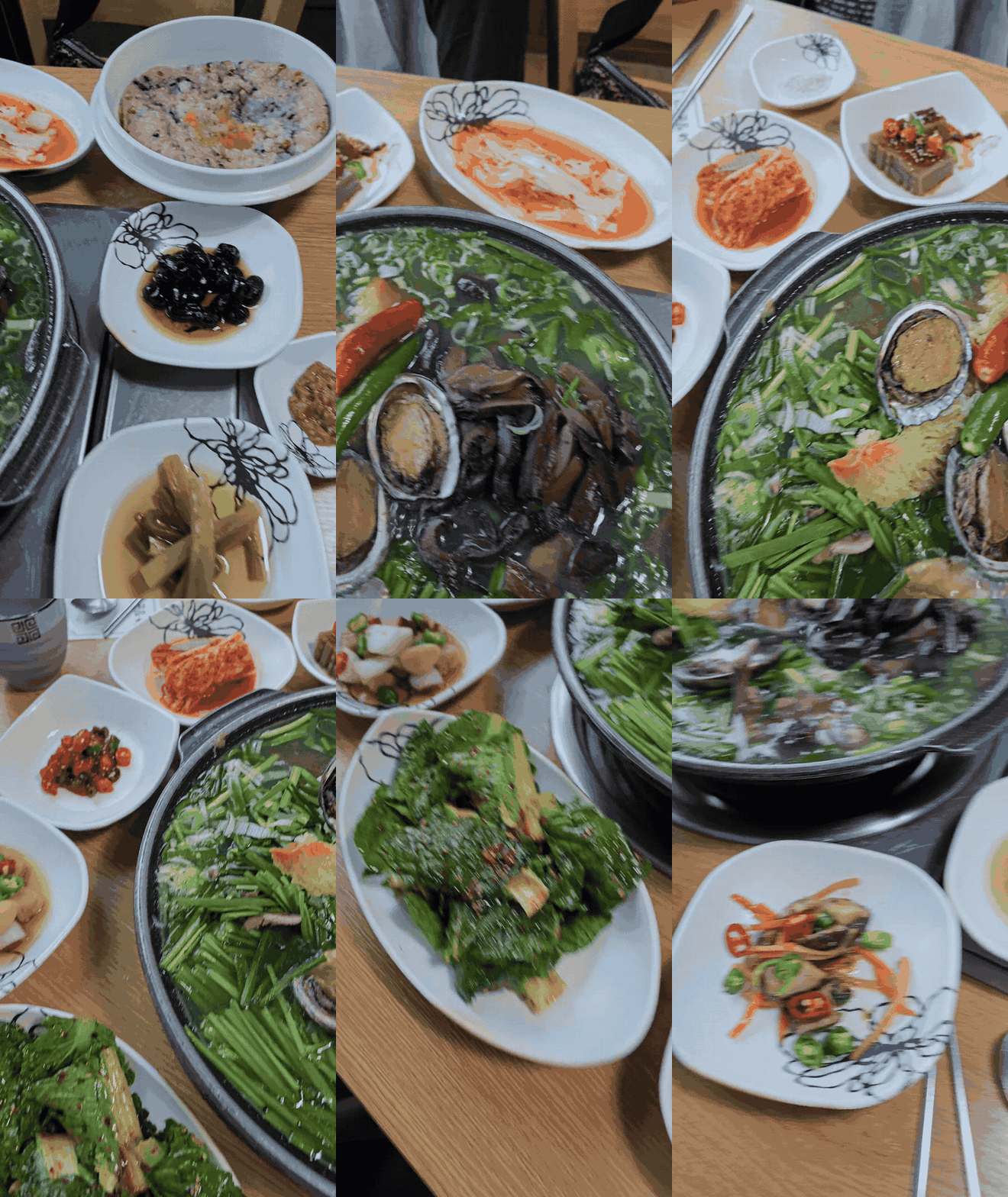
Once the main pot and sticky rice arrived, the whole table looked full. This was clearly a dish designed for several people to share slowly rather than a quick individual meal.
The Neungi Duck Baeksuk Arrives
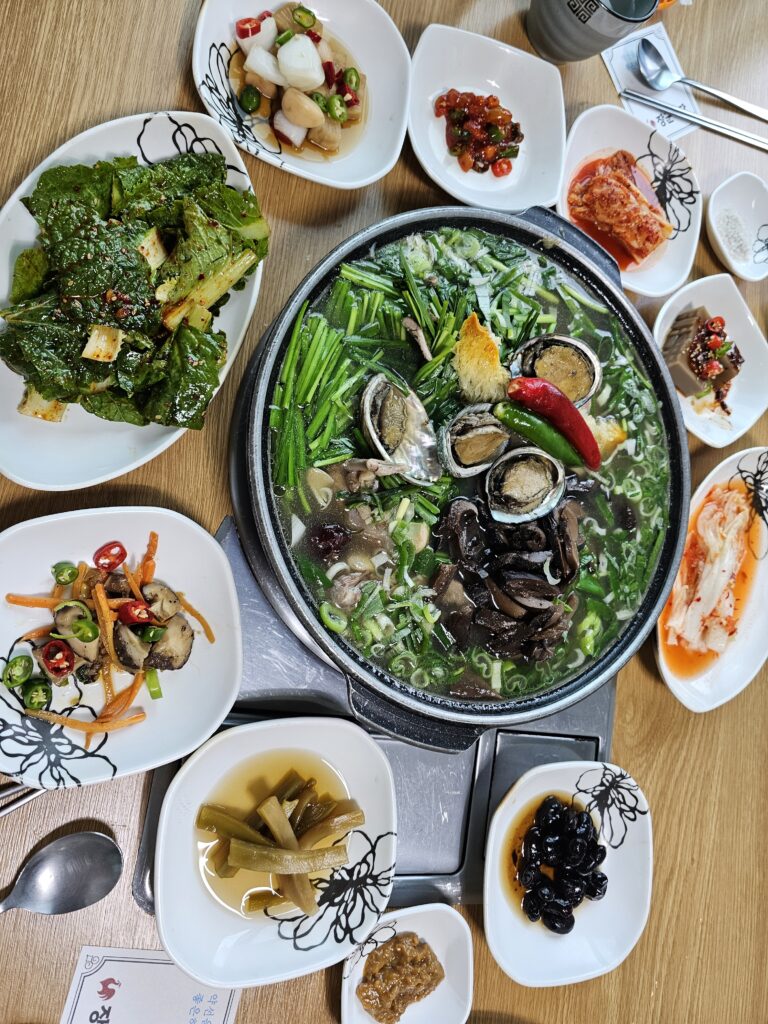
The large pot came topped with duck, abalone, mushrooms, chives, green onion, red chili, and green chili in a clear broth. The amount of food made an immediate impression before we had tasted anything.
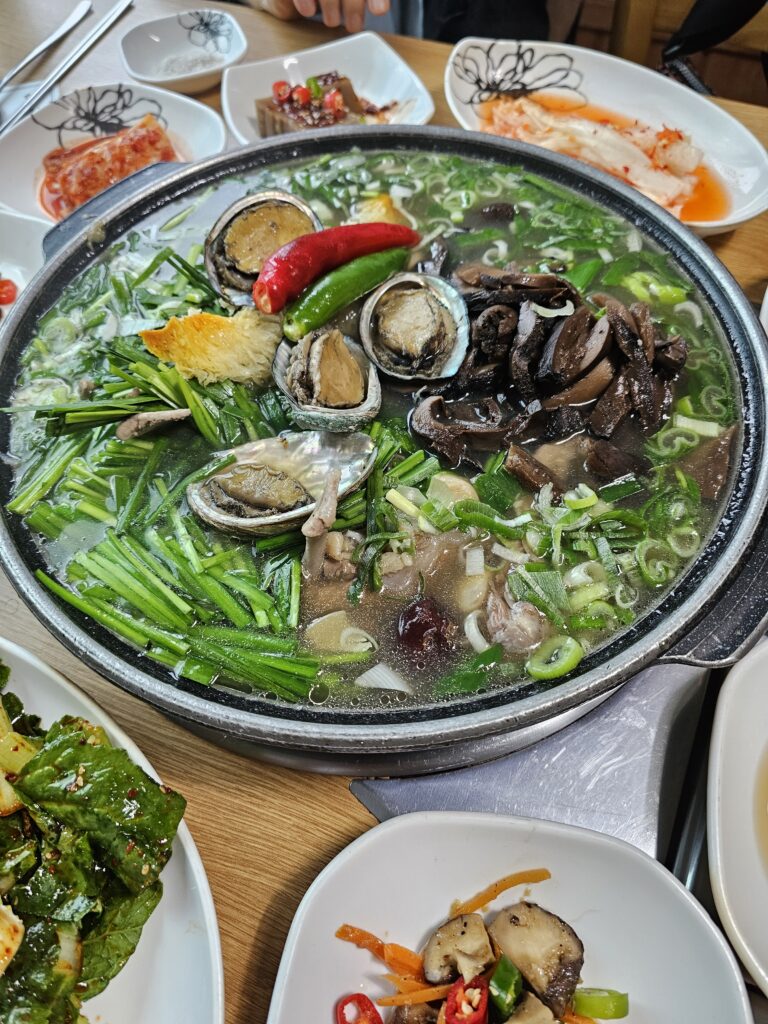
A closer view showed how densely the ingredients filled the pot. I could clearly see the abalone, dark mushrooms, chives, sliced green onion, duck, and broth, although I could not identify every mushroom variety.
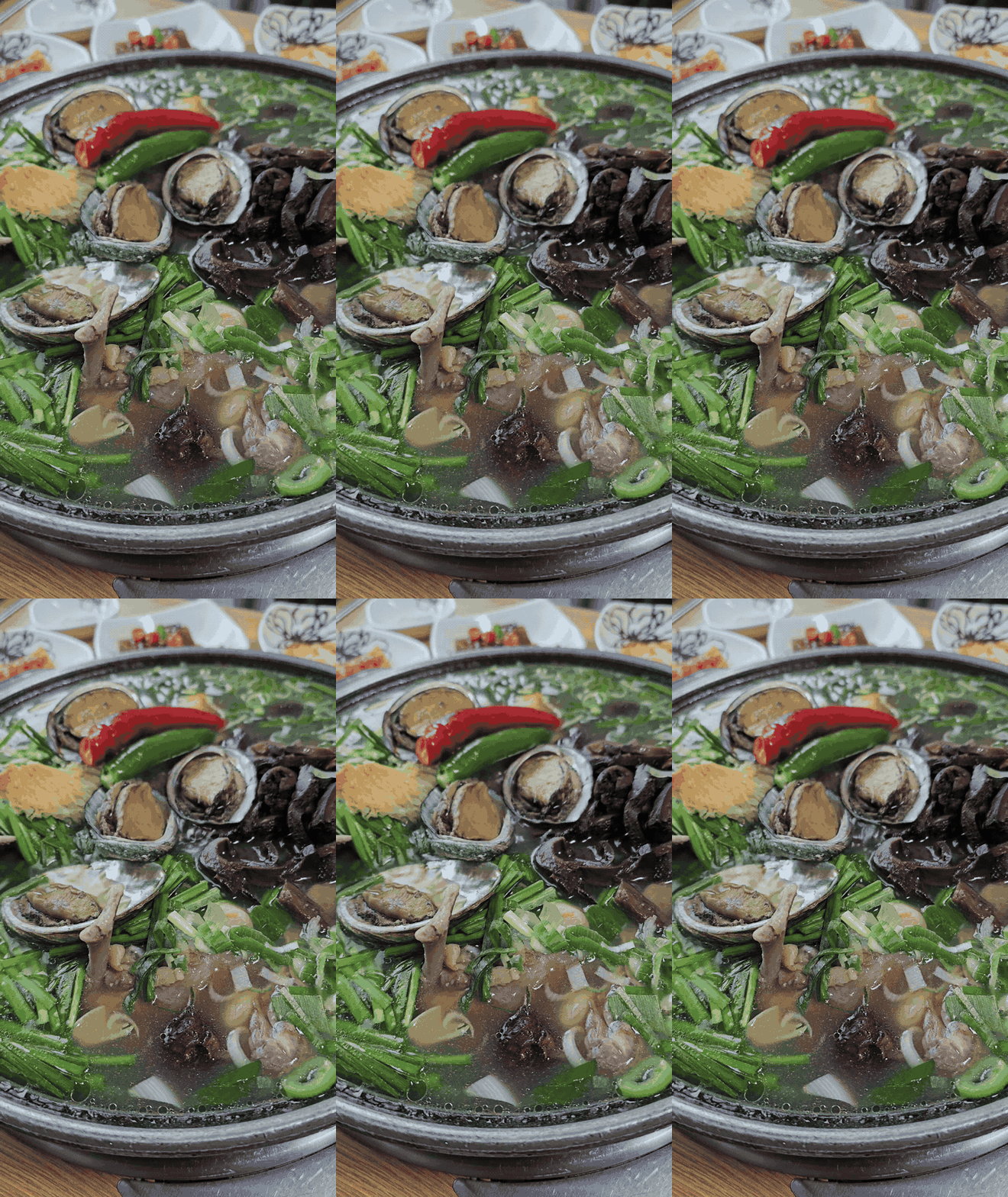
We kept the pot simmering at the table. Bubbles moved the vegetables and meat while steam rose from the broth, and the food stayed hot throughout the meal.
Starting with the Abalone
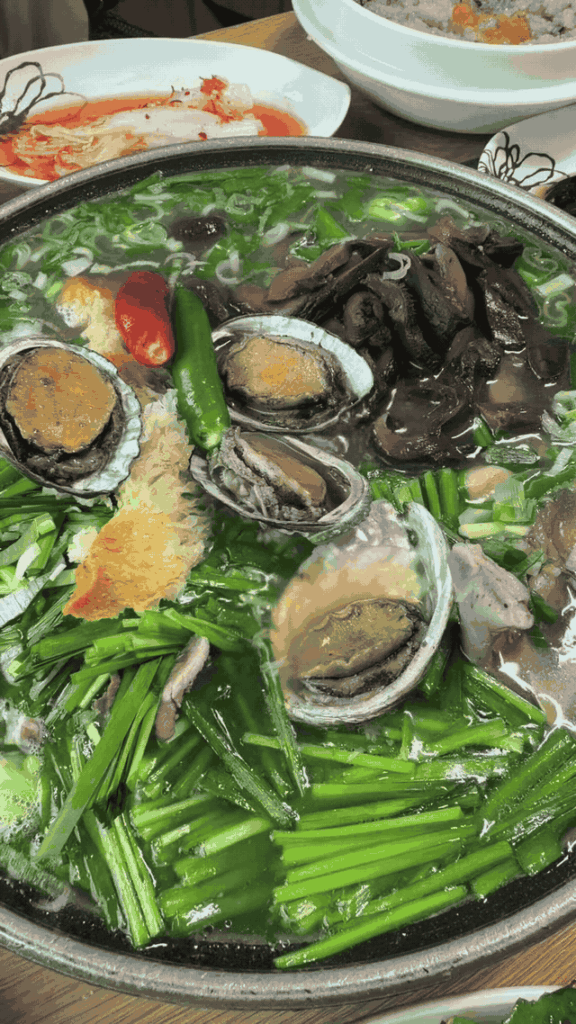
The abalone sitting on top of the pot caught my attention first, so I started there before moving on to the duck.
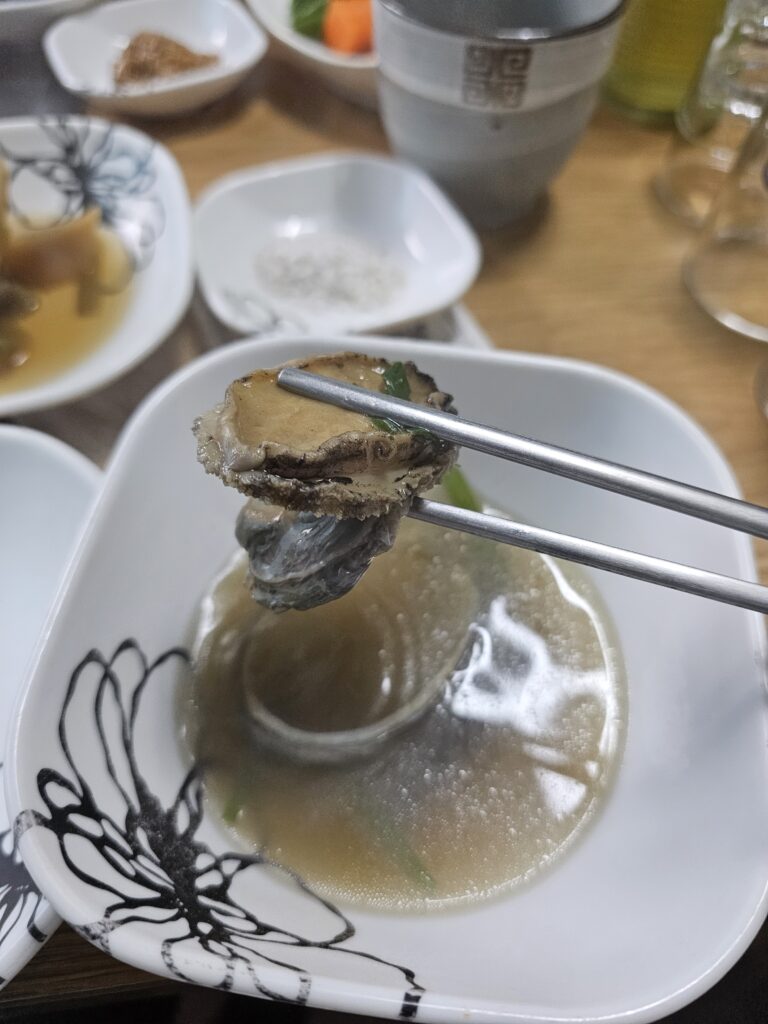
One abalone came out with the meat still attached to the shell. It was not enormous, but the flesh looked reasonably thick and was coated with the light broth.
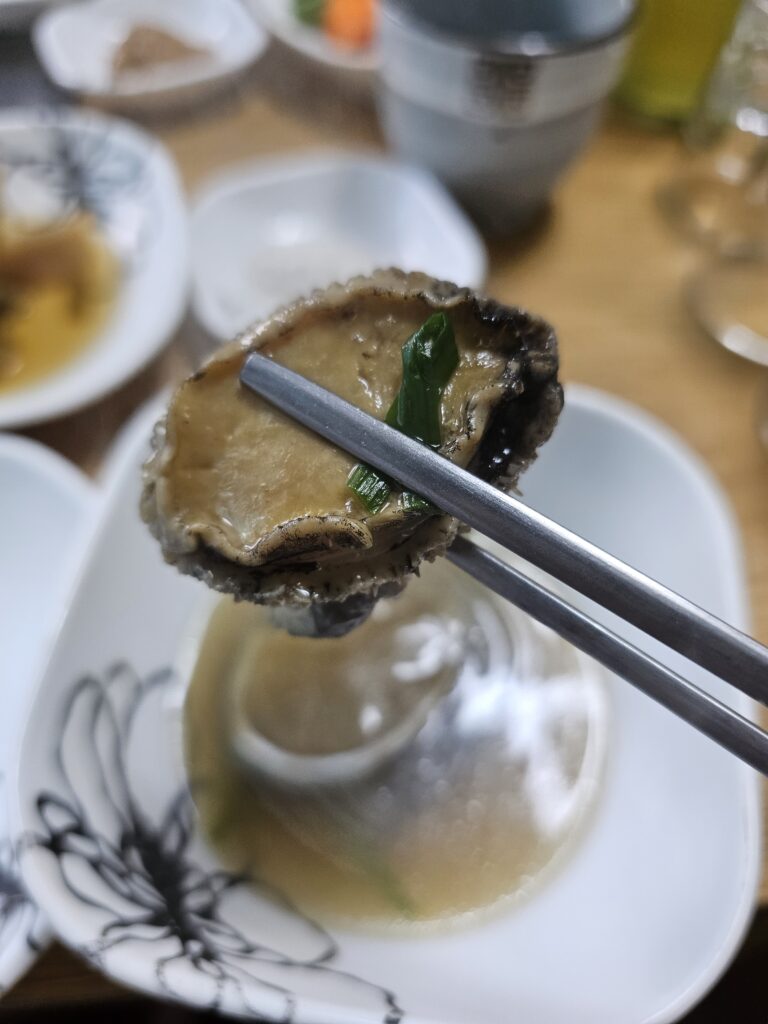
Up close, the abalone had a glossy surface and a small piece of green onion on top. The texture was springy rather than mushy, and the mild broth let the natural seafood flavor remain noticeable.
Duck Texture: Chewy, Moist, and Familiar
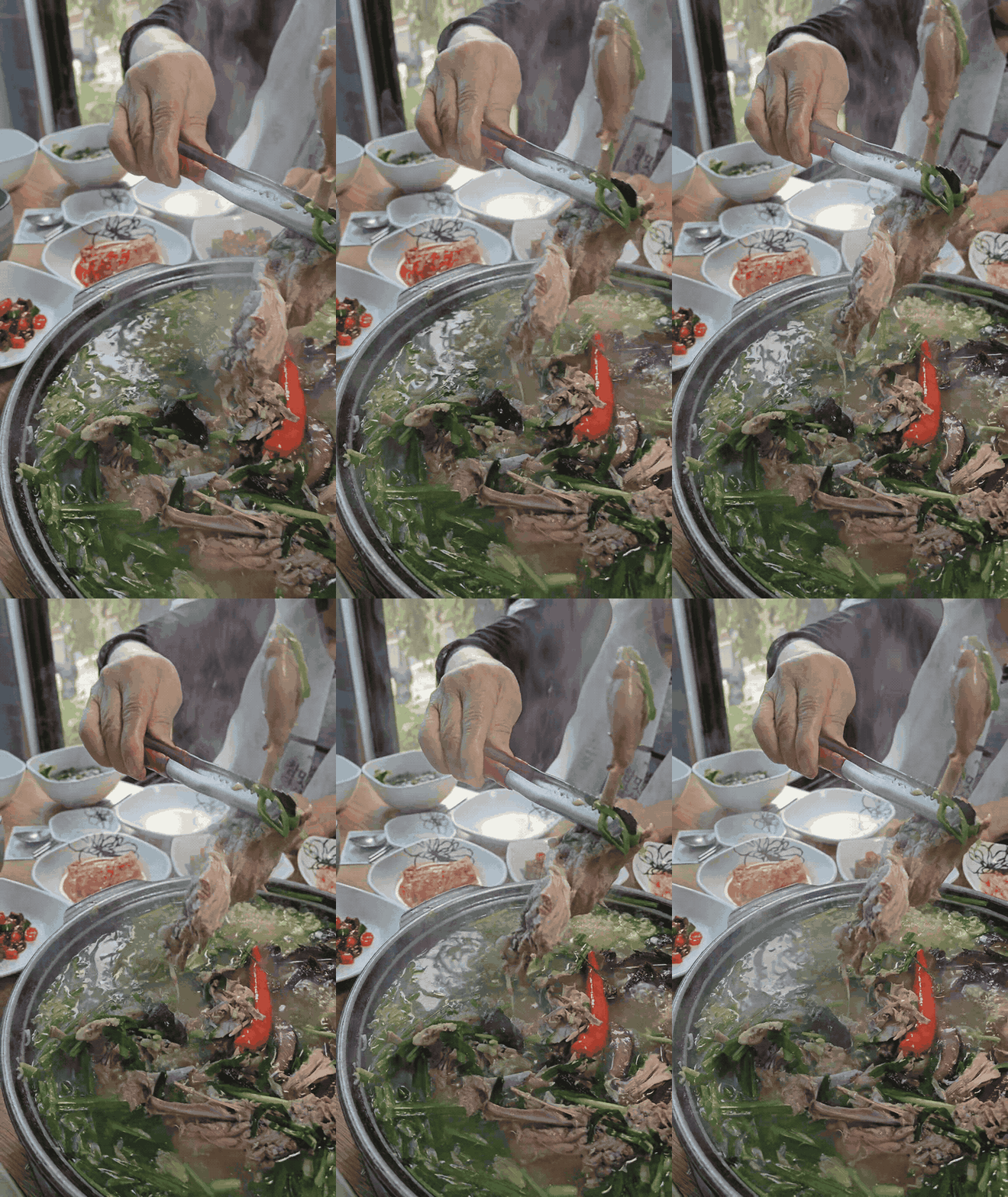
Next, we lifted a large bone-in piece of duck from the pot with tongs. It felt substantial enough to make the meal look even more filling.
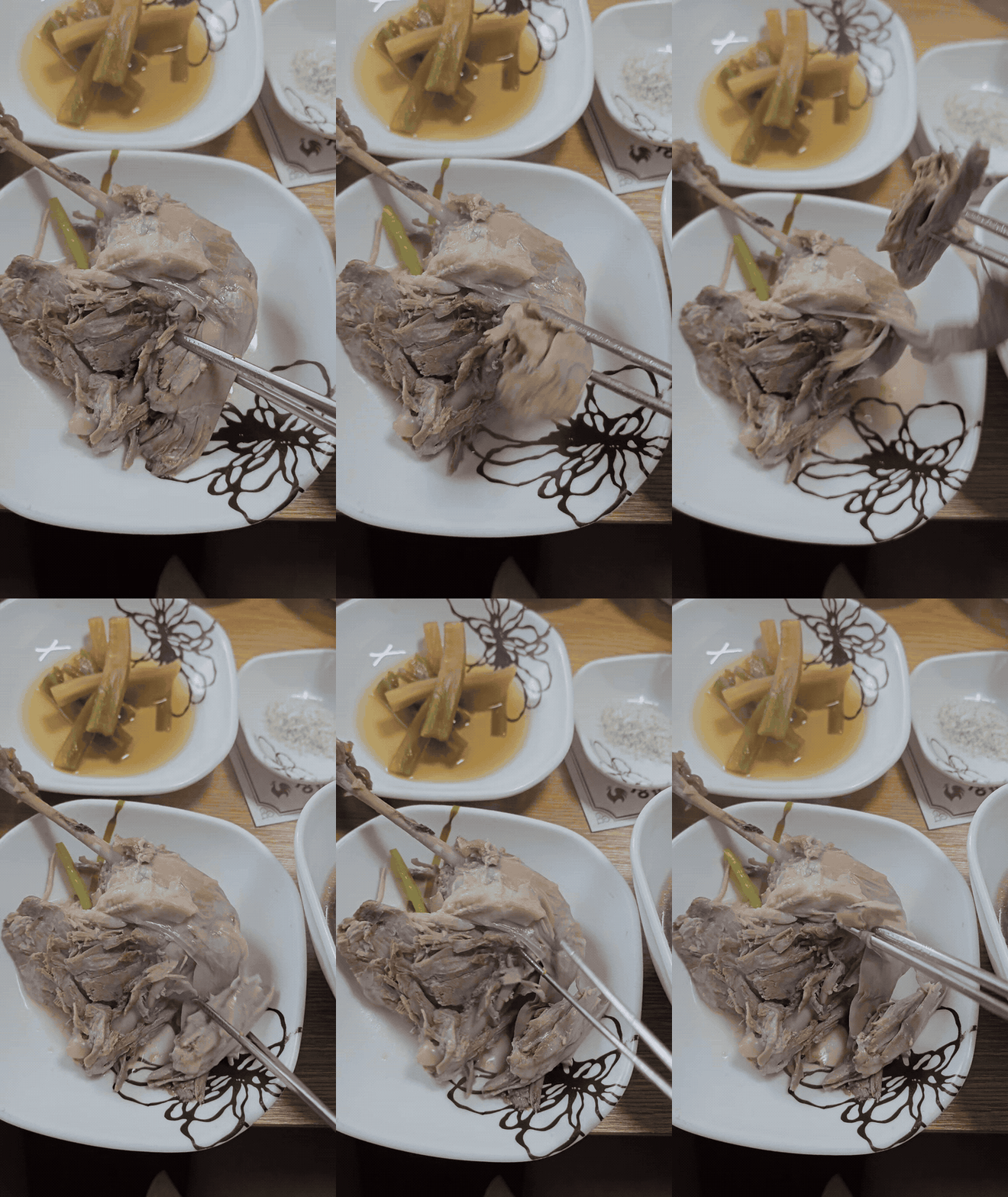
On the plate, the meat separated along the grain with chopsticks. It was not falling apart into shreds, but it came away from the bone without much difficulty.
This was my first time eating duck baeksuk. The overall flavor was less unfamiliar than I expected because it was still close to the gentle style of chicken baeksuk. The main difference for me was the texture: the duck felt firmer, springier, and slightly chewier than chicken.
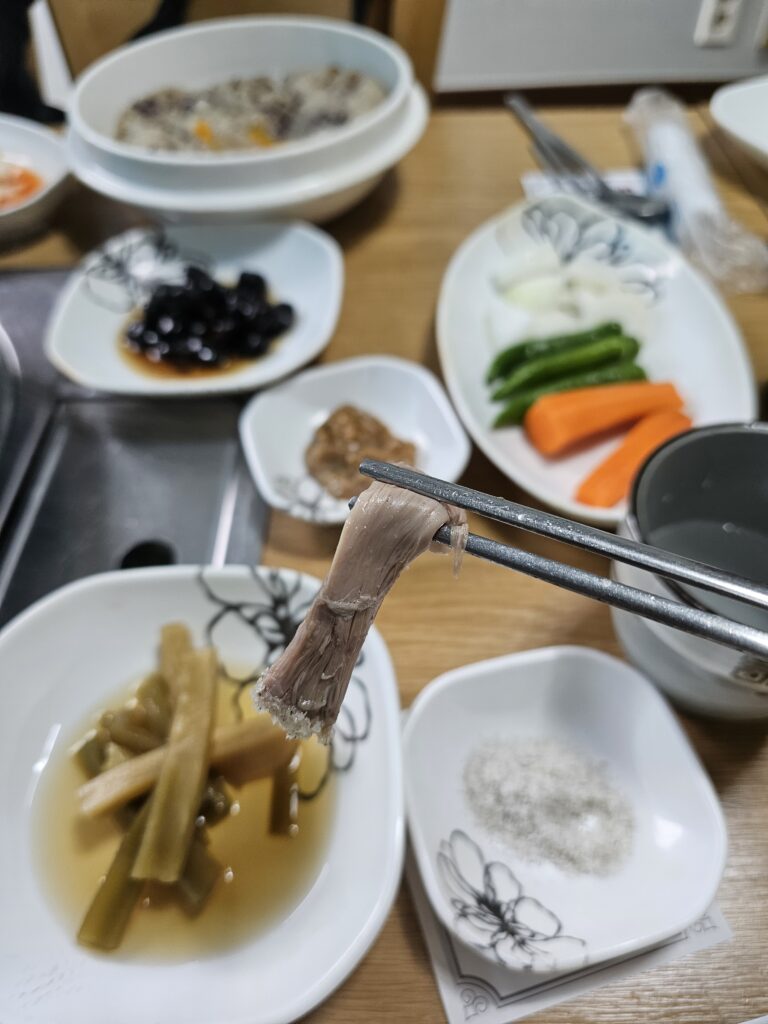
A lean piece showed a clear grain and stayed moist instead of breaking into dry fibers. It tasted mild on its own, and a small amount of the provided salt made the meat flavor more distinct.
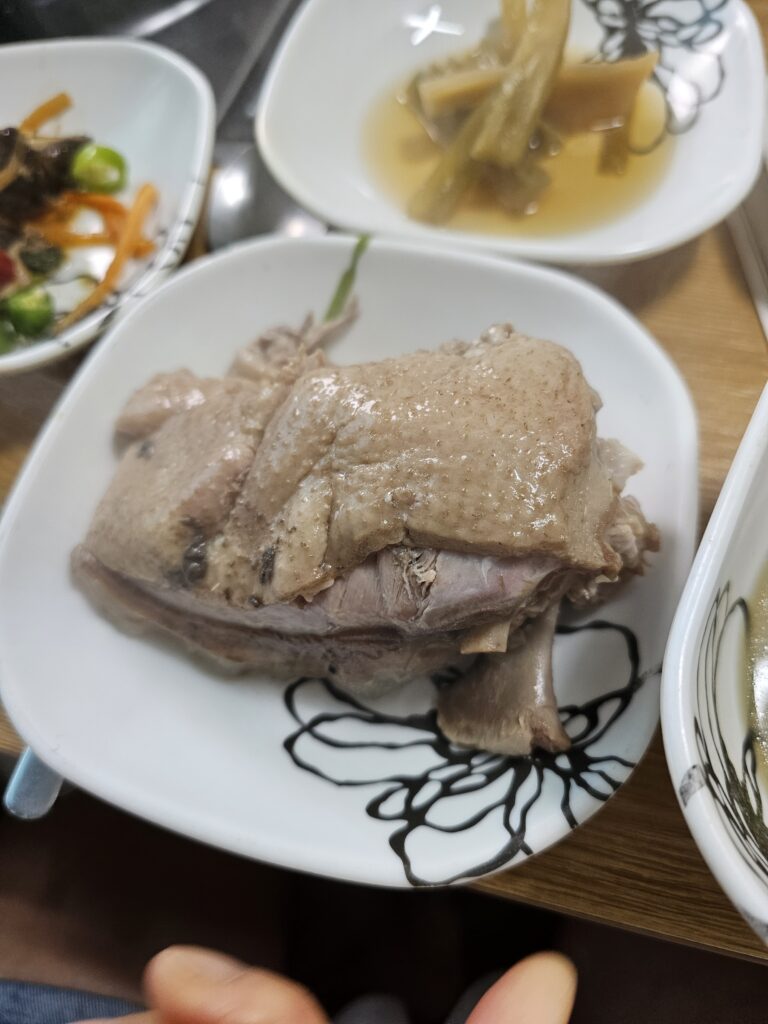
I especially liked the meat around the bone and skin. That part had more texture and stayed juicy longer than the leaner pieces. I had worried that duck might have a strong smell, but this version was approachable even for a first-time duck baeksuk eater.
Sticky Rice with the Broth
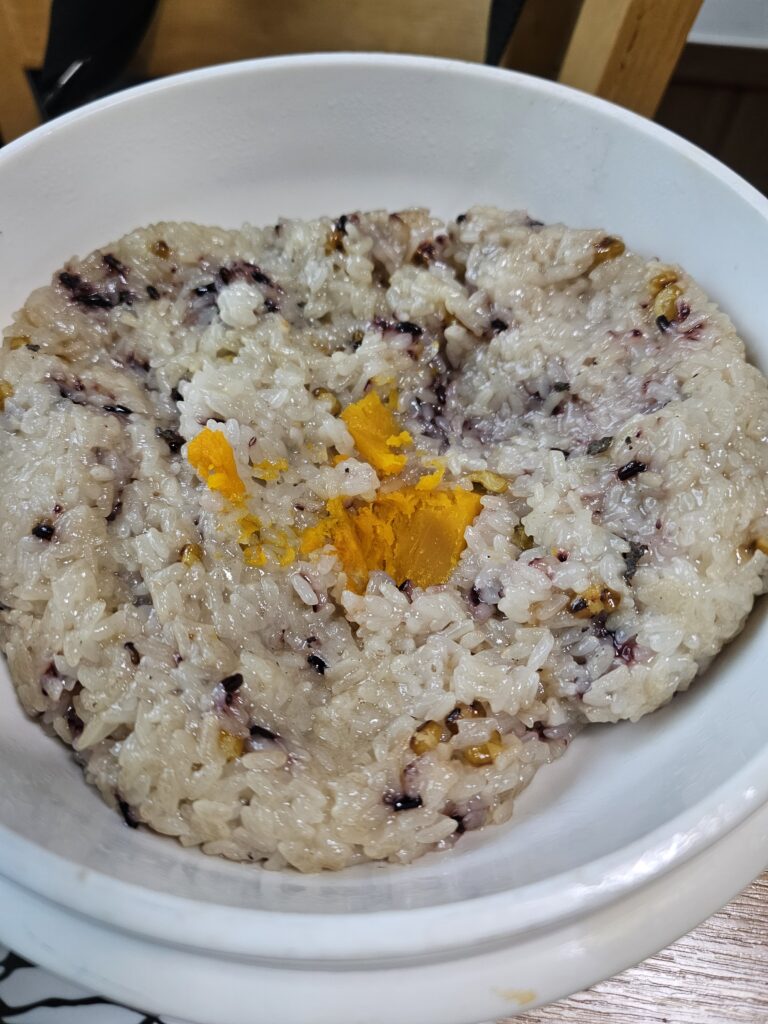
A large bowl of sticky multigrain rice came with the baeksuk. The grains were glossy and chewy, with darker grains and a yellow-orange ingredient in the center that I could not identify confidently.
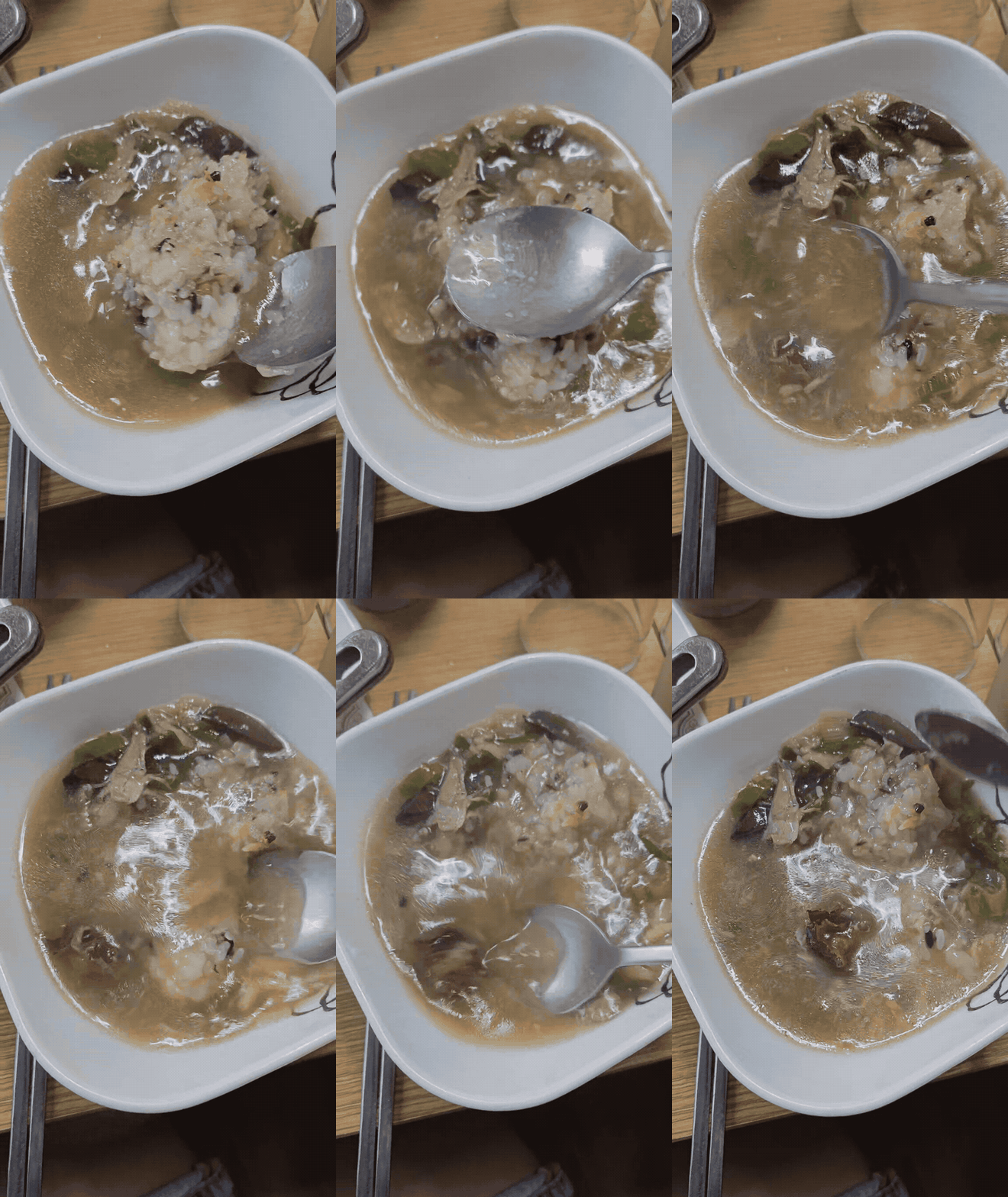
Instead of cooking the rice again in the main pot, I placed some in my own bowl and poured in plenty of duck broth. As I loosened the rice with a spoon, it became soft like a light porridge while still keeping some chewiness. The broth carried the flavor of duck, mushrooms, and green onion, making this the most satisfying way to finish the meal.
What Foreign Visitors Should Know
Baeksuk is usually a shared dish. The pot is placed in the center, kept warm on a tabletop burner, and divided among the group. Chopsticks and tongs are used to separate the meat, while each person can place broth, meat, and rice into an individual bowl.
The seasoning is much lighter than dishes such as spicy stew or barbecue. Guests who prefer stronger flavor can use the salt, kimchi, seasoned vegetables, or dipping paste on the table.
This restaurant appears especially suitable for visitors arriving by car or traveling as a family or group. Public-transport directions were not confirmed, and some facilities may require advance reservation. English service was not confirmed, so showing the Korean name “장군식당” and the menu photo may make communication easier.
Final Recommendation
What stayed with me most was the combination of the food and the setting. The garden was carefully maintained, the dining rooms were spacious, and the windows brought in the sounds and movement of the rainy landscape. The jokgu court and karaoke equipment also made the restaurant feel suitable for a full group outing rather than only a meal.
My grandmother had recently recovered from a bad cold and still seemed low on energy that day. After enjoying the scenery, fresh air, and warm food, she looked more comfortable and energetic. I cannot say that the meal treated or cured anything, and the timing may simply have matched her natural recovery, but I was glad the visit gave her a warm and enjoyable afternoon.
I was disappointed that the rear water channel had been blocked for cleaning, because the owner said it is especially beautiful when the water is flowing. That gives me one more reason to return.
For foreign visitors exploring Songhae Park, Yongyeonsa Temple, or the quieter side of Dalseong-gun, Janggun Sikdang is worth considering when you want a shared Korean duck baeksuk meal, a rural garden atmosphere, easy parking, and space for a family or group gathering.
[FAQ]
Q1. What is neungi duck baeksuk?
A1. It is a mild Korean duck dish simmered in broth with neungi mushrooms and other ingredients. At Janggun Sikdang, the version I tried also included abalone, vegetables, and sticky rice.
Q2. How much was the duck baeksuk?
A2. The yuhwang duck neungi baeksuk was listed at 78,000 KRW on the menu during my July 1, 2026 visit. The price and included items may have changed.
Q3. Is Janggun Sikdang suitable for groups?
A3. The restaurant had a large parking area, long group tables, separate rooms, an outdoor jokgu court, and karaoke equipment. Reservation rules, facility fees, and available times should be confirmed directly.
Q4. Are the holiday opening hours confirmed?
A4. No. The regular hours observed during my visit were Tuesday to Sunday from 11:00 to 19:00, with Monday closed. Lunar New Year, Chuseok, and other holiday schedules should be checked before visiting.
Plan your own Korean food adventure
🌶️ Test your Korean spice tolerance — find your survival level in 7 questions
🎰 Spin the Korean Food Roulette — let the wheel pick your next meal
🍀 Draw Korean Lotto 6/45 numbers — lucky picks in official ball colors